Survey Data
Reg No
13402355
Rating
Regional
Categories of Special Interest
Architectural
Previous Name
Tennalick
Original Use
Outbuilding
Date
1760 - 1830
Coordinates
221726, 258994
Date Recorded
24/08/2005
Date Updated
--/--/--
Description
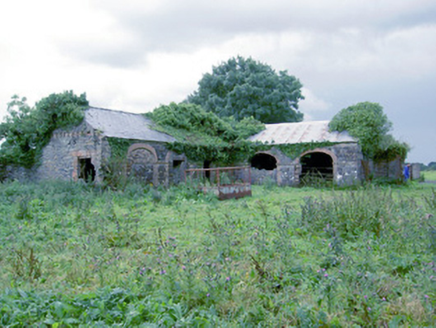
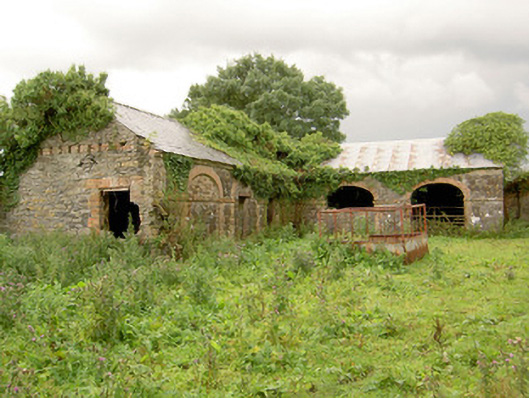
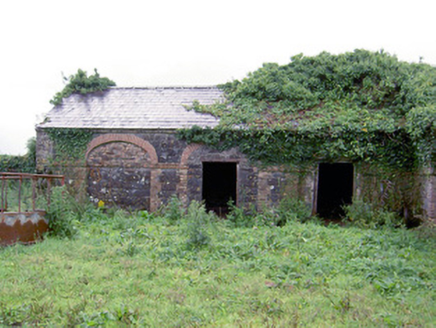
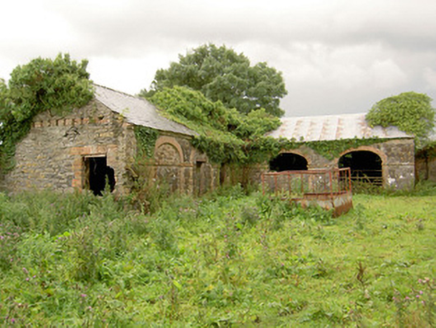
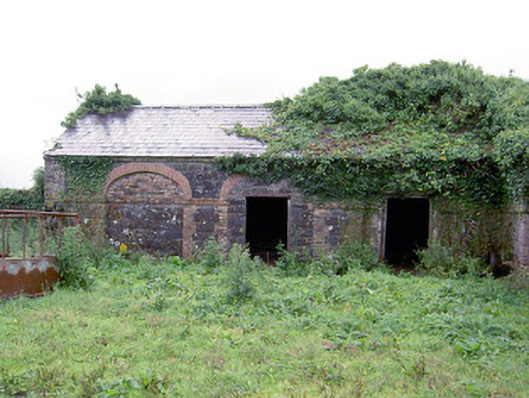
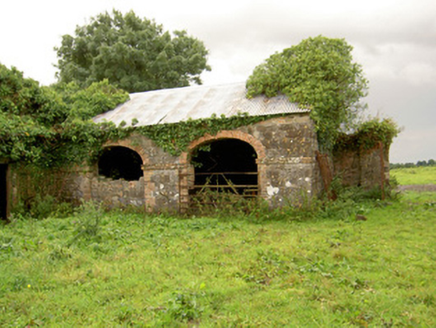
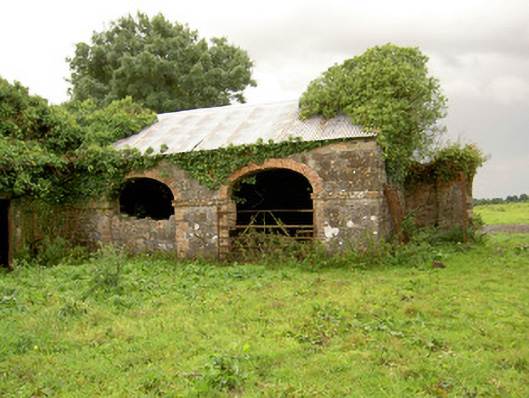
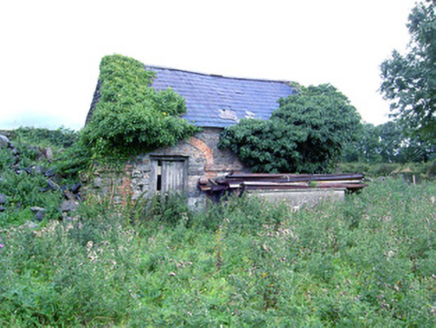
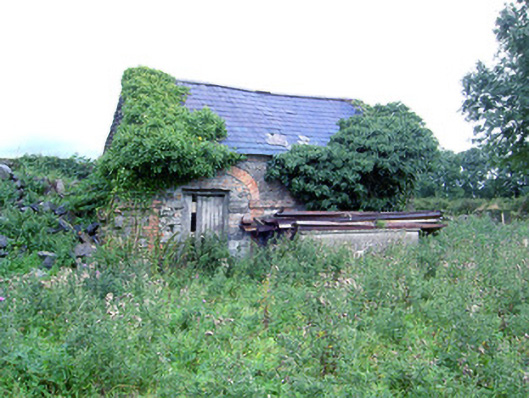
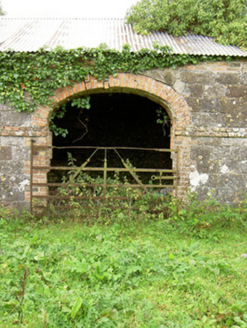
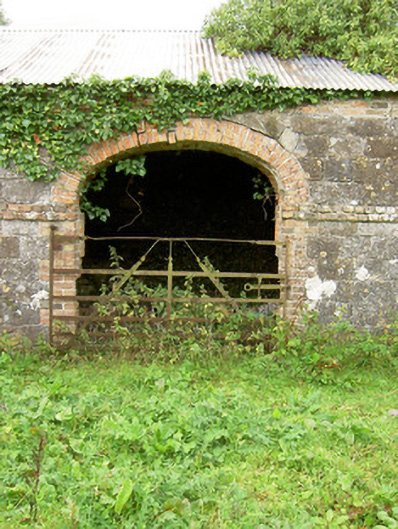
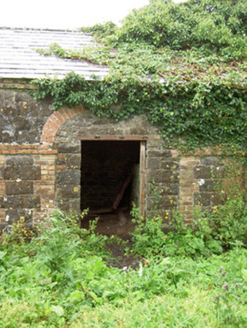
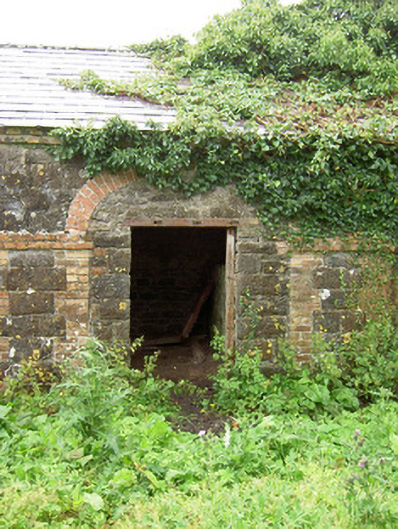
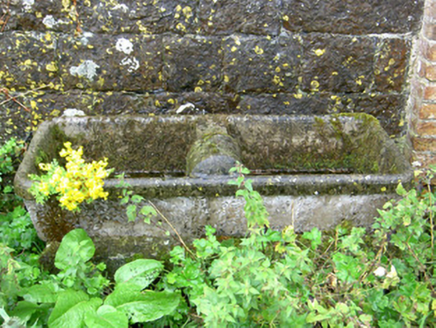
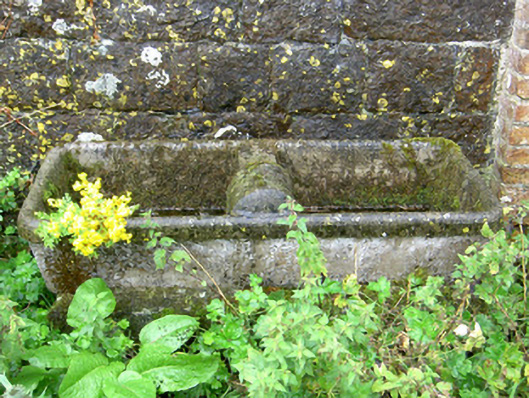
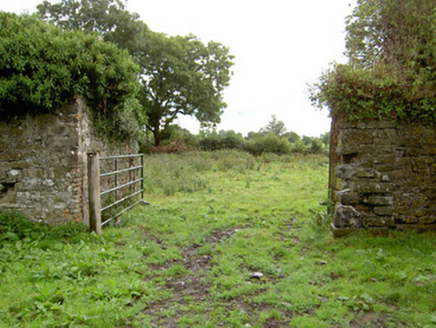
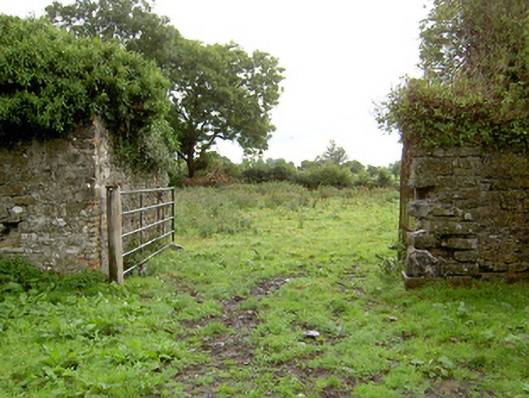
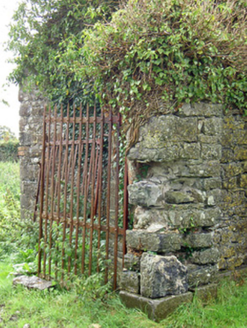
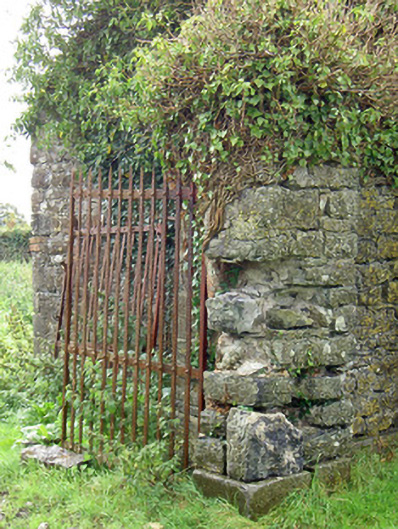
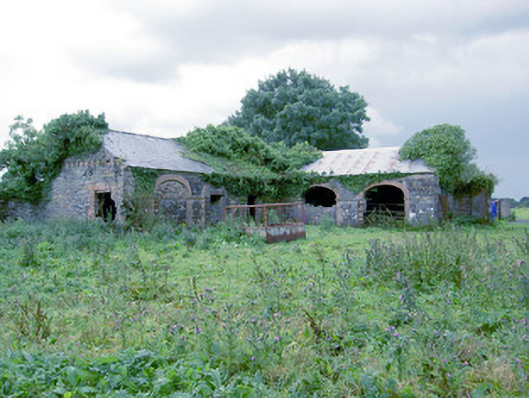
Complex of single-storey outbuildings located to the northeast of Tennalick House (13402348), built c. 1770 or c. 1820, comprising a multiple-bay single-storey outbuilding on L-shaped plan to the south and a two-bay single-storey shed to the north. Altered c. 1840. Now out of use and derelict. Pitched natural slate and corrugated-metal roofs with red brick eaves courses. Roughly dressed coursed limestone walls with redbrick string courses at arch impost level. Segmental-headed carriage arch openings with redbrick voussoirs and brick block-and-start surrounds; some openings now infilled with coursed dressed limestone having square-headed door openings with remains of timber battened doors. Carved limestone water trough adjacent to south range. Gateway to the west having roughly dressed limestone rubble gate piers (on square-plan) having cut stone plinth and wrought-iron flat bar gate. Rubble stone and brick boundary walls to site. Set well back from road to the northeast of Ballymahon and to the west of Abbeyshrule.
Appraisal
This small-scale but interesting and well-detailed complex of outbuildings retains much of its early form and character. The contrast between the roughly dressed, almost rock-faced, limestone masonry and the red brick dressings to the openings and the red brick detailing creates an appealing textural and tonal appearance. These outbuildings are located to the northeast of Tennalick House (13402348) and may have been built to serve this house. However, the house went out of use by c. 1793 and the appearance of these outbuildings (particularly the red brick dressings) gives these buildings an early nineteenth-century architectural character. They may have been built c. 1820 by the McCann family (a notable milling family who also owned mills in Drogheda) who owned Tennalick Mills (LF023-123002-) to the south and used part of Tennalick House as stabling for dray horses, which they employed for pulling barges along the nearby Royal Canal. It is quite possible that these outbuildings were built and used for the same purpose. The well-carved limestone drinking trough, and the gateway to site, completes the setting of this good quality but unassuming composition.