Survey Data
Reg No
13402307
Rating
Regional
Categories of Special Interest
Architectural, Artistic
Original Use
Outbuilding
In Use As
Outbuilding
Date
1830 - 1850
Coordinates
222731, 263991
Date Recorded
01/09/2005
Date Updated
--/--/--
Description
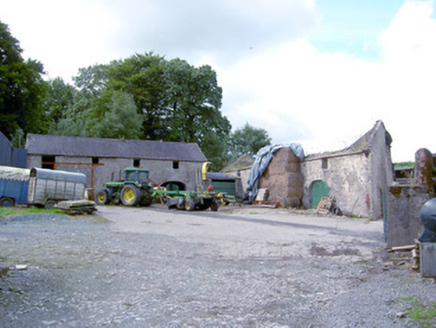
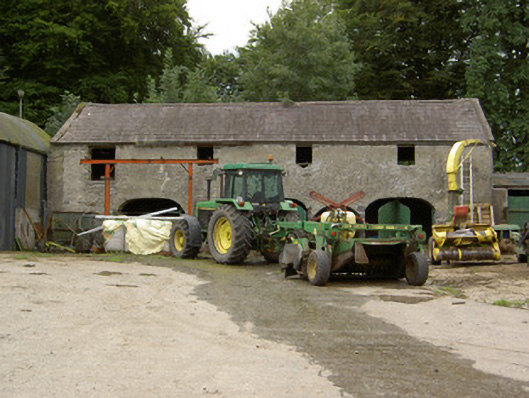
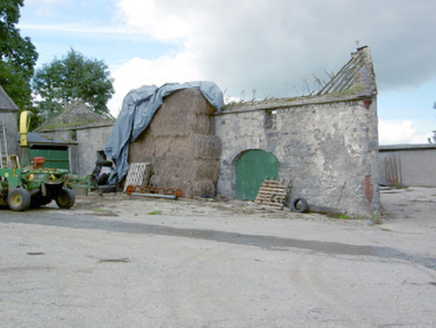
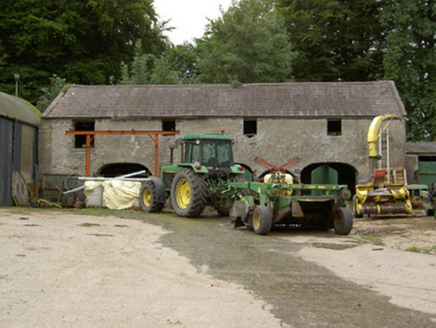
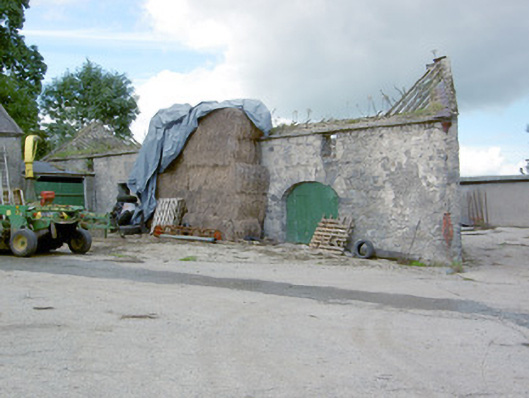
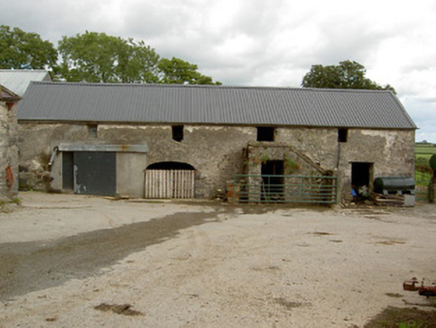
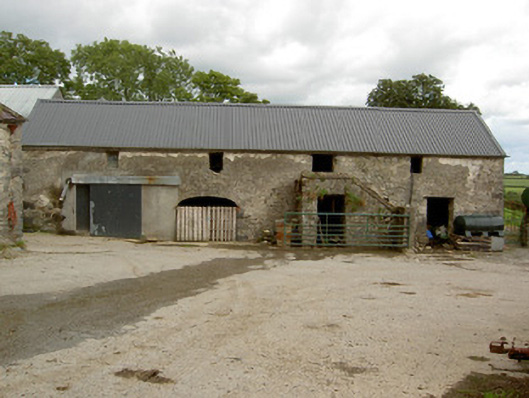
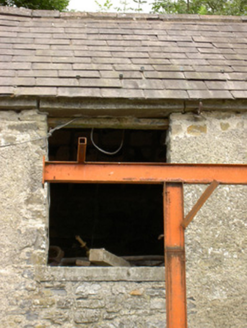
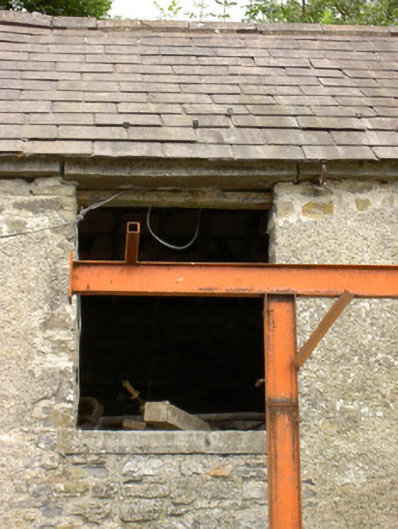
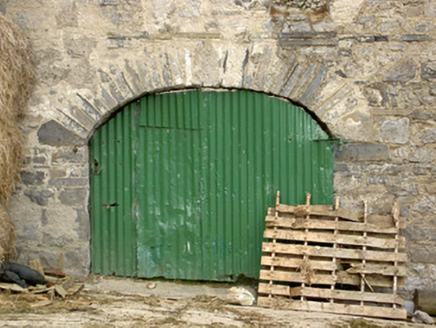
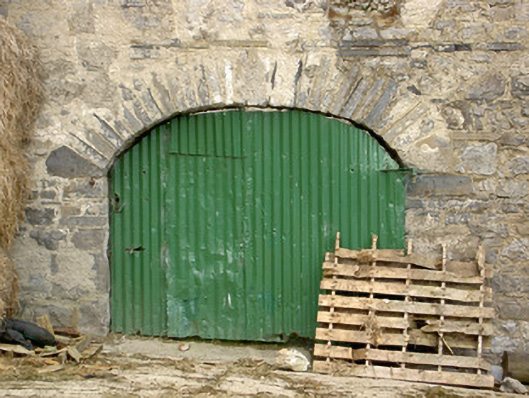
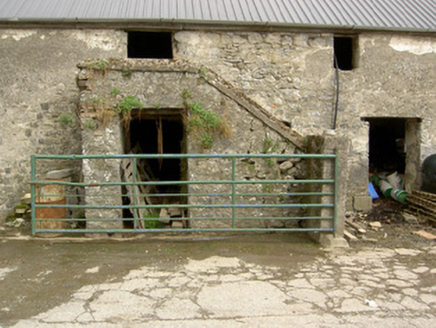
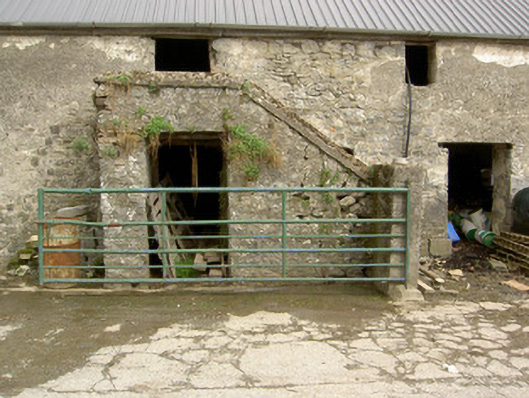
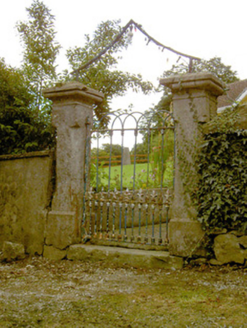
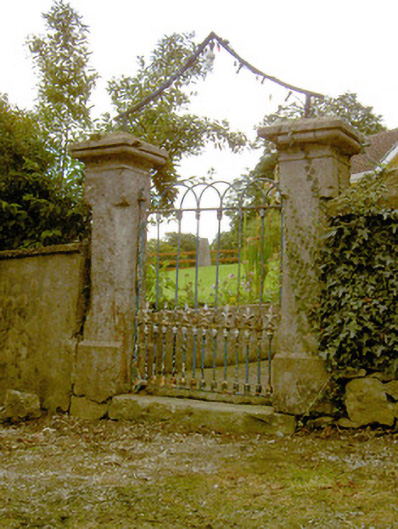
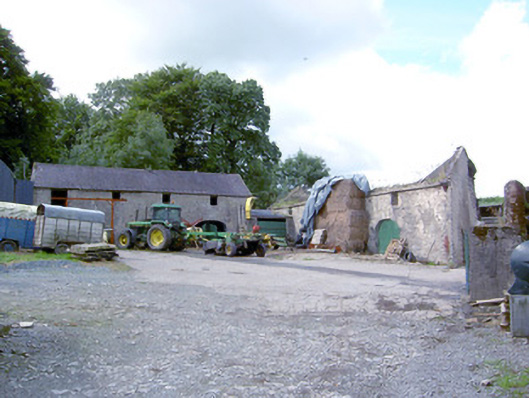
Complex of three multiple-bay two-storey outbuildings arranged around a yard to the rear (northwest) of the site of Tully House (demolished), built c. 1840. Single-bay single-storey shed attached to the northwest gable end of outbuilding to the northwest having lean-to corrugated-metal roof. Flight of cut stone steps to the main elevation (southwest) of range to the northeast, giving access to first floor level, having rubble stone construction and parapet wall. Pitched natural slate roof to outbuilding to the southwest having raised rendered verges to gable ends; pitched corrugated-metal roof to outbuilding to the northwest; roof of outbuilding to the northeast now collapsed. Cut stone eaves courses to all outbuildings. Roughcast rendered walls over rubble stone construction having flush roughly dressed limestone quoins to the corners (partially exposed to the northeast and northwest ranges). Square-headed window openings with tooled limestone sills; original fittings now removed. Square-headed door openings with roughly dressed limestone lintels; original fittings now removed. Segmental-headed carriage arches to all ranges having roughly dressed limestone voussoirs and voussoirs. Corrugated-metal doors to a number of openings. Modern square-headed carriage arch to the northwest end of front elevation (southwest) of outbuilding to the northeast having sheet metal sliding door. Set back from road in own grounds with modern house (southeast) and outbuildings/farm outbuildings to site. Located to the west of Legan. Concrete and gravel yard to forecourt of outbuildings. Pedestrian gateway to the northeast comprising a pair of cut limestone gate posts (on square-plan) having projecting plinths to base, cut limestone shafts having chamfered edges, moulded limestone caps and having a hooped wrought-iron gate with cast-iron fittings. Rendered rubble stone boundary walls to site.
Appraisal
Although now in a poor condition, these two-storey outbuildings retains much of their early form and character. Much of the early fabric survives including cut stone eaves courses, while the outbuilding to the southwest survive in good condition and retains a natural slate roof. The simple forms and rubble stone construction is indicative of their original functional use. They were built to serve Tully House, now demolished and replaced by a modern house, and their scale provides an interesting historical insight into the extensive resources required to run and maintain a middle-sized landholding in Ireland during the nineteenth century. The exterior steps to the northeast range is an interesting feature allowing direct access to the upper loft. The well-detailed pedestrian gateway to the northeast adds an element of artistic interest to the site. The quality of the carving to the gate posts is indicative of the high quality craftsmanship available at the time of construction. Tully was described in 1835 as the ‘property of the Countess Dowager of Rosse, held in deed forever (O’Donovan Letters). It was leased to a John Millar for 21 years in 1835 (deed) and it is probable that the outbuildings were constructed shortly after this date. Tully was later the home of a George H Miller in 1894 (Slater’s Directory). This complex of outbuildings is a modest addition to the built heritage of the Legan area, and adds interest to its pleasant rural location.