Survey Data
Reg No
13402304
Rating
Regional
Categories of Special Interest
Architectural
Original Use
House
In Use As
House
Date
1700 - 1750
Coordinates
220195, 264298
Date Recorded
29/08/2005
Date Updated
--/--/--
Description
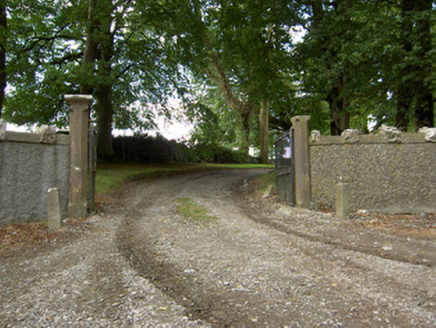
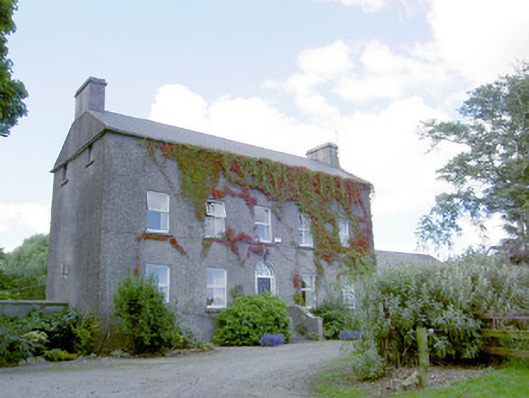
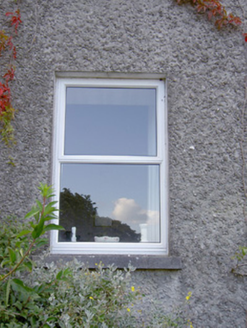
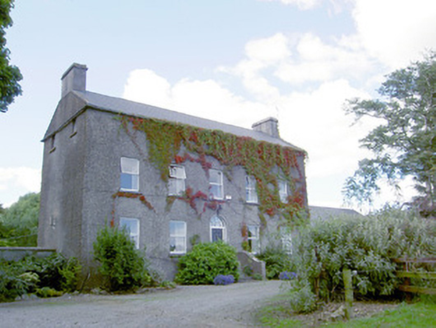
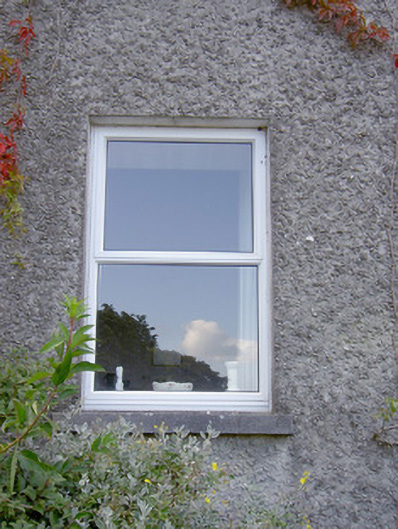
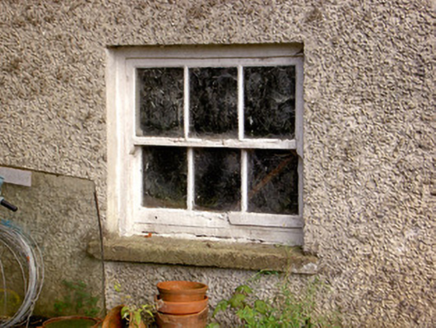
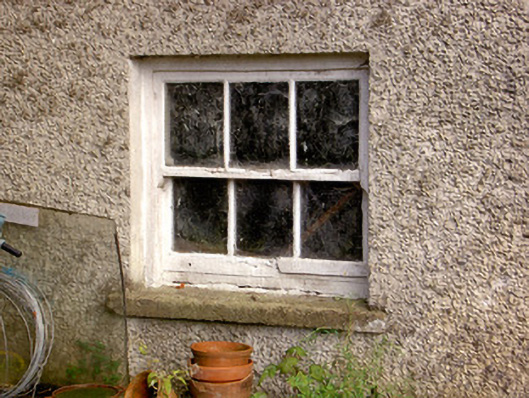
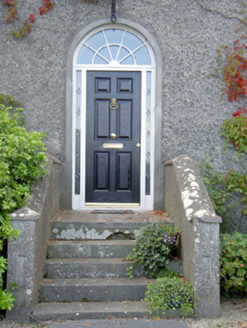
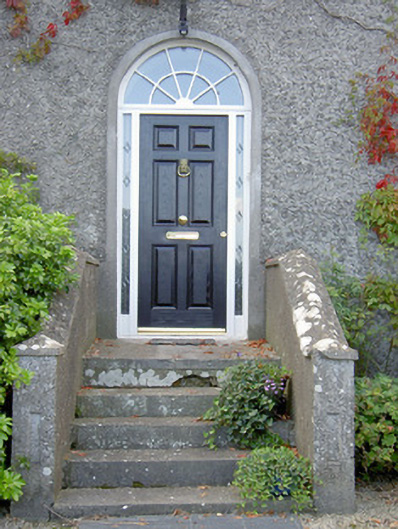
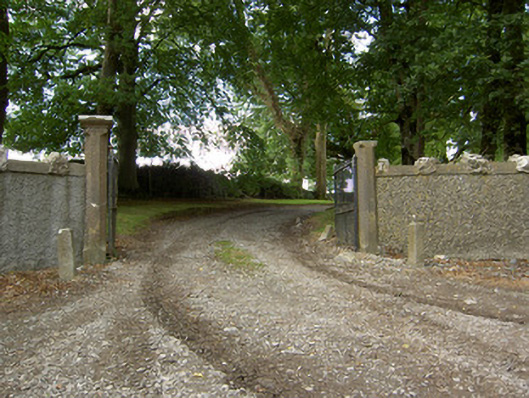
Detached five-bay two-storey house over raised basement and with attic level, built c. 1720, formerly on T-shaped plan having single-bay three-storey single-bay return to the centre of the rear elevation (northwest). Single-bay two-storey block with water tank over attached to the southwest side of rear return; single- and two-storey blocks attached to the northeast side of rear return. Pitched slate roof with cut stone eaves course and with dressed ashlar limestone chimneystacks and raised cut stone verges to gable ends (southwest and northeast). Cast-iron rainwater goods, rooflights to rear pitch (northwest) of roof. Roughcast rendered or pebbledashed walls. Square-headed window openings with replacement windows, some three-over-three pane timber sliding sash windows remain to rear at basement level, all having limestone sills. Central round-headed door opening to main elevation (southeast) with replacement door, and replacement door and sidelights. Doorway accessed by flight of cut stone steps flanked by rendered walls. Set back from road in extensive mature landscaped grounds to the northeast of Barry and to the south of Ardagh. Single-storey outbuildings to rear (northwest). Main entrance gateway to the south comprising a pair of moulded cut stone gate posts having chamfered edges and moulded capstones. Cut stone wheel guards to outer face of gate posts. Gateway flanked by sections of rendered boundary wall. Remains of motte and bailey (LF023-019----) located in grounds just to the northeast of house.
Appraisal
This interesting, robust and substantial house retains much of its early form and character. The recent loss of the original fittings to the openings fails to detract substantially from its visual expression. The narrow plan with central return to rear (possibly a stair return), and the pitched roof with end chimneystacks suggest that this building is of considerable antiquity, perhaps dating to the first half of the eighteenth century. The unusual proportions to the front elevation are primarily due to the large space between the top of the first floor window openings and the eaves. This suggests that this building formerly had a steeper pitched roof that was subsequently changed to the present profile, or that it possibly originally had a second floor. According to local information, this building was thatched until the late-nineteenth century when the roof was rebuilt. However, it would be highly unusual to have at thatched roof on a building of this type and scale. The well-crafted gate posts to the south add considerably to the setting of this notable composition, which is an integral element of the built heritage of the local area. Richmount was the home of the Richardson family from the middle of the eighteenth century. It was the residence of James Richardson c. 1780 (died 1785/6). A Mr. Achmuty/Auchmuty Richardson of Richmount served as high sheriff of County Longford in 1811. The Richardson family also owned Richfort House, now demolished (gateway remains 13401904) to the northwest of Ardagh during the eighteenth century up until the mid-nineteenth century. Richmount later passed into the ownership Moffet family (probably through marriage with Richardson family) of nearby Park Place (house demolished). It was later the residence of a Dr. Huggins M.D. (died 1847), a relative of the Moffet family, who apparently served as an army doctor at the Battle of Waterloo in 1815. It was the residence of a Revd. Arthur Irwin Huggins c. 1860 (Griffiths Valuation) and later of a Revd. Arthur William Irwin, who inherited the property through the Moffet family.