Survey Data
Reg No
13402213
Rating
Regional
Categories of Special Interest
Architectural, Artistic
Original Use
House
Date
1770 - 1810
Coordinates
213985, 260718
Date Recorded
18/08/2005
Date Updated
--/--/--
Description
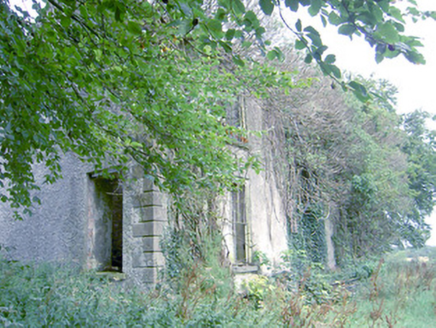
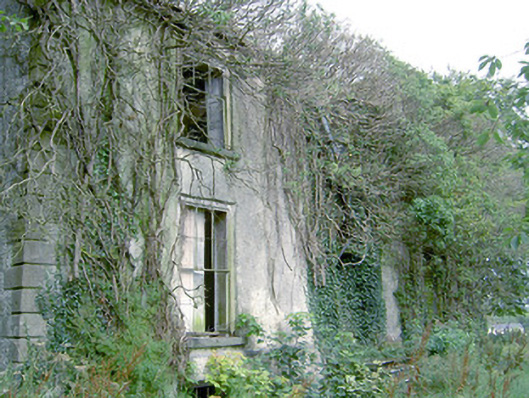
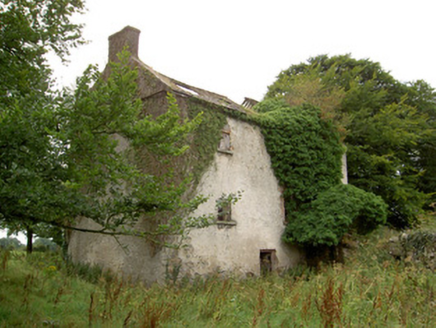
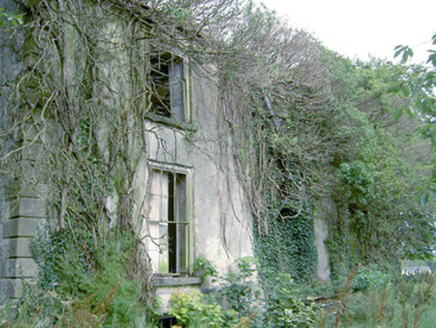
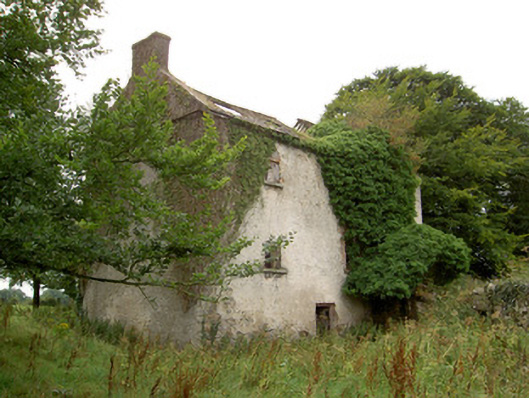
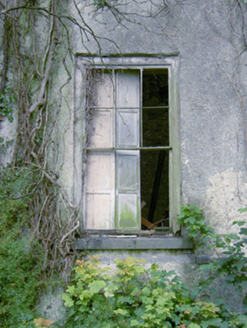
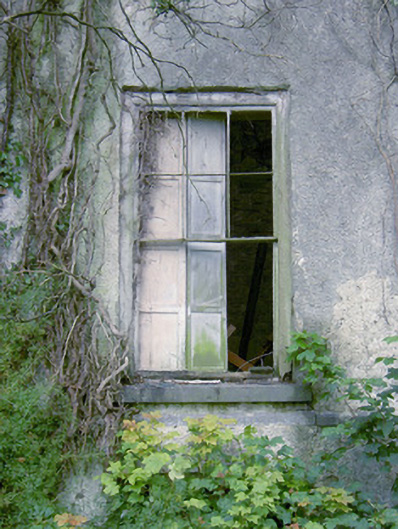
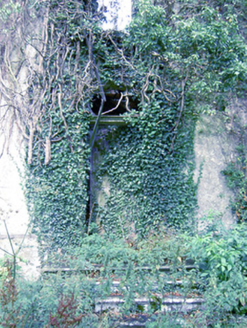
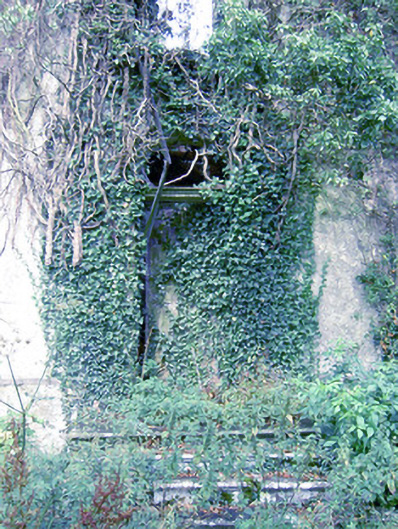
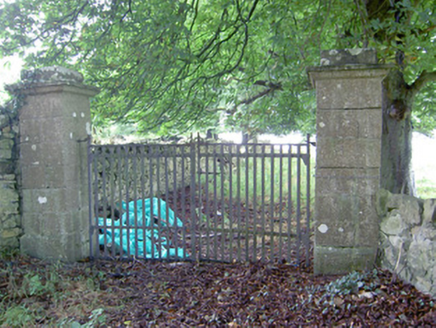
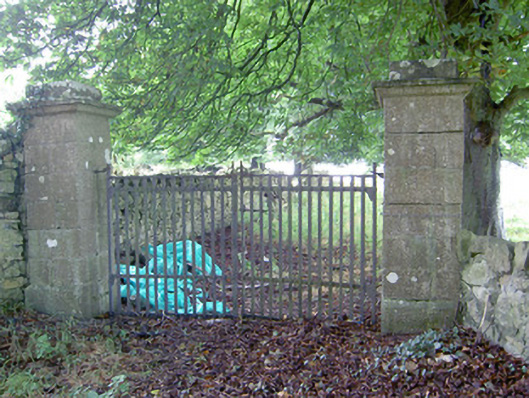
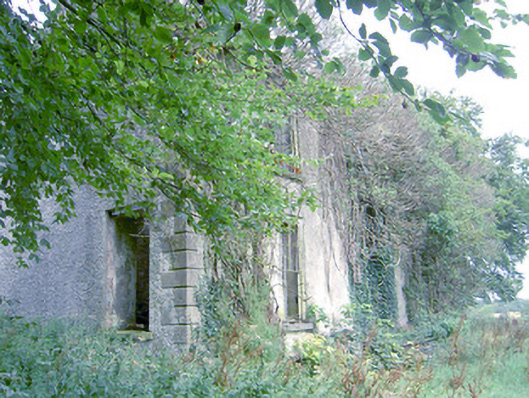
Detached three-bay two-storey over basement house, built c. 1790. Now in ruin. Pitched natural slate roof, now partially collapsed, having cut stone eaves course, cast-iron rainwater goods and rendered chimneystacks to gable ends (southwest and northeast). Raised cut stone verges to gable ends. Roughcast rendered walls with chamfered dressed limestone block-and-start quoins to the corners of the front facade. Render failing to rear exposing rubble stone construction. Chamfered dressed limestone string course to front elevation, located above basement level. Square-headed window openings with tooled limestone sills and remains of six-over-six pane timber sliding sash windows with sash boxes set flush with facades. Central round-headed door opening to front elevation having tooled limestone surround with moulded limestone lintel and remains of timber panelled door. Fanlight formerly over doorway, now removed. Doorway accessed by a flight of moulded cut limestone steps. Set back from road in own grounds to the west of Barry. Main entrance gate to the southwest of house comprising a pair of dressed ashlar limestone gate piers (on square-plan) having chamfered plinths, moulded capstones and wrought-iron flat-bar gates. Rubble limestone boundary walls to road-frontage (west) and to site.
Appraisal
Although now derelict and out of use, this good-quality two-storey house retains its early form and character. It is well-proportioned and the fine cut stone doorcase provides a central focus and elevates the otherwise plain front façade. The dressed limestone quoins to the corners of the front elevation and the flight of moulded cut stone steps serving the entrance also help to elevate this building above many of its contemporaries in the area. This building is an example of the language of classical architecture stripped to its barest fundamental elements, which creates a fine dwelling in a subtle style. This is exhibited through features such as the rigid symmetry to the main elevation, the central round-headed doorway, the diminishing window openings and centrally placed chimneystacks. The sash windows to the front elevation are set against the front façade, which suggests that this building is quite early in date. The largely blank rear elevation with small window openings would also suggest a relatively early date. The fine ashlar limestone gate piers to the southwest add considerably to the setting. The simple wrought-iron gates and rubble stone boundary walls complete this appealing composition. Sensitively restored, this would be an important element of the built heritage of County Longford. This house was described as ‘the property of Lady Rosse, held by deed for ever’, and ‘has offices and an orchard attached to it’, c. 1835 (O’Donovan Letters).