Survey Data
Reg No
13402104
Rating
Regional
Categories of Special Interest
Architectural
Original Use
Outbuilding
In Use As
Outbuilding
Date
1860 - 1880
Coordinates
203241, 263407
Date Recorded
04/08/2005
Date Updated
--/--/--
Description
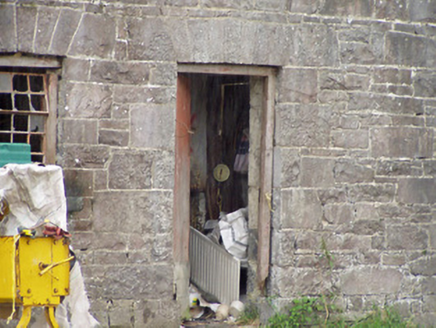
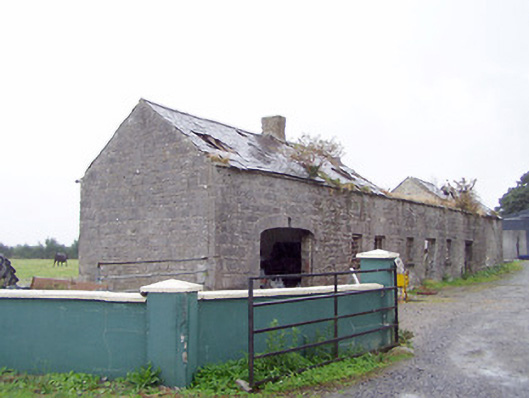
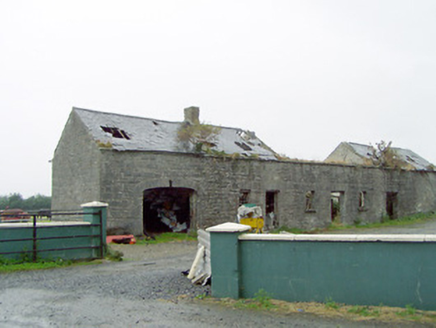
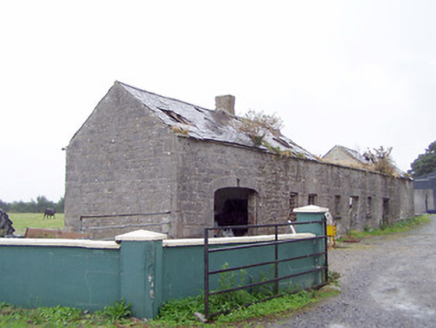
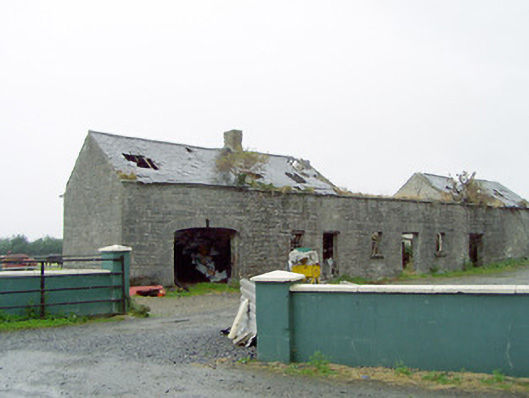
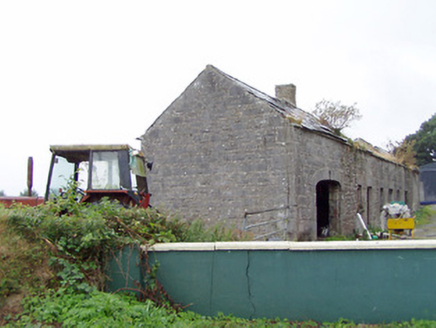
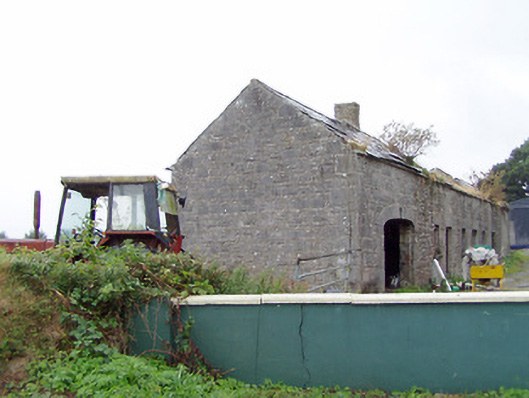
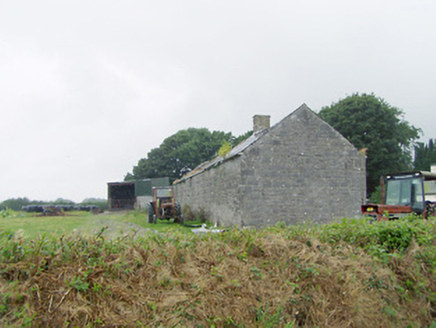
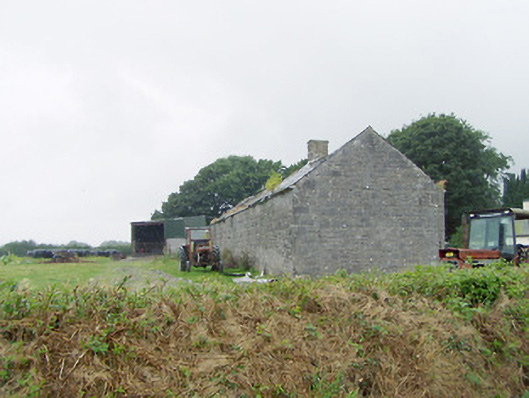
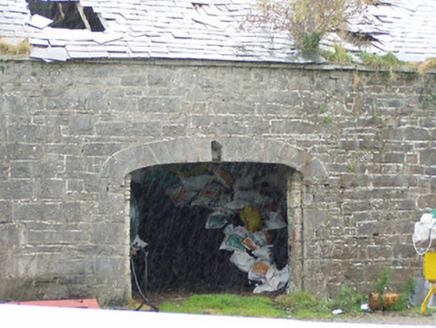
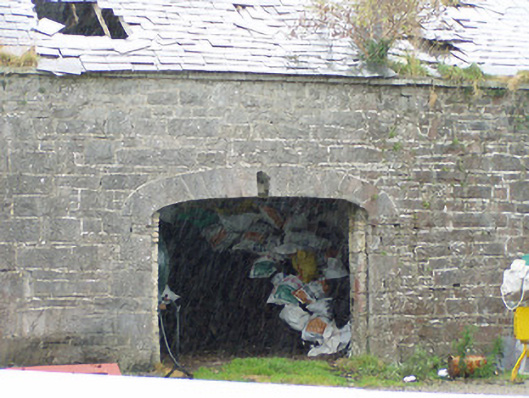
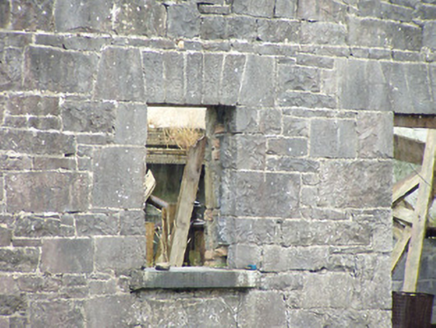
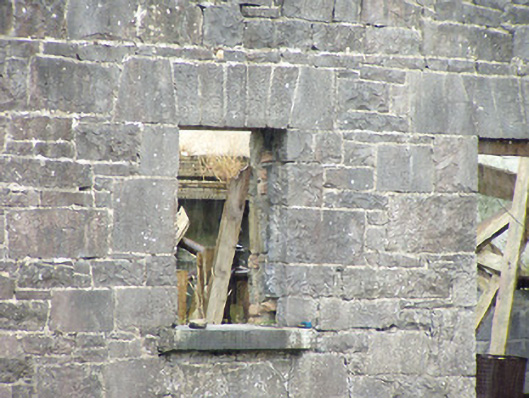
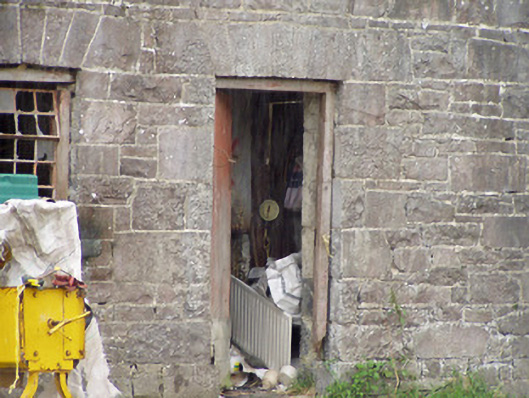
Detached seven-bay single-storey outbuilding associated with Cordara House (now demolished), built c. 1870. Pitched natural slate roof, now partially collapsed, having projecting cut stone eaves course. Yellow brick chimneystack offset to the east side of centre. Roughly dressed snecked limestone masonry walls. Square-headed window openings with cut limestone voussoirs, tooled limestone sills, and remains of metal lattice window fittings. Square-headed door openings with cut limestone voussoirs and timber battened doors. Elliptical-headed carriage arch to the east end of main elevation (north) having cut limestone voussoirs. Set slightly back from road, to the southeast of Lanesborough. Gable end fronts onto road to the east. Rendered boundary walls and rendered gate piers (on square-plan) to road-frontage. Located to the south of the site of Cordara House, now demolished. Gateway formerly serving house to the north.
Appraisal
Although now derelict, this well-constructed outbuilding, of mid-to-late nineteenth-century date, retains its early form and character. This outbuilding is unusual as it is constructed wholly with high quality roughly dressed limestone masonry and has finely cut limestone surrounds to the window and door openings. The building retains some interesting features and materials such as the natural slate roof, brick chimneystack and metal lattice window fittings which enhance the structure. The building serves as a reminder of the high quality of nineteenth century craftsmanship, and also acts as an historical reminder of Cordara House, now demolished. This building is a pleasant feature in the rural landscape to the southeast of Lanesborough, adding historic incident to its pleasant rural location. Cordara House was the home of the Fox family throughout the nineteenth century. It was the residence of a Captain (later Major) Luke Loftus (Bushe) Fox, from c. 1850 to c. 1885. Luke Fox served in the Longford Militia and was a Justice of the Peace for County Longford. He also served as a High Sheriff of the county in 1865. It was later the home of an L. K. Bushe-Fox (B. L.) in 1894 (Slater’s Directory).