Survey Data
Reg No
13402010
Rating
Regional
Categories of Special Interest
Architectural
Original Use
House
Date
1780 - 1820
Coordinates
227119, 267692
Date Recorded
12/08/2005
Date Updated
--/--/--
Description
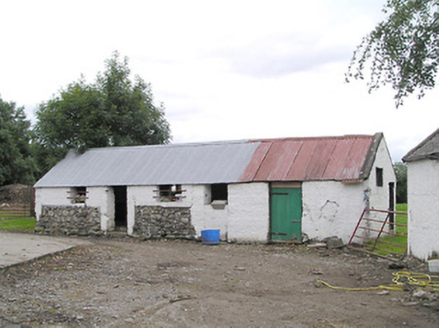
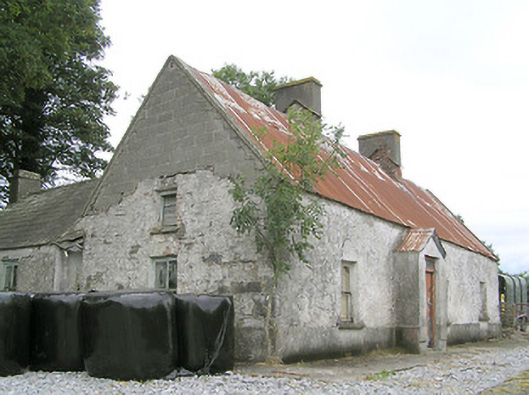
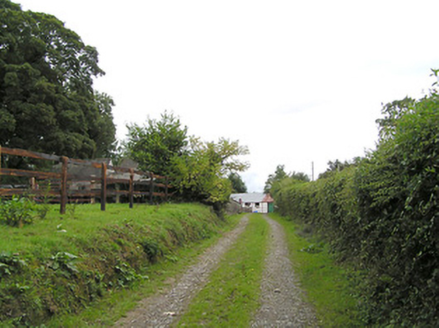
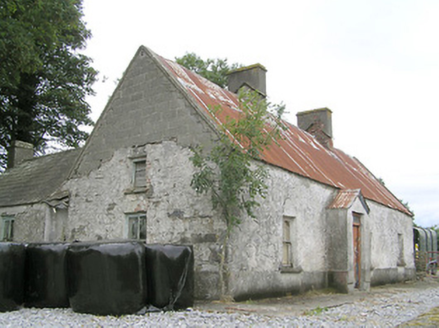
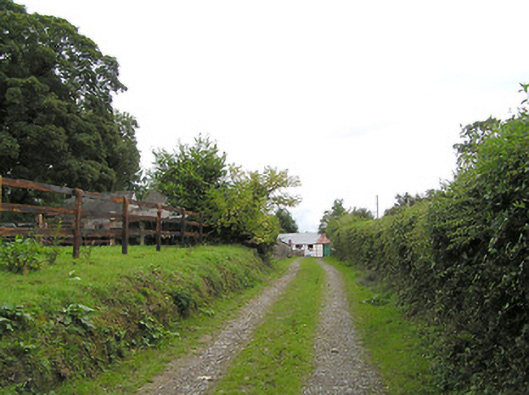
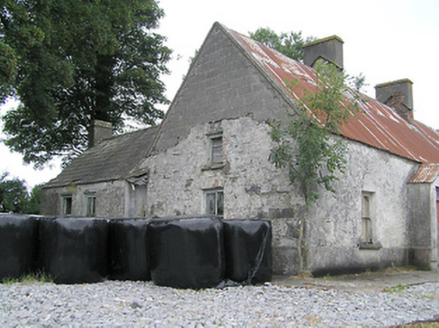
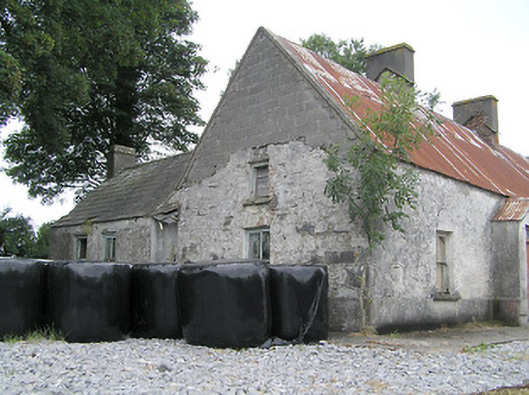
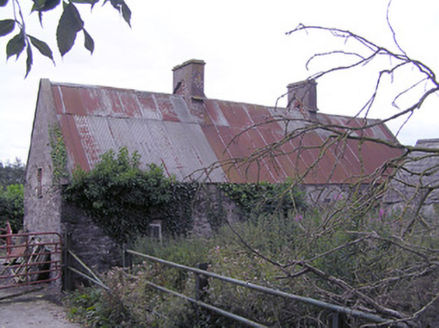
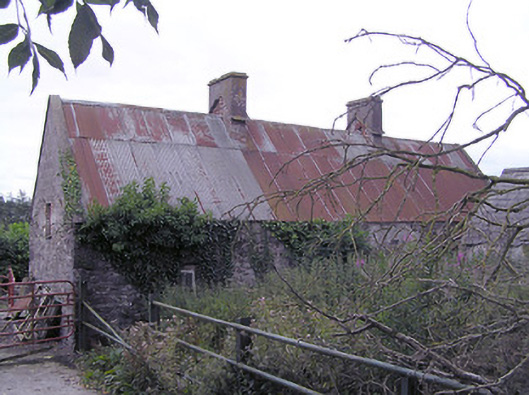
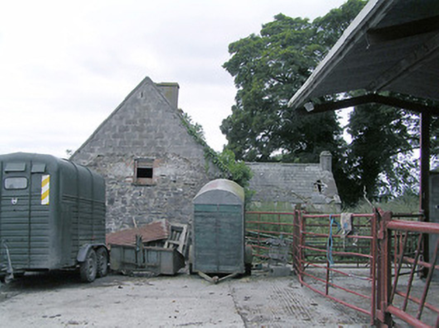
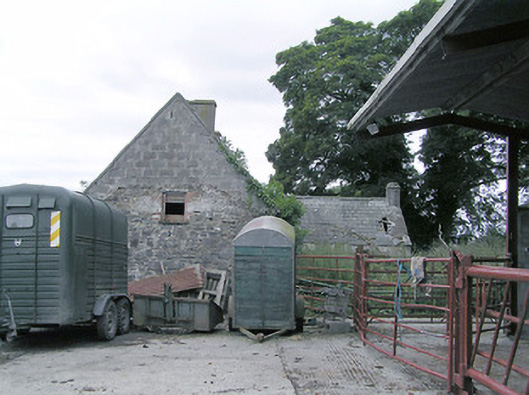
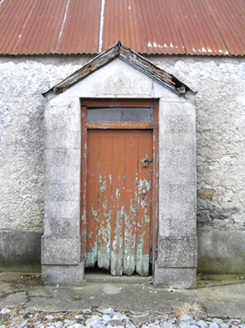
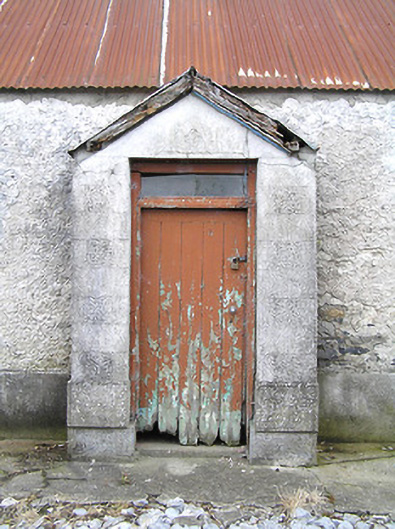
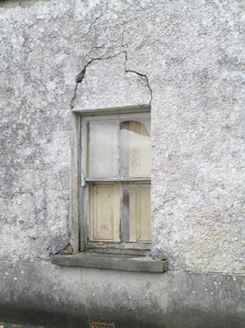
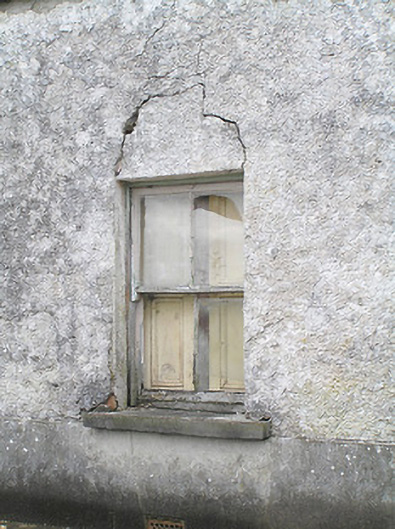
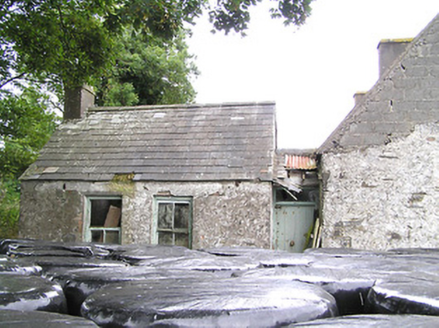
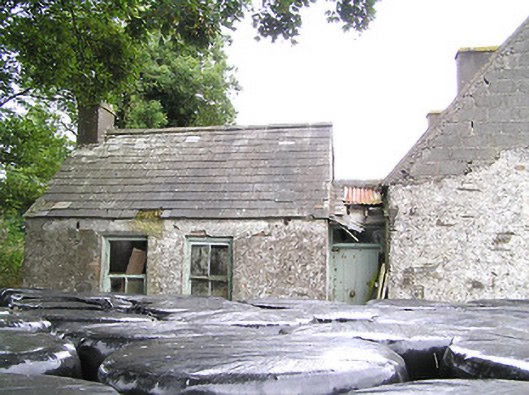
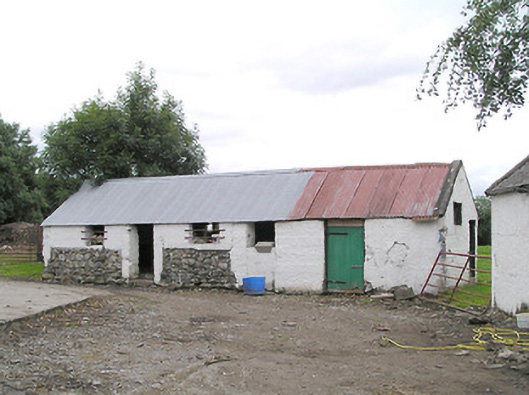
Detached four-bay single-storey house with attic level, built c. 1800, with windbreak porch (c. 1900) with pitched corrugated-metal roof to the front (east) elevation, and with single-storey extension to rear (west) with pitched slate roof. Now out of use. Pitched corrugated-metal roof with two rendered red brick chimneystacks and with raised rendered verges to gable ends (north and south). Rendered walls over rubble stone construction, smooth rendered plinth course. Lined-and-ruled finish to windbreak porch. Some reconstruction in modern blockwork to gable apex to south elevation. Square-headed window openings with remains of two-over-two pane timber sliding sash windows and having stone sills. Square-headed doorway to front face of porch (east) with timber battened door having plain overlight. Set back from road in own grounds, with laneway to house from the south. Located to the southeast of Edgeworthstown. Rendered garden wall to front. Multiple-bay single-storey outbuildings to yard having pitched corrugated-metal roofs, painted rendered walls and square-headed openings with timber fittings.
Appraisal
Although now out of use and in a deteriorating condition, this interesting vernacular house retains much of its early character and form. The small irregularly-spaced openings, simple materials, and the positioning of outbuildings to the front of this house are indicative of its vernacular origins. The simple form makes a pleasing silhouette against the skyline. The steep pitch of the corrugated-metal roof suggests that this building was formerly thatched. The junction of the extension with the main body of the house indicates that the roof also suggests that this building was formerly thatched. The position of one of the chimneystacks, which is roughly in line with the main entrance, hints that this building has the lobby-entry plan that is characteristic of the vernacular dwellings of the midlands of Ireland. This building is the only survival from a nucleated settlement at Cornapark, which is indicated on an 1838 map of the area (Ordnance Survey first edition six-inch map) but was cleared/demolished by 1914 (Ordnance Survey third edition six-inch map. This simple dwelling is a modest element of the vernacular heritage of County Longford and, sensitively restored, would be an integral element of the county. Cornapark was described c. 1835 as ‘Bishop Land, held under a lease of 21 years by Sir George Featherstone, Bart (Of Ardagh House)…. The inhabitants are comfortable, and the houses in neat repair’ (O’Donovan Letters).