Survey Data
Reg No
13401706
Rating
Regional
Categories of Special Interest
Architectural, Artistic, Social
Original Use
Rectory/glebe/vicarage/curate's house
In Use As
House
Date
1850 - 1870
Coordinates
200120, 265957
Date Recorded
15/08/2005
Date Updated
--/--/--
Description
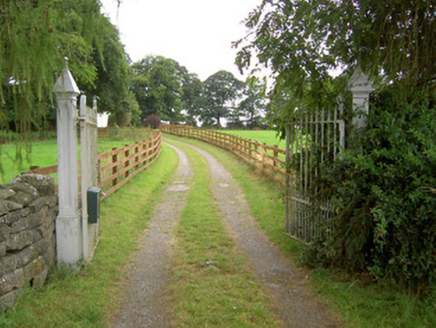
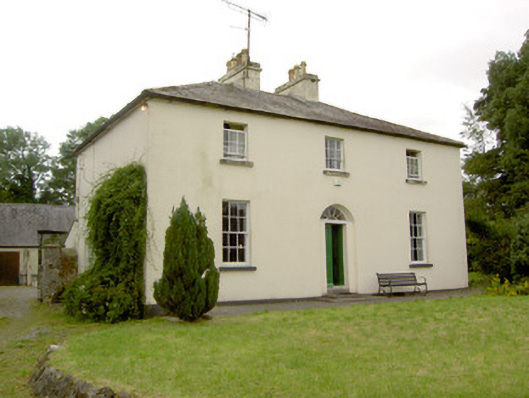
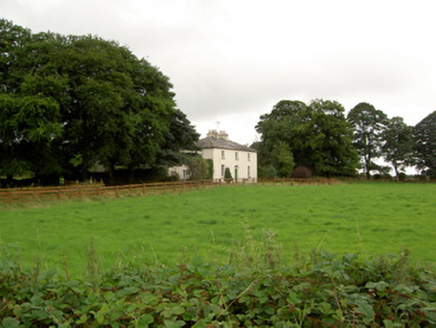
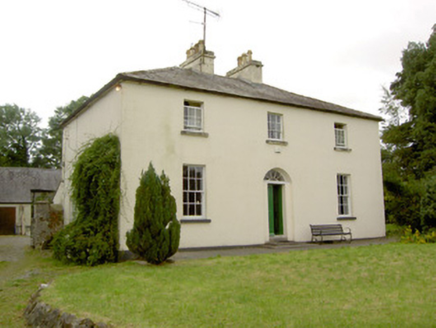
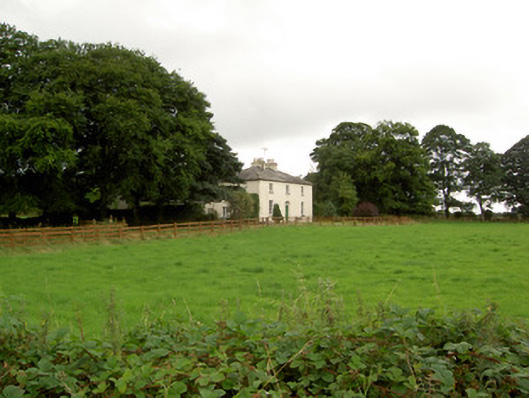
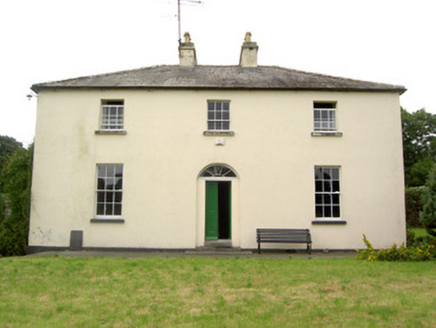
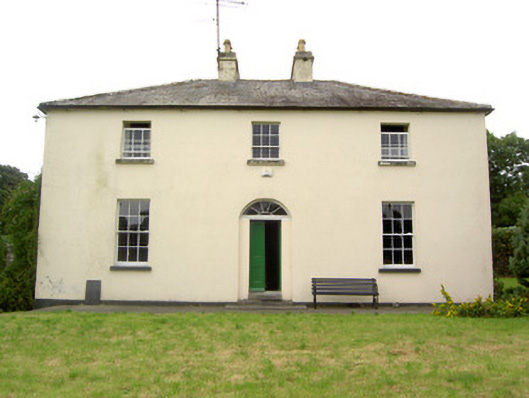
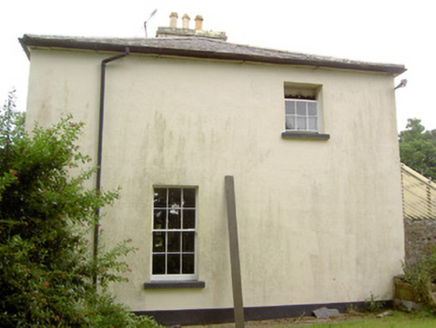
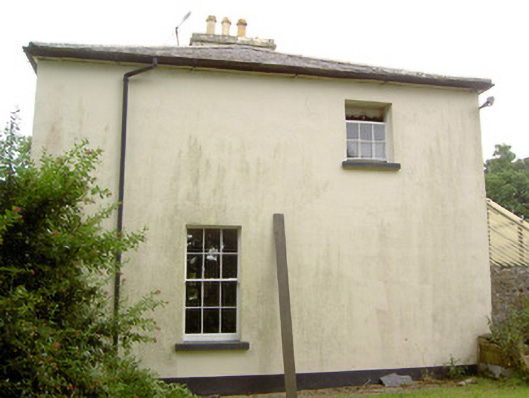
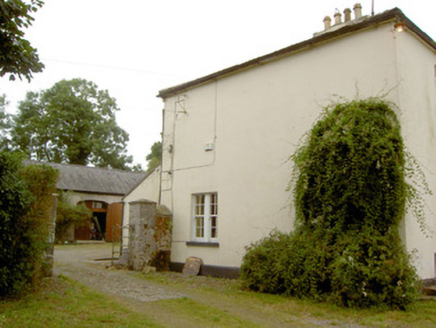
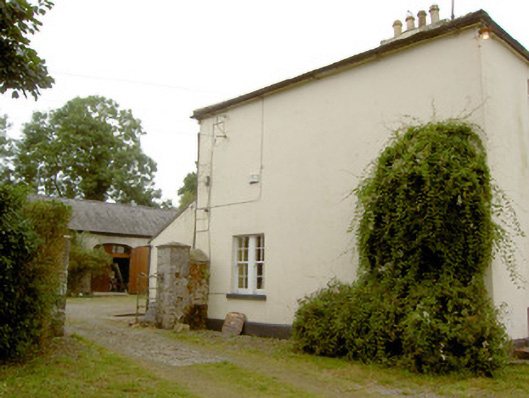
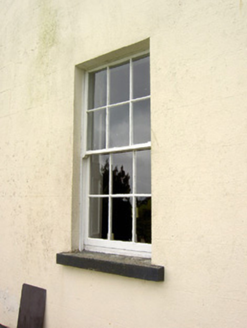
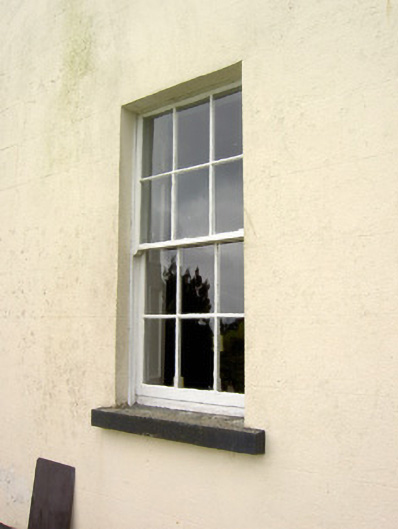
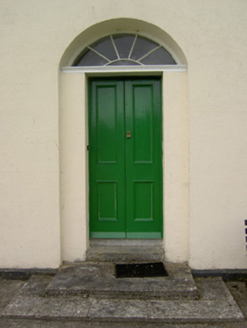
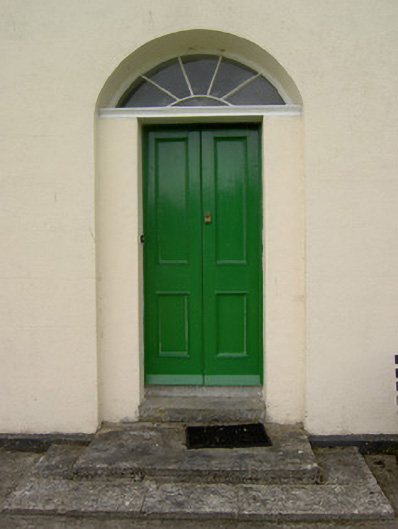
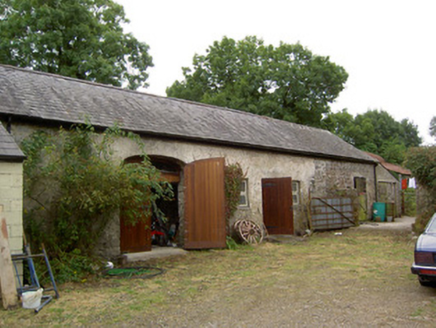
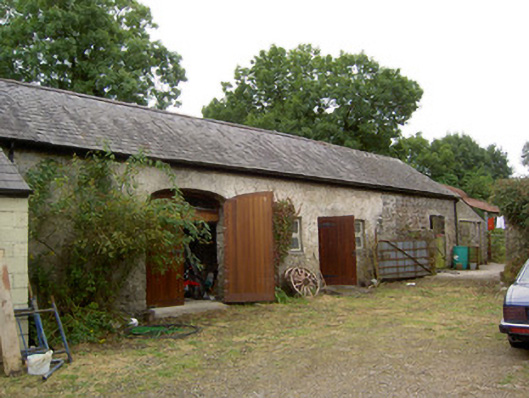
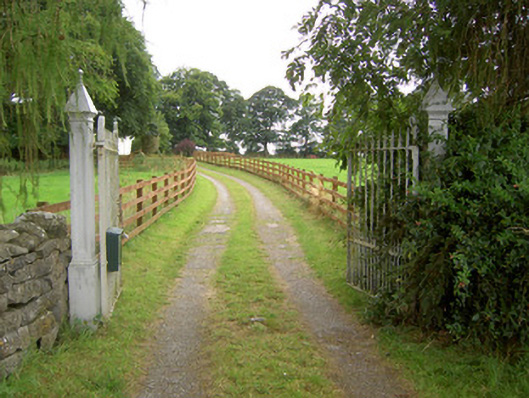
Detached three-bay two-storey former Church of Ireland rectory, built c. 1860, having multiple-bay single-storey lean-to extension to rear (southeast). Now in use as private house. Hipped natural slate roof with a central pair of rendered central chimneystacks having terracotta chimney pots, and with cast-iron rainwater goods. Lined-and-ruled rendered walls projecting rendered plinth course (elevation). Square-headed window openings with tooled cut limestone sills and diminishing timber sliding sash windows, six-over-three pane to first floor, six-over-six pane to ground floor. Timber window shutters visible to interior. Central round-headed doorway to main elevation (northwest) having recessed doorway with double leaf timber panelled door and with moulded lintel and spoked fanlight over. Cut stone steps to doorway. Detached multiple-bay single-storey outbuilding to rear (southeast) having pitched natural slate roof, roughcast rendered random rubble limestone walls (exposed to southwest end of main elevation, northwest), square-headed window and door openings with replacement fittings, and segmental-headed carriage arch with replacement timber double-doors. Entrance to yard from the southeast side of house through gateway comprising a pair of dressed limestone gate piers (on square-plan) having wrought-iron gates. Set back from road in extensive mature grounds to the south of Lanesborough, and to the east of ruinous church and graveyard (13401705). Associated church, St. John’s Church of Ireland Church, to the north at Lanesborough (13310007). Main entrance gates to the north comprising a pair of decorative cast-iron gate posts with pyramidal heads and cast-iron double-gates. Rubble stone boundary walls to road-frontage to the north.
Appraisal
This well-proportioned former Church of Ireland rectory retains its early form, character and fabric. This building is an example of the language of classical architecture stripped to its barest fundamental elements, which creates a fine dwelling in a subtle style. The three-bay two-storey form is typical of Church of Ireland rectory buildings (particularly built by the Board of First Fruits), and many middle class gentleman’s residences, dating from the late-eighteenth and early-nineteenth century. However, this building dates to the mid-to-late nineteenth century (Ordnance Survey six-inch sheets 1838 and 1913), and it is unusual to find a mid-to-late nineteenth-century rectory in rural Ireland. The form of the doorway, having recessed panels to either side, suggests that there may have been flanking columns to the doorcase, now removed. It is of social interest to the local area on account of its original intended function as a Church of Ireland rectory. The highly decorative cast-iron gate posts and gates to the north have an ecclesiastical character, and exhibit ornate detailing and fine craftsmanship. This building was probably built to designs by Joseph Welland (1798 – 1860), the architect for the Ecclesiastical Commissioners during the mid-nineteenth century (from 1843 onwards) or, possibly, by William John Welland (1832 – 1995) and William Gillespie, architects to the Ecclesiastical Commissioners following the death of Joseph Welland in 1860. It may have been constructed at the same time as the Church of Ireland church at Lanesborough, St. Johns (13310007), which was built or rebuilt to designs by Joseph Welland between 1858 and 1862. Rathcline Rectory was the residence of a Rev. Thomas Ireland (rector at Lanesborough) in 1881 (Slater’s Directory), and possibly a Rev. William Pollard in 1894 (Slater’s Directory). The simple outbuilding to the rear and the rubble stone boundary wall to the road-frontage complete the setting and add to this notable composition.