Survey Data
Reg No
13401607
Rating
Regional
Categories of Special Interest
Architectural, Artistic
Original Use
Farmyard complex
In Use As
Farmyard complex
Date
1860 - 1900
Coordinates
234175, 274664
Date Recorded
11/08/2005
Date Updated
--/--/--
Description
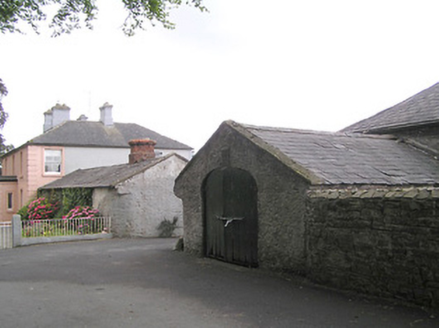
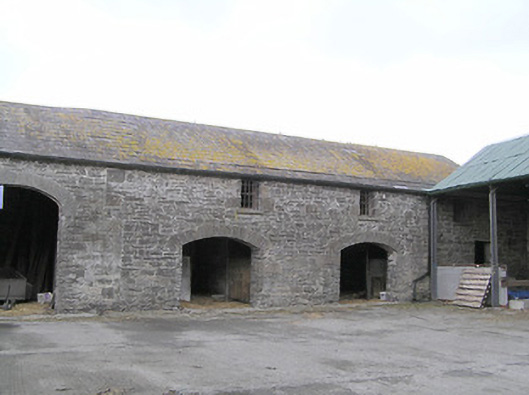
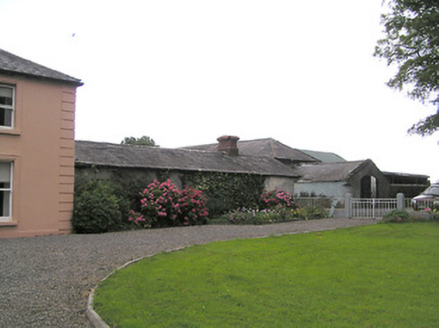
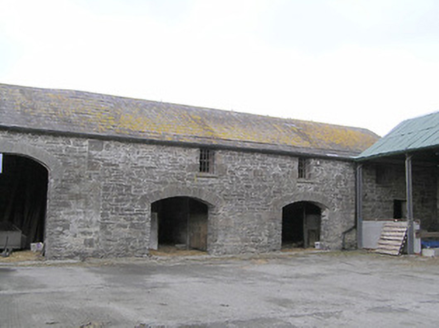
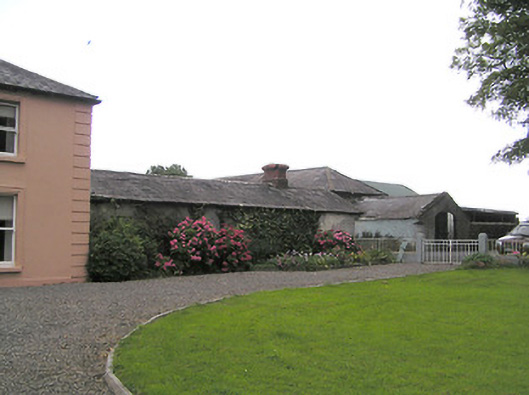
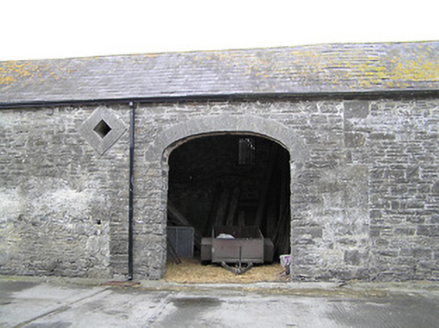
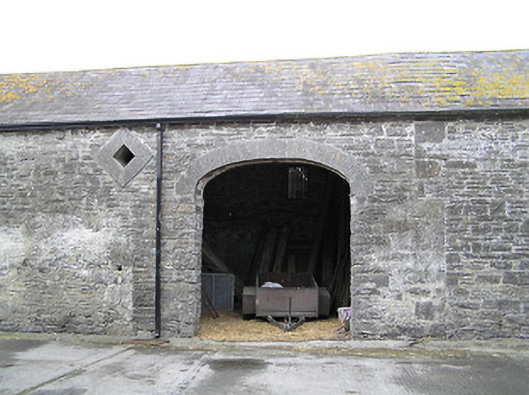
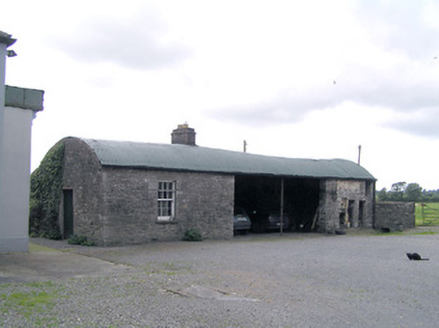
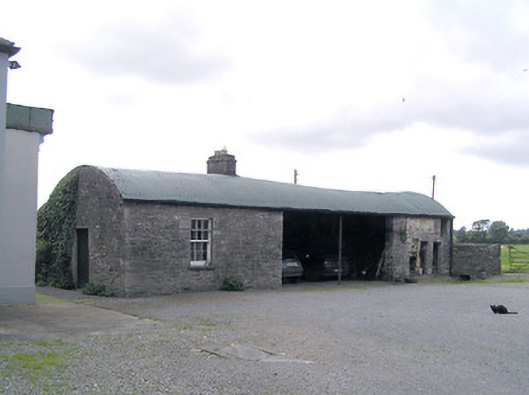
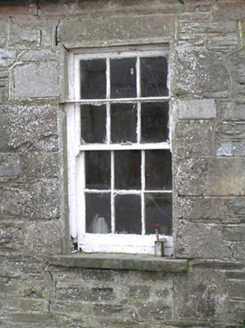
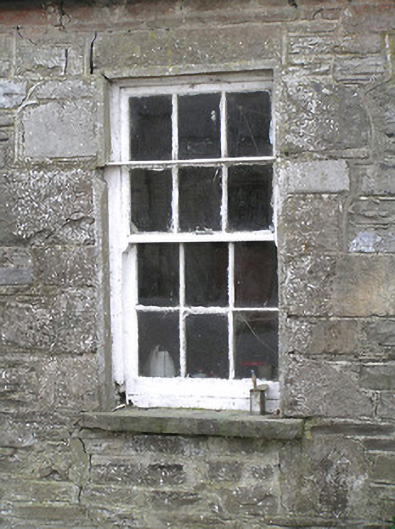
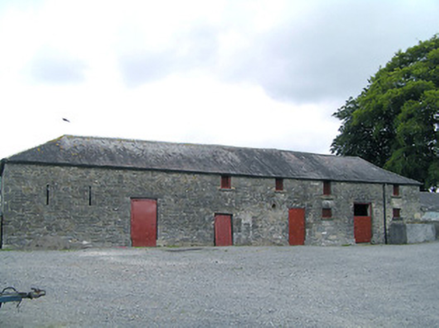
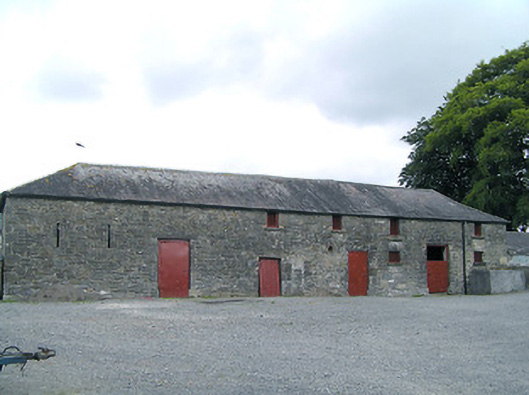
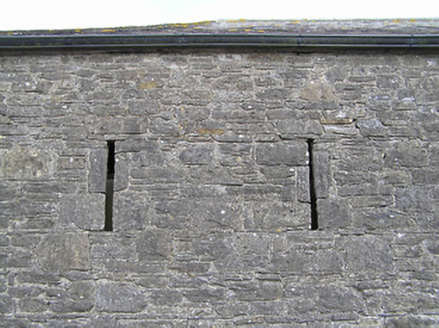
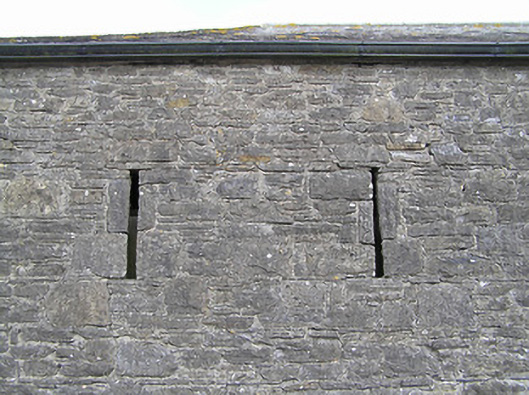
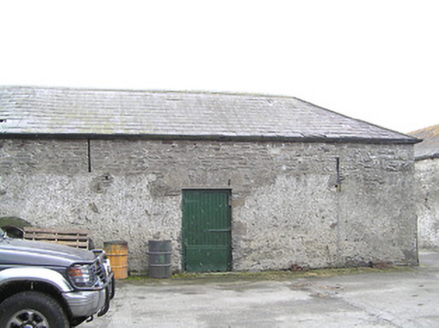
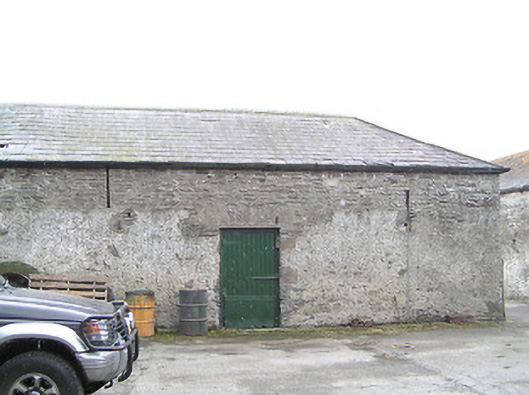
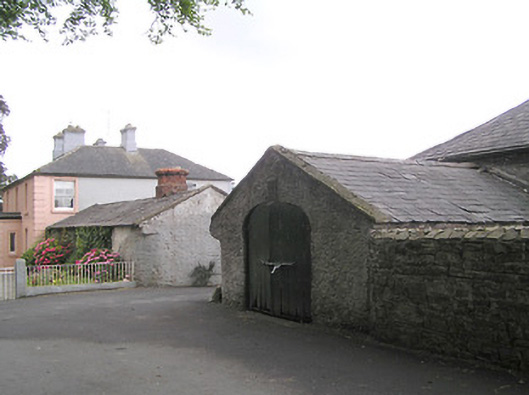
Complex of single- and two-storey outbuildings arranged around a yard to the rear of Moneyhoolaghan House (13401606), built c. 1880. Multiple-bay two-storey range to the west having hipped natural slate roof, rubble limestone walls, square-headed openings with timber fittings, diamond shaped window opening, and elliptical-headed carriage arches with cut limestone voussoirs. Multiple-bay single-storey range to south with corrugated-metal barrel roof, brick chimneystack, rubble limestone walls, and square-headed openings, one with six-over-six pane timber sliding sash window. Multiple-bay single-storey range to east, abutting house, with pitched natural slate roof with red brick chimneystack, painted rendered walls, chamfered corner, and square-headed door openings with timber battened and sheet doors. Multiple-bay two-storey outbuilding to north with hipped natural slate roof, rubble stone walls, slit/loop hole window openings and square-headed openings with timber fittings, and single-bay single-storey gable-fronted outbuilding with pitched slate roof, painted rendered walls, chamfered corner, and elliptical-headed carriage arch to gable with timber battened double doors and render keystone. Set back from road in shared grounds with Moneyhoolaghan House (13401606), and to the northeast of Edgeworthstown.
Appraisal
This substantial complex of single- and two-storey outbuildings associated with Moneyhoolaghan House (13401606) retains its early form and character, and represents one of the best surviving complexes of its type and date in County Longford. The differing shapes and heights, contrasting variety of materials and the varied rooflines and roof types make an interesting architectural composition. The utilitarian functional nature of the complex is evident in the simple forms of the buildings. The well cut voussoirs and large arched openings of the west range contrast pleasingly with the more modest ranges to the east and south. This is an unusually large complex to find associated with a house of such modest size, indicating that this was a prosperous farm at the time of construction. The scale of this complex provides an historical insight into the resources required to run a middle-sized farm/landholding in Ireland during the late-nineteenth century. This complex forms a notable group with Moneyhoolaghan House, and is an integral element of the built heritage of the local area.