Survey Data
Reg No
13401602
Rating
Regional
Categories of Special Interest
Architectural, Artistic, Historical
Original Use
Country house
Date
1750 - 1790
Coordinates
235250, 276402
Date Recorded
11/08/2005
Date Updated
--/--/--
Description
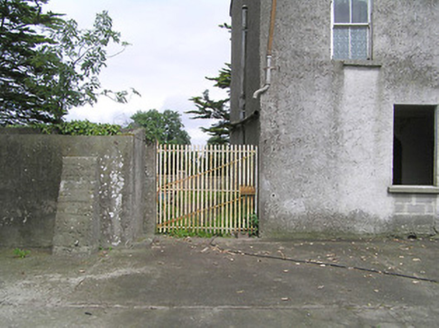
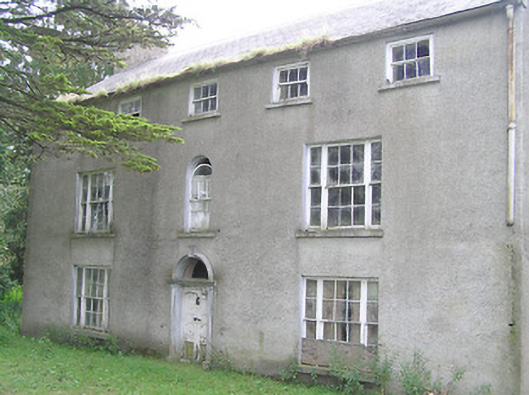
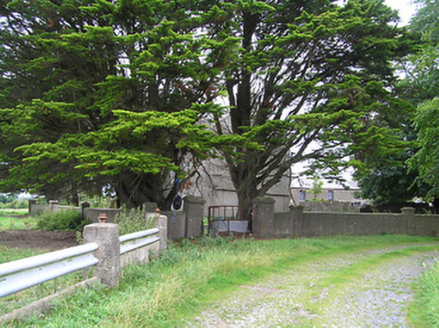
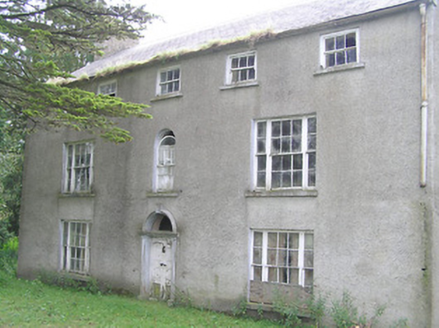
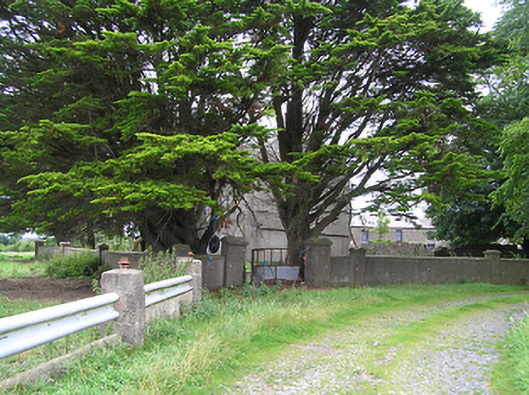
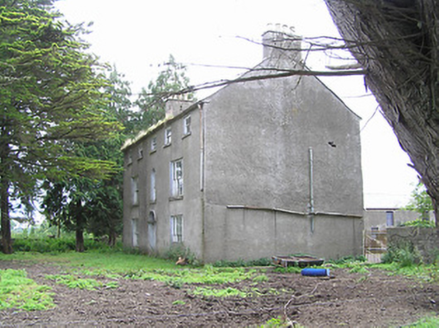
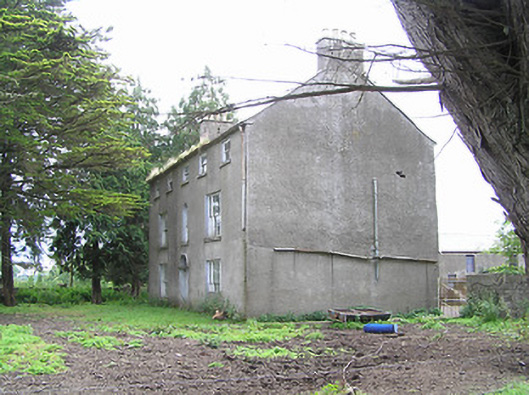
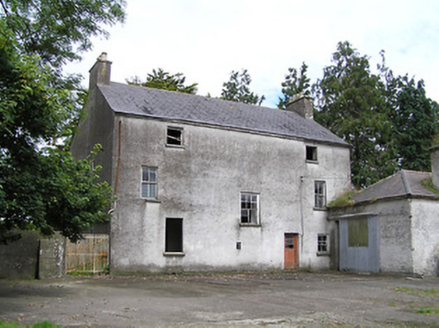
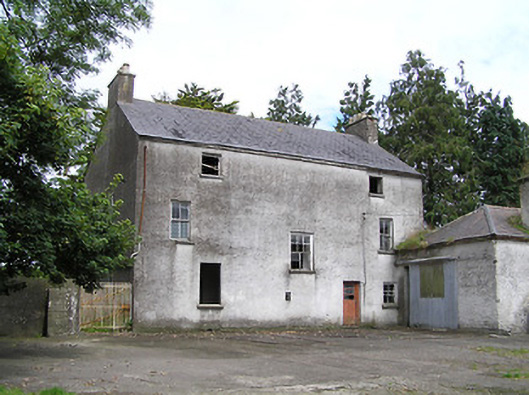
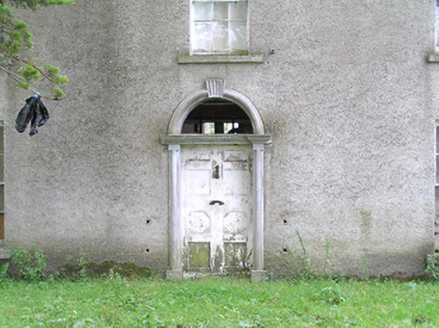
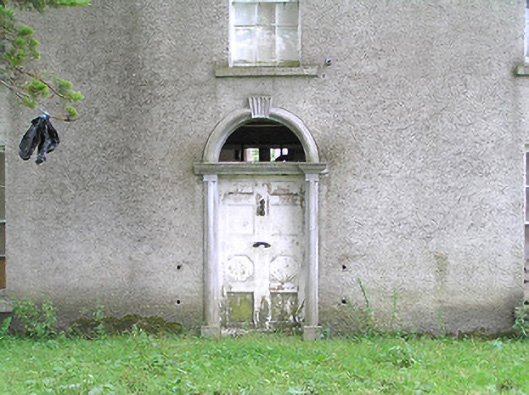
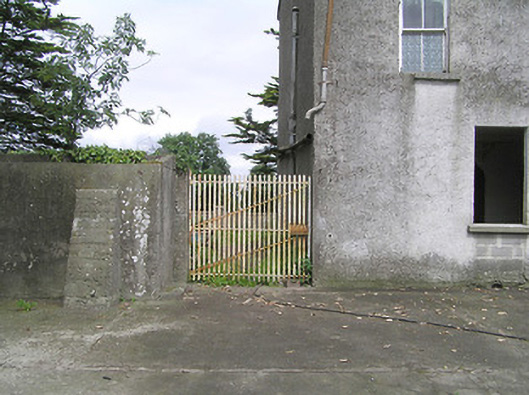
Detached three-bay three-storey country house, built c. 1770 and altered c. 1810, now disused. Pitched natural slate roof with cut stone eaves course, rendered chimneystacks to gable ends (east and west) and cast-iron rainwater goods. Roughcast rendered walls. Square-headed window openings with tooled stone sills having three-over-three pane timber sliding sash windows to second storey, Wyatt windows with six-over-six pane central lights and two-over-two pane sidelights to ground and first floors, and central round-headed window opening at first floor level, having three-over-six pane timber sliding sash window, all with stone sills. Central round-headed door opening to main elevation (north) having carved limestone door surround with blocks to base, fluted keystone, moulded lintel and flanking pilasters, and having timber panelled door with recessed panels. Original fanlight now missing. Set back from road in extensive mature grounds to the south of Abbeylara. Rendered garden wall to front garden with rendered gate piers (on square-plan). Wrought-iron flat bar gate to west gable end giving access to complex of outbuildings (13401603) to the rear.
Appraisal
Although no longer in use, this imposing three-storey country house retains its early character and form. It also retains much of its early fabric including a natural slate roof and timber sliding sash windows. The good quality cut stone doorcase provides a central focus to the main elevation and displays evidence of skilled craftsmanship in its design and execution. The central arrangement of a doorcase with a round-headed window opening over is vaguely reminiscent of a Palladian arrangement and suggests that this structure dates to the mid-to-late eighteenth century, while the pitched roof with chimneystacks to the gable ends is another feature of late-eighteenth century houses. The tripartite or Wyatt window openings at ground and first floor levels suggest that this building was altered during the early-nineteenth century (from a five-bay structure as still evident to the upper floor). Killasona House has historical connections with the Nugent family, and was associated with this family from at least 1707/8 (Will of a John Nugent, Killasona House, County Longford). This indicates the presence of an earlier house at Killasona, and suggests that the present house may contain earlier fabric. It was later the home of a Sir Ignatius Nugent (knight), c. 1720, and a Count (Christopher) Nugent during the early-to-mid nineteenth century (Slater’s Directory 1846). It may have passed out of the ownership of the Nugent family during the second half of the nineteenth century, and the estate was later put up for sale by a Mr. Richard Davoren, who agreed to sell his lands at Killasonna to his tenants in 1906. This building forms a interesting pair of related structures with the complex of outbuildings (13401603) and the walled garden to the rear (south), and is an important element of the built heritage of County Longford.