Survey Data
Reg No
13401527
Rating
Regional
Categories of Special Interest
Architectural, Social
Previous Name
Cloonshannagh House
Original Use
Worker's house
Date
1825 - 1835
Coordinates
232106, 274274
Date Recorded
06/09/2005
Date Updated
--/--/--
Description
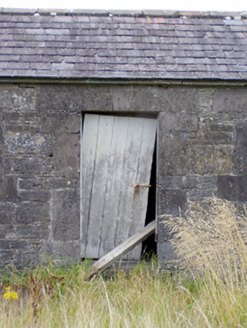
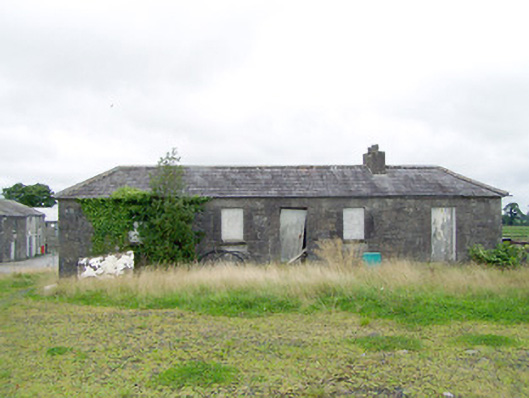
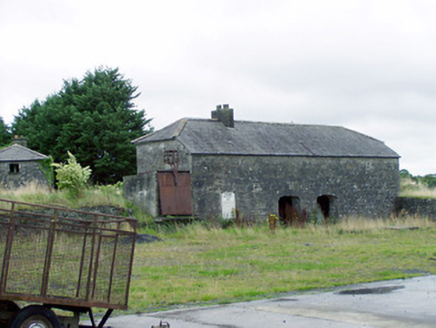
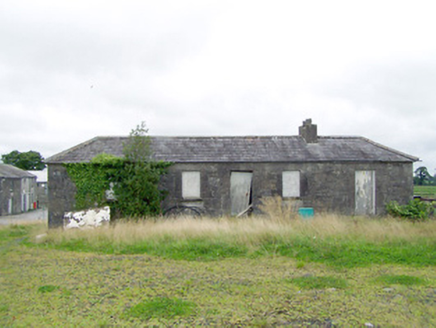
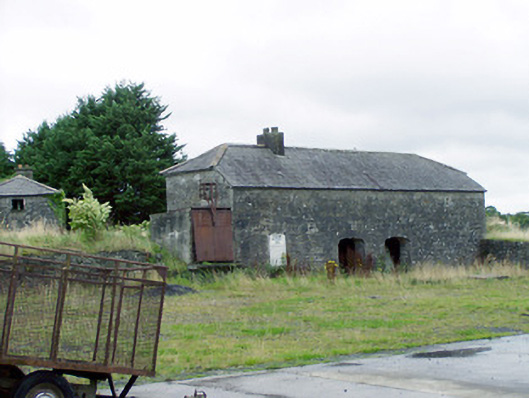
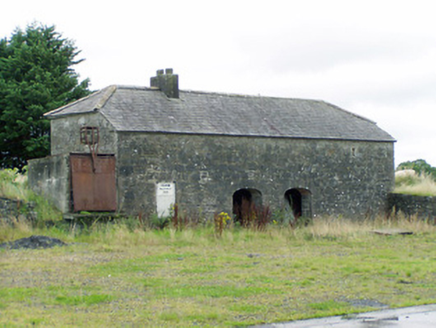
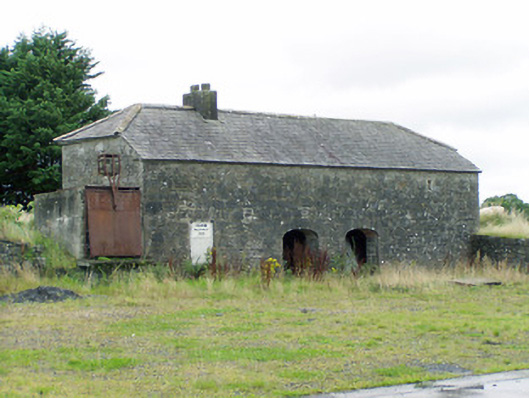
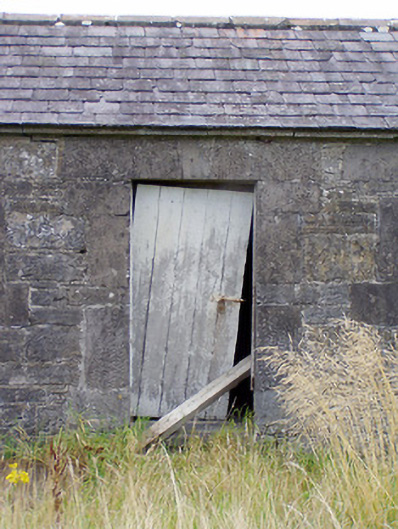
Detached five-bay single-storey outbuilding and worker’s accommodation associated with Coolamber Manor (13401520), built c. 1830, on split-level site having two-storey elevation to rear (northwest). Now disused. Hipped natural slate roof with cut stone eaves course, remaining sections of cast-iron rainwater goods, and a rendered chimneystack. Roughly dressed and squared limestone rubble masonry walls with flush dressed limestone quoins to the corners. Two segmental-headed carriage arches to the centre of the rear elevation (northeast) having roughly dressed limestone voussoirs. Square-headed window openings to front elevation (southeast) having dressed limestone surrounds and cut limestone sills. Fittings now gone. Square-headed openings with dressed limestone surrounds and remains of timber battened doors. Located to the northwest of Coolamber Manor (13401520) and adjacent to former walled garden and curvilinear glasshouse (13401528).
Appraisal
This former outbuilding and former estate worker’s house(s) forms part of an extensive collection of structures associated with Coolamber Manor (13501520). Although now out of use, it retains much of its early form and character. It is constructed using good quality limestone masonry, and has dressed limestone detailing to the openings and a cut stone eaves course. Its detailing and construction compliments that found to the main complex of outbuildings (13401521) associated with Coolamber Manor adjacent to the southwest. The form of this building, and its location outside the rear entrance to Coolamber Manor, suggests that it was in use as an estate worker’s house, while the lower storey to rear (northwest) was in use as outbuildings. This building forms part of an extensive group of related structures, which together provide an interesting historical insight into the extensive resources required to run and maintain a large country estate in Ireland during the nineteenth century. Good quality materials have been used throughout the building as can be seen in the cut limestone sills and dressings to the windows and doors.