Survey Data
Reg No
13401522
Rating
Regional
Categories of Special Interest
Architectural, Technical
Original Use
House
In Use As
House
Date
1780 - 1820
Coordinates
233346, 273258
Date Recorded
09/08/2005
Date Updated
--/--/--
Description
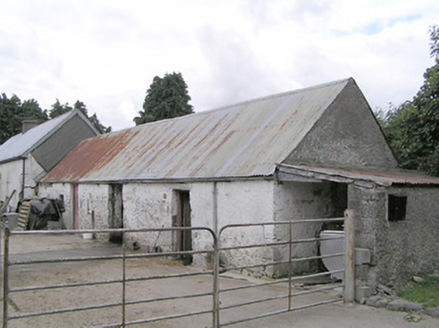
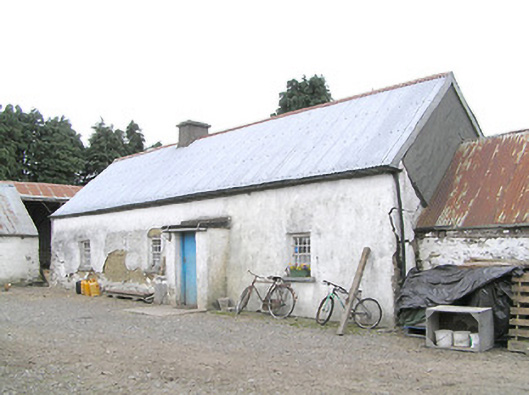
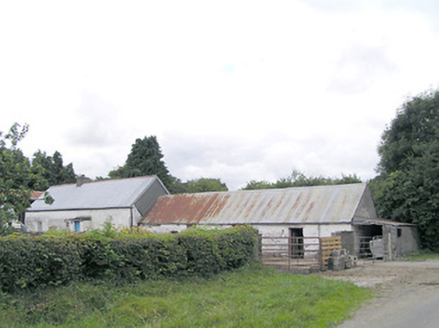
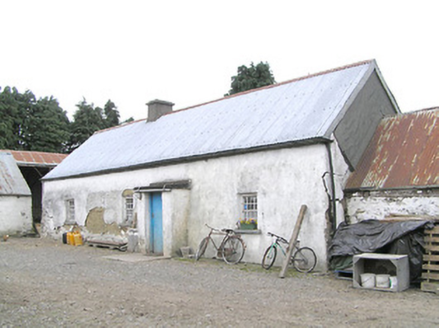
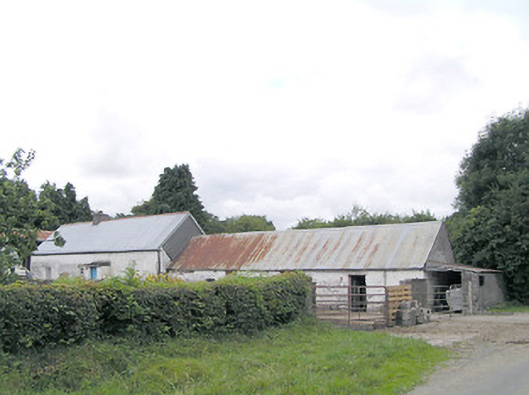
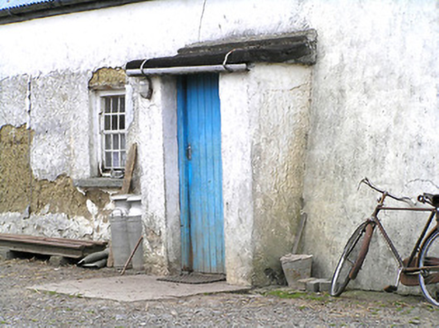
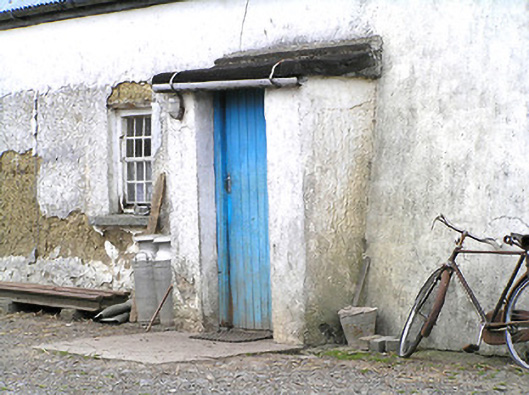
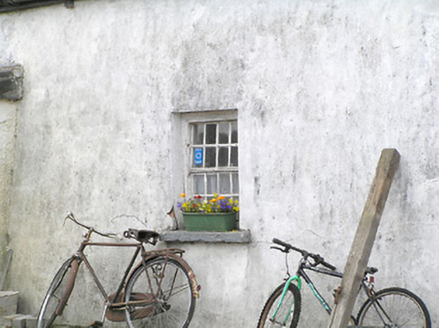
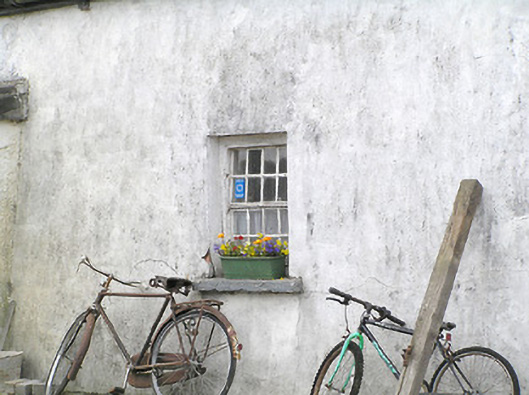
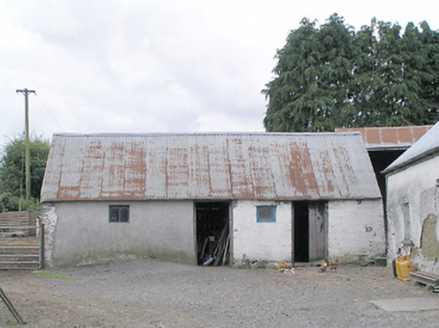
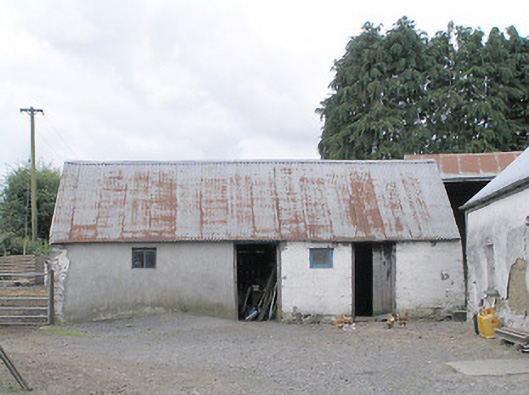
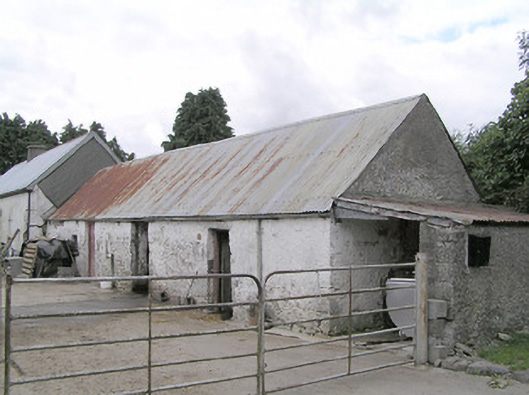
Detached four-bay single-storey vernacular house, built c. 1800, having off centre windbreak to front elevation, and four single-storey outbuilding adjoining northeast gable aligned with house. Pitched corrugated-metal roof with rendered chimneystack. Painted rendered battered mud walls with stone footings and masonry construction to the corners. Square-headed window openings with timber windows, having eight-pane swivelling toplights over eight-pane lower lights, having stone sills. Square-headed door opening to windbreak porch with timber battened door. Set back from road, at a right-angle to the road alignment, to the east of Edgeworthstown. Outbuilding attached to the northeast gable of house having corrugated-metal roof, rendered rubble stone walls and square-headed openings with timber fittings. Yard to front of house (southeast) having four-bay single-storey outbuilding to the south having corrugated-metal roof, rendered walls and square-headed openings with timber fittings. Modern house adjacent to the southeast and modern farm outbuildings to site. Modern farm gates gives access to yard from the northeast.
Appraisal
Although this vernacular house is now out of use, it retains its early character and form. The steeply pitched corrugated-metal roof suggests that this building was formerly thatched. The long low profile of this structure is typical of many modest vernacular buildings in Ireland, with an outbuilding abutting it lengthways. The position of the chimneystack, offset to the centre of the building and roughly in line with the windbreak porch, suggests that this building may have the lobby-entry plan that is characteristic of the vernacular architecture of the midlands of Ireland. This building is aligned at a right angle to the road alignment, which is another characteristic feature of the vernacular architecture of Ireland. The projecting entrance bay provides a windbreak, and the house is oriented in such a way as to minimise exposure to the elements. Of particular interest is the building material used in the construction of this house, now partially exposed due to the failure of the render coat. The house has rubble stone footings and rubble stone construction to the corners, while the main body of the building is constructed using compacted clay/mud. It is a rare surviving example of a building of this construction in County Longford, which adds to its importance. Mud-walled vernacular houses are more common in the east and southeast of Ireland, but are rare in the north midlands. The multi-pane timber casement windows are another interesting survival. Buildings of this type were once a ubiquitous feature of the Irish rural country but are now becoming increasingly rare. The associated vernacular outbuildings complete the setting of this building, which is an integral element of the built heritage of the local area.