Survey Data
Reg No
13401514
Rating
Regional
Categories of Special Interest
Architectural, Social
Original Use
House
In Use As
House
Date
1890 - 1910
Coordinates
229498, 275810
Date Recorded
04/08/2005
Date Updated
--/--/--
Description
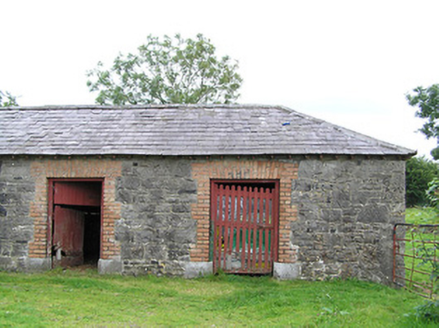
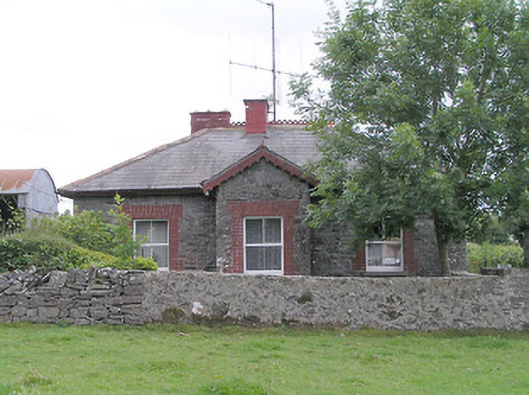
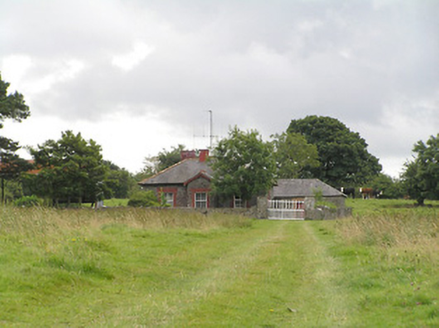
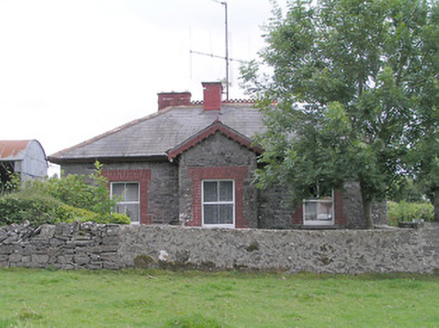
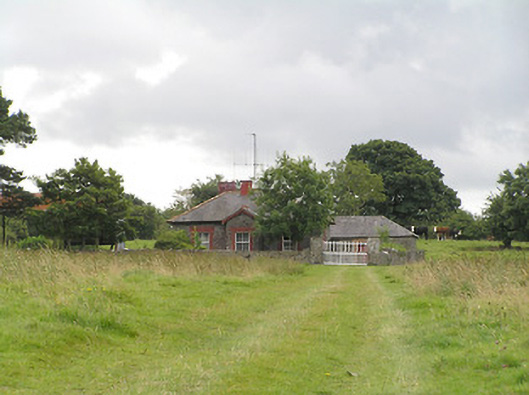
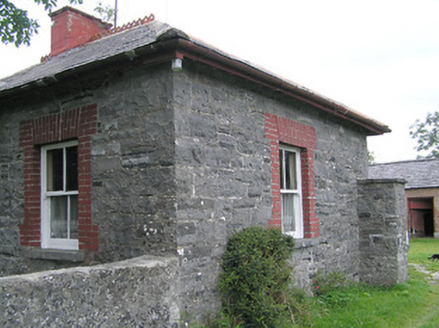
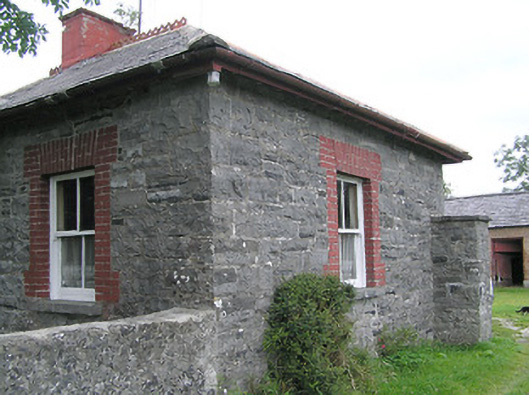
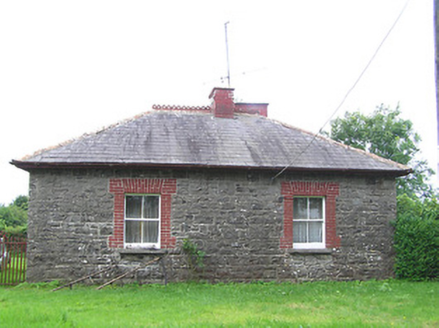
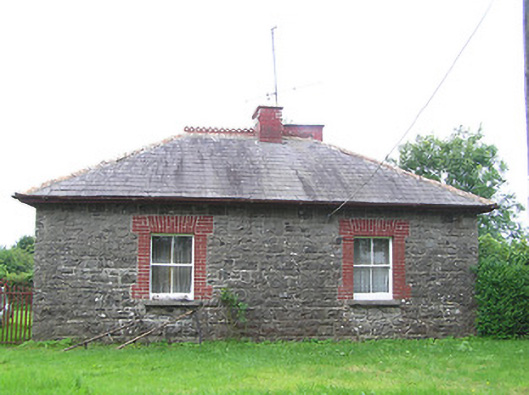
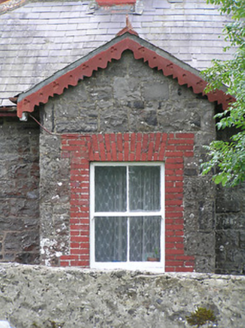
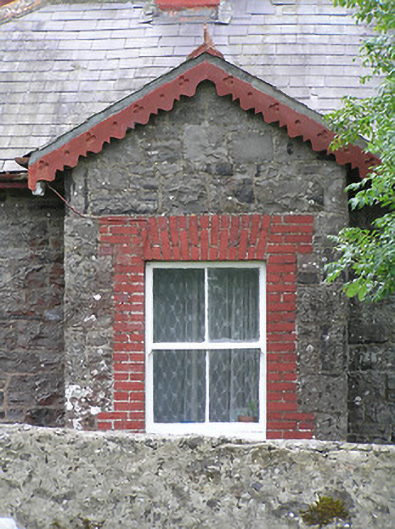
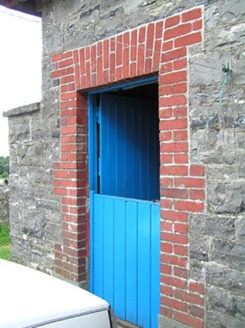
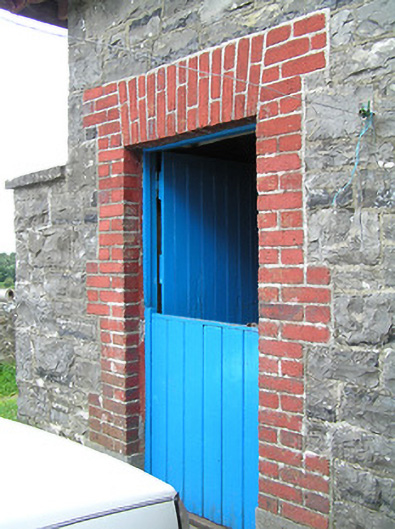
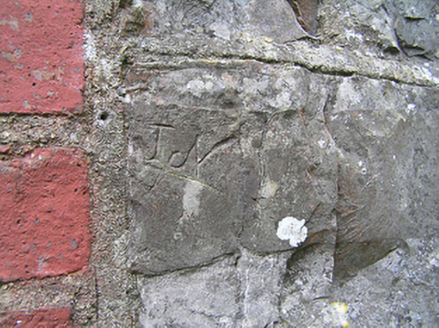
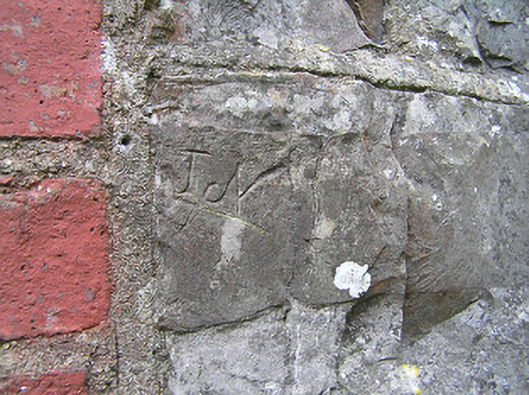
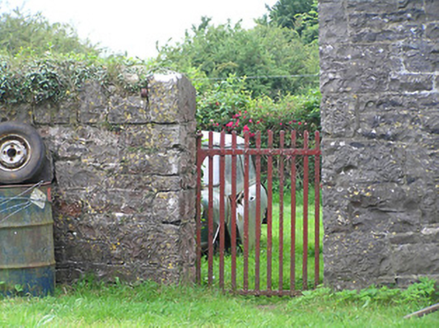
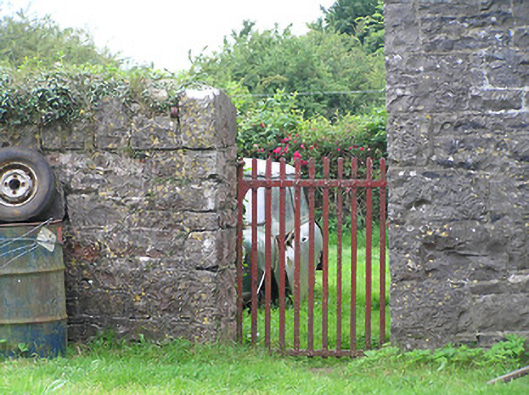
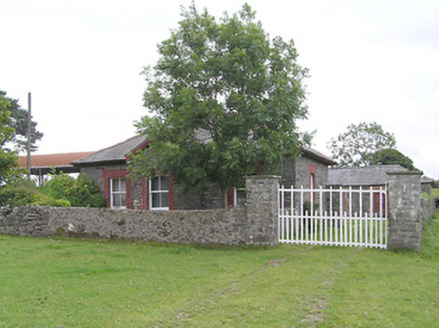
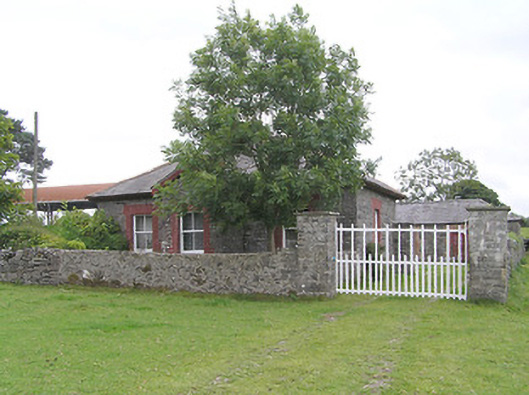
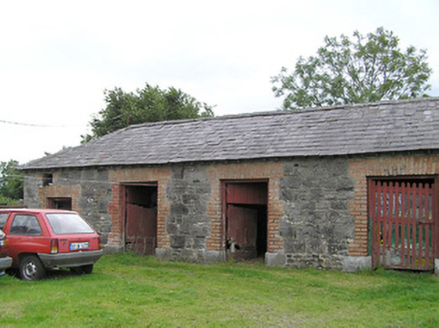
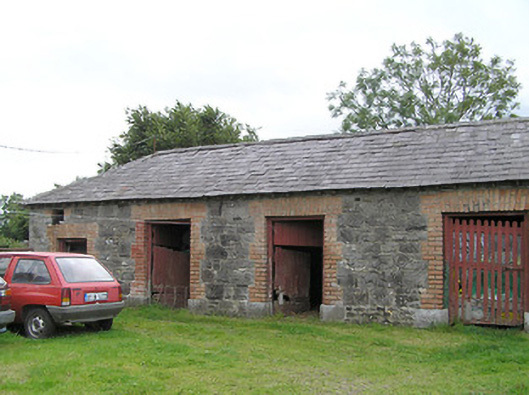
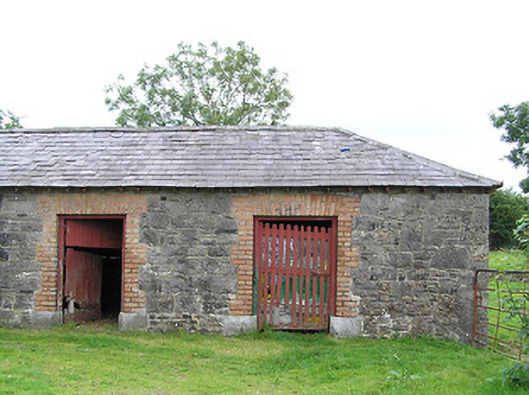
Detached three-bay single-storey former worker's house on L-shaped plan, built c. 1890, having return to the rear (south) and having projecting gable-fronted bay to the centre of the main elevation (north). Now in use as a private house. Hipped natural slate roofs with painted masonry chimneystacks, terracotta ridge crestings and cast-iron rainwater goods. Pitched natural slate roof to projecting bay to front elevation (north) having decorative timber bargeboards. Squared and roughly dressed limestone walls, with initials ‘J. N’ (?) incised to northeast elevation. Square-headed window openings with red brick block-and-start surrounds (flush), cut limestone sills and two-over-two pane timber sliding sash windows. No doorway to front elevation. Square-headed door opening to rear (south) with timber battened half-door. Set well back from road to the northeast of Edgeworthstown. Detached four-bay single-storey outbuilding to rear (south) with hipped natural slate roof, roughly dressed squared rubble limestone walls, and square-headed door openings with (flush) red brick block-and-start surrounds, limestone plinth blocks and timber fittings (battened and open boarded). Main entrance gate to the northwest of house comprising a pair of roughly dressed squared limestone rubble gate piers (on square-plan) having wrought-iron gate. Rubble stone boundary walls with crenellated coping over, rendered boundary walls and wrought-iron gates to site.
Appraisal
This small-scale house retains its original form and character. It retains the majority of its early fabric, which enhances the structure and provides a patina of age. The contrast between the roughly dressed grey limestone masonry and the smooth red brick dressings to the openings creates an appealing tonal and textured appearance. The quality of the design and execution of this house, together with it's modest size, suggests that it may have been originally constructed as a worker's house, perhaps associated with the complex of nearby quarries (rear; south and east) which were active in the nineteenth and early twentieth century (Ordnance Survey six-inch map sheets 1838 and 1913). Its symmetrical front elevation and refinements such as timber bargeboards to the projecting centre bay and terracotta ridge cresting give this structure hint at mannered rather than vernacular origins. The incised initials (J. N. ?)to one of the side elevations probably records the original builder or occupier. The large outbuilding to the rear, treated in a similar manner to the house, provides historical context and adds considerably the setting. The simple wrought-iron gates and the rubble stone boundary walls to site complete this interesting, if unassuming composition.