Survey Data
Reg No
13401503
Rating
Regional
Categories of Special Interest
Architectural, Artistic, Historical
Original Use
House
In Use As
House
Date
1830 - 1835
Coordinates
228143, 276753
Date Recorded
04/08/2005
Date Updated
--/--/--
Description
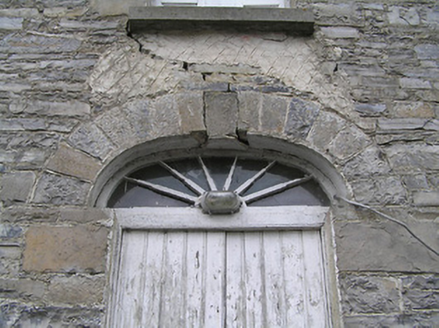
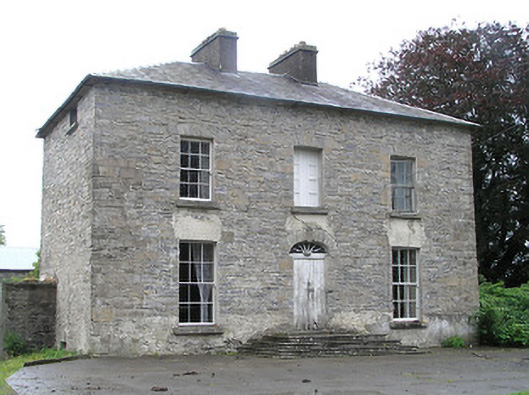
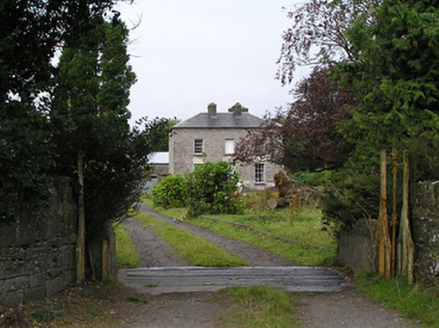
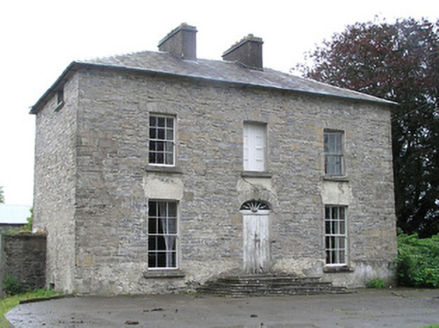
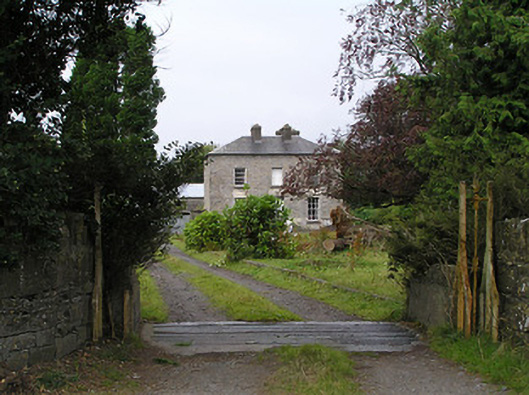
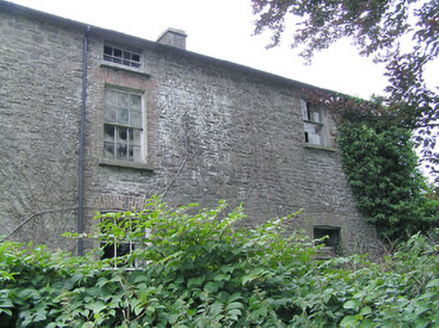
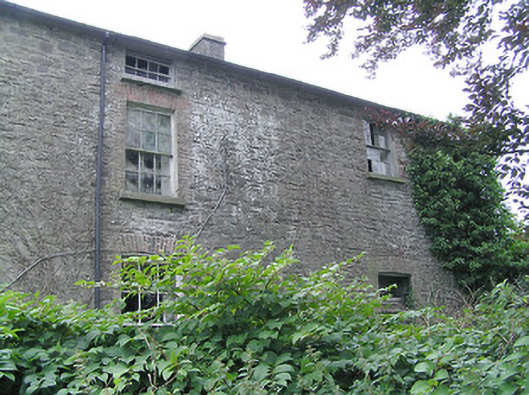
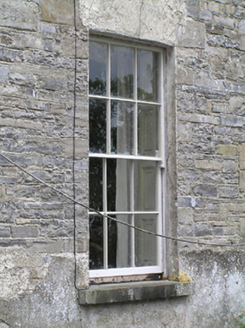
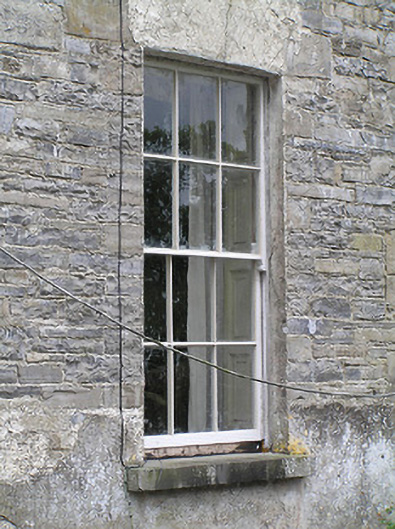
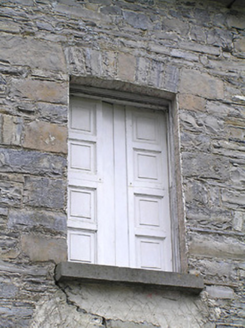
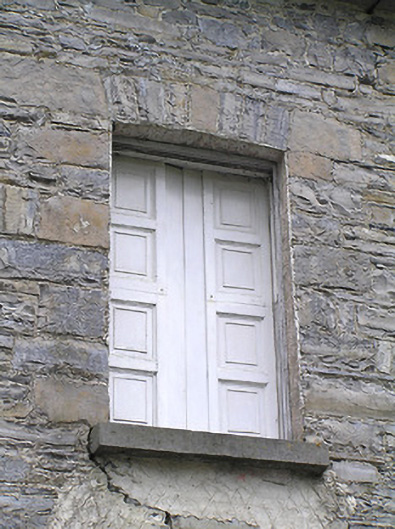
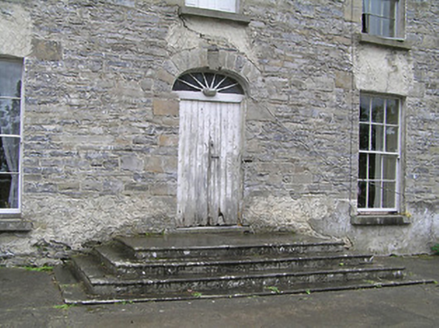
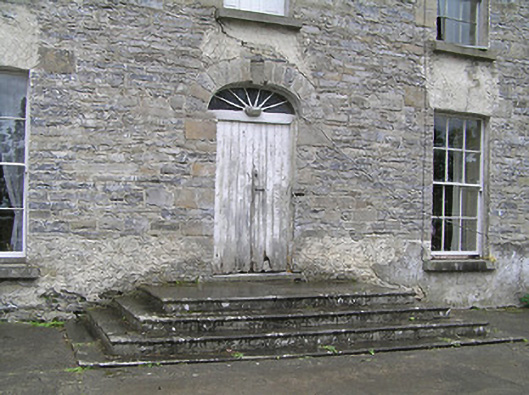
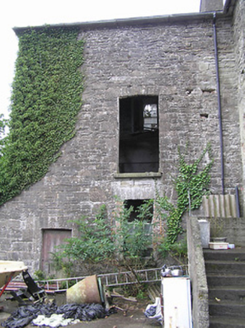
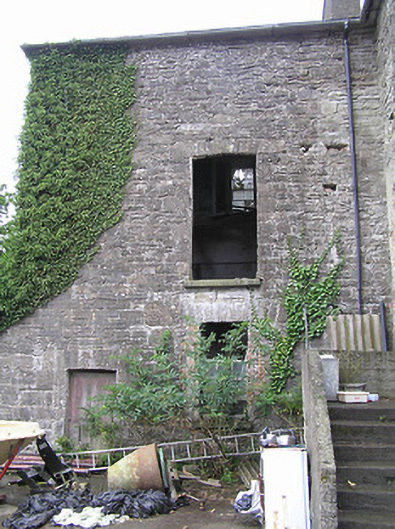
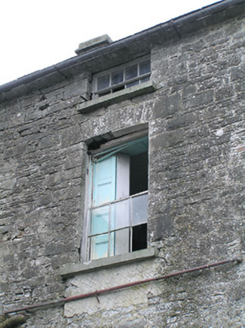
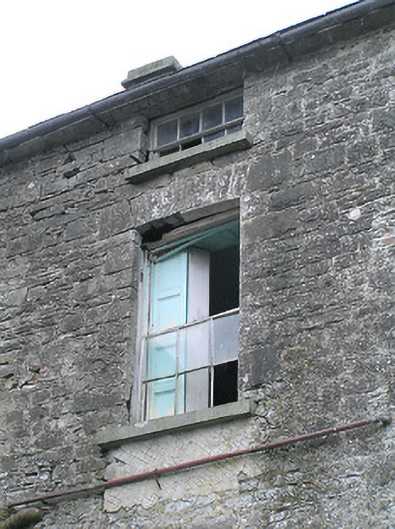
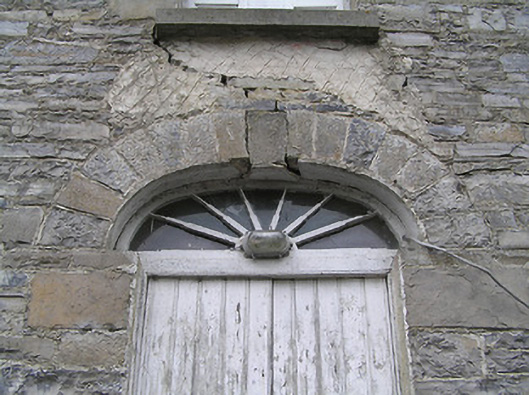
Detached three-bay two-storey over basement house with attic level, built 1832, on L-shaped plan having two-storey over basement return to the rear (northwest) at the northeast end. Now disused. Hipped natural slate roofs with projecting cut stone eaves course and having a central pair of rendered chimneystacks to the main block and a rendered chimneystack to the rear return. Remaining sections of cast-iron rainwater goods. Rubble limestone and sandstone walls, formerly rendered. Square-headed window openings with stone sills and six-over-six timber sliding sash windows, attic windows to sides (southwest and northeast) and rear (northwest) having four-over-four timber sliding sash windows. Number of sash windows now removed. Remains of timber panelled shutters to interior. Central segmental-headed door opening to front elevation (southeast) having timber battened door and spoked fanlight over. Flight of moulded cut stone steps to entrance. Set back from road in own grounds to the southwest of Granard. Complex of outbuildings (13401504) and walled garden (13401505) to the rear. Main entrance gates (13401506) and boundary walls to road-frontage to the south.
Appraisal
Although now out of use, this elegant middle-sized house retains its early form and character. It retains much of its early fabric, including timber sash windows and timber shutters to the interior. The proportions are classically-inspired with a rigid symmetry to the front elevation, which is typical of late-Georgian houses of this type and scale in rural Ireland. The simple elliptical-headed doorway provides a central focus and enlivens the plain front elevation. The well-crafted flight of cut stone steps adds further interest to the entrance. This building was built in 1832 by James Wensley Bond (1781 – 1843), Esq., High Sheriff of Longford in 1822. The Bond family were important in the local area during the eighteenth and nineteenth century and had further seats at Newtownbond and at Farragh/Farraghroe (both now demolished). It was the home of a Thomas Bond in 1846 and a Thomas W. Bond in 1881 (Slater’s Directories), and later possibly a Bryan Brady in 1894 (Slater’s Directory). This building forms the centrepiece of a group of related structures (along with the outbuildings (13401504) and walled garden (13401505) to the rear, and the main entrance gates (13401506) and boundary walls to the south) and is an important element of the built heritage of the local area.