Survey Data
Reg No
13401438
Rating
Regional
Categories of Special Interest
Architectural, Social
Original Use
House
In Use As
House
Date
1890 - 1910
Coordinates
221040, 274043
Date Recorded
19/07/2005
Date Updated
--/--/--
Description
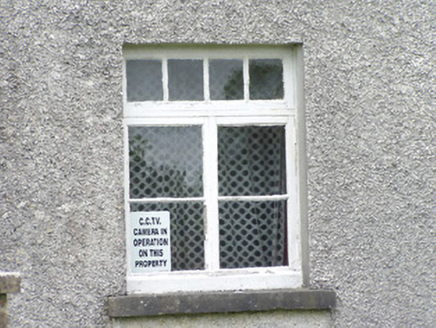
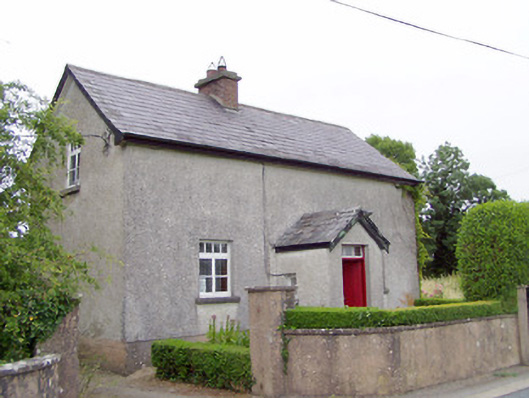
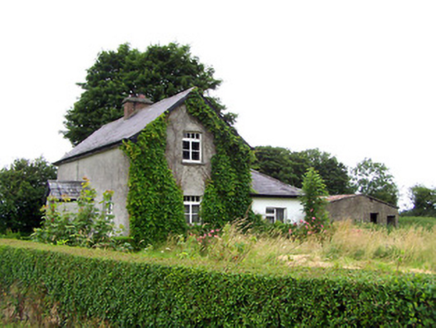
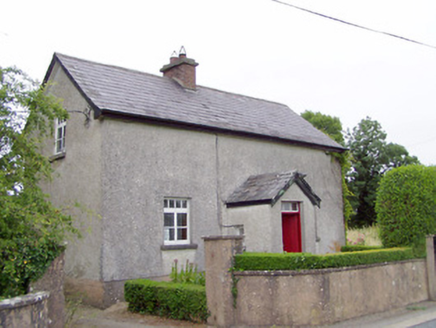
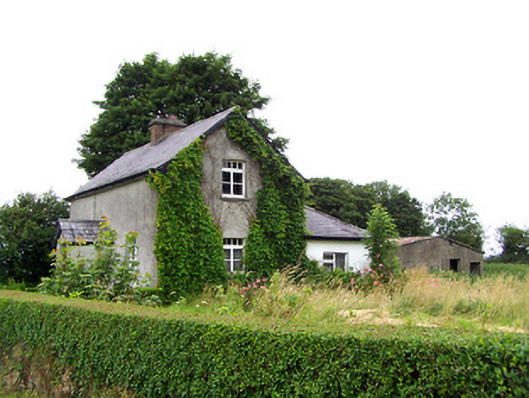
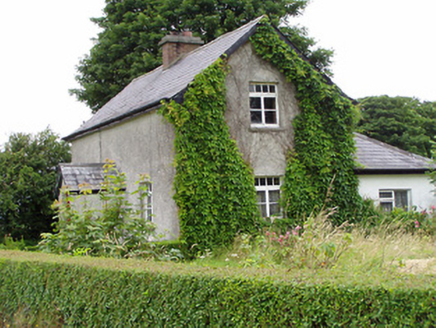
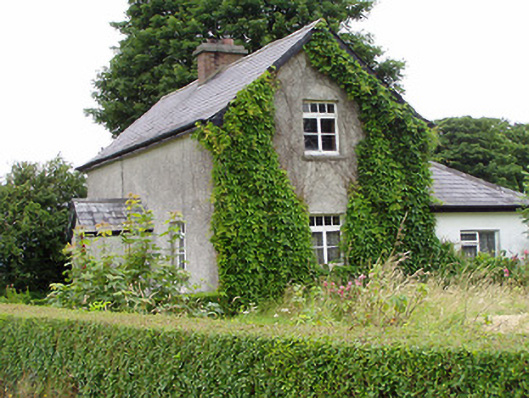
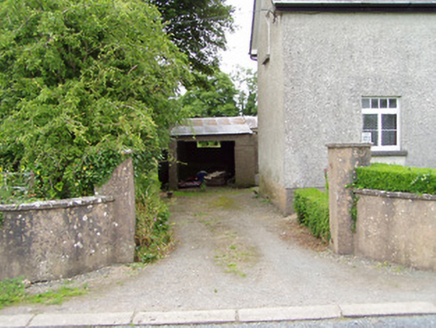
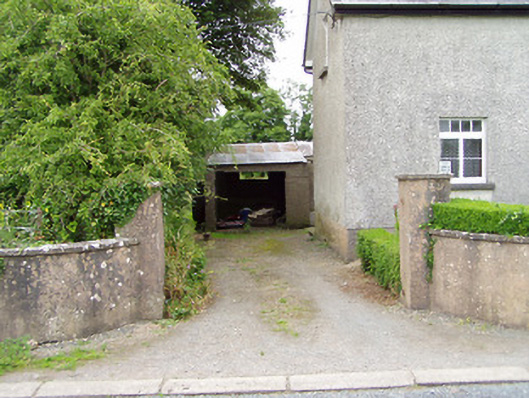
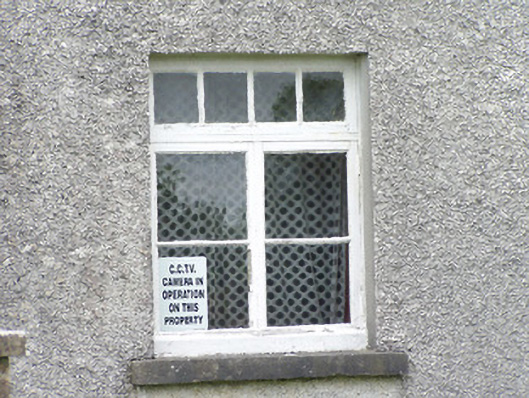
Detached three-bay single-storey local authority house with attic level, built c. 1900, having single-bay single-storey gable-fronted porch to the centre of the main elevation (southwest). Now in use as a private house with and recent single-storey extension to rear (northeast). Pitched natural slate roof with central brick chimneystack. Roughcast rendered walls over smooth rendered plinth course. Square-headed window openings having timber casement windows with multi-pane overlights, all with concrete sills. Square-headed door opening to front face of porch (southwest) having timber battened door with glazed overlight. Set back from road in own grounds in the rural countryside to the northwest of Edgeworthstown. Rendered boundary walls and rendered gate piers (on square-plan) to road-frontage (southwest).
Appraisal
This simple but appealing small-scale house retains its early character and form. It is enhanced by the retention of the majority of its early fabric, including timber casement windows with distinct overlights and the timber battened door. The multipane overlights are a feature of the Arts and Crafts movement of the late-nineteenth and early twentieth century. The form of this modest house suggests that is was originally built by a local authority as social housing. A great many houses of this type were built throughout Ireland following the passing of the various Land and Labourers’ Acts (c. 1883 - 1921) by the British Parliament in the late-nineteenth and early-twentieth centuries, and they are a feature of the rural Irish countryside. It is well-built to a conscious architectural design, which is basically an ‘improved’ interpretation of the vernacular housing of the time. The single central chimneystack aligned with the front door is, perhaps, an arrangement modelled on the lobby-entry plan that is characteristic of the vernacular houses of the midlands. The majority of these local authority houses are now heavily altered, which makes this a rare surviving intact example of its type. This modest structure is an interesting part of the social history and built heritage of County Longford and is an integral element of the built heritage of the local area.