Survey Data
Reg No
13401431
Rating
Regional
Categories of Special Interest
Architectural, Artistic, Technical
Original Use
House
In Use As
House
Date
1850 - 1900
Coordinates
223562, 277260
Date Recorded
27/07/2005
Date Updated
--/--/--
Description
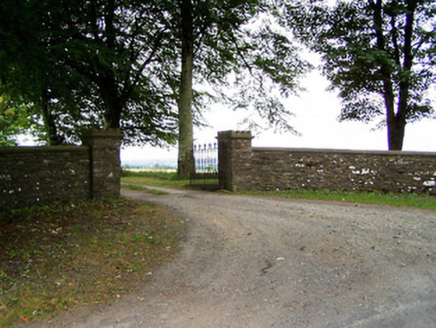
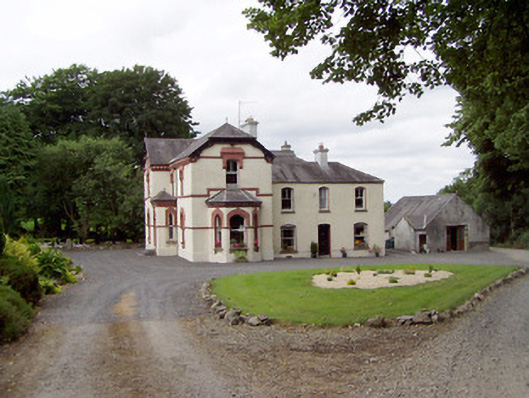
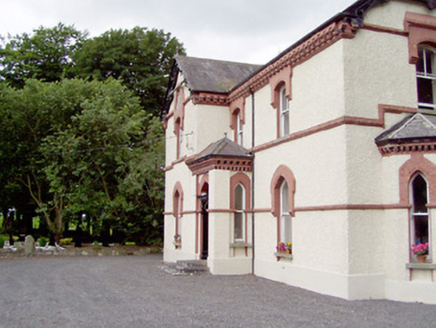
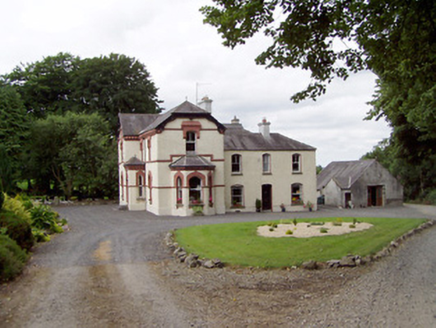
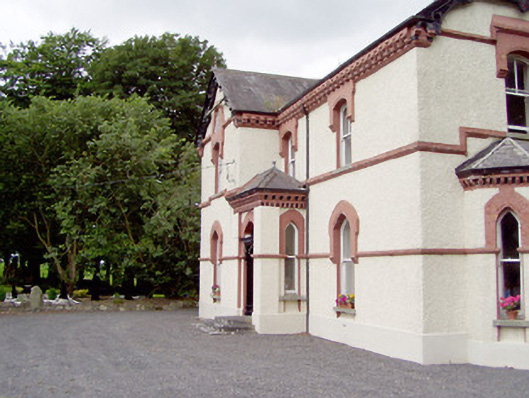
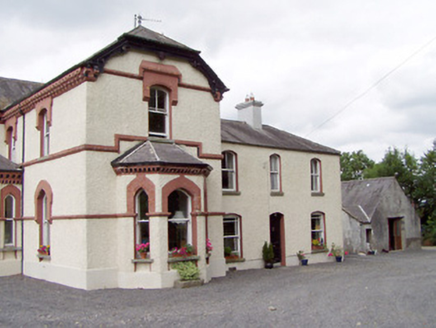
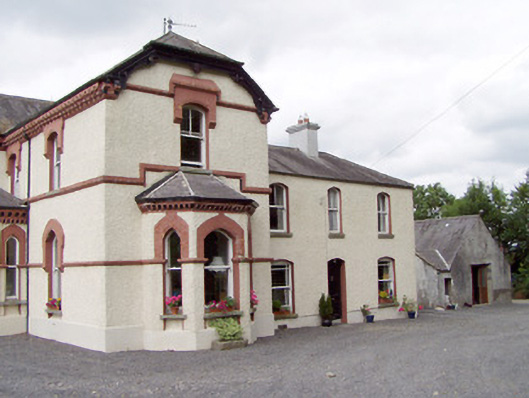
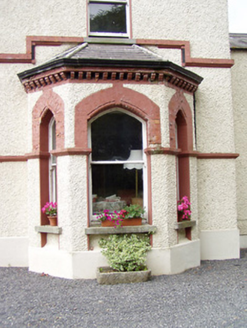
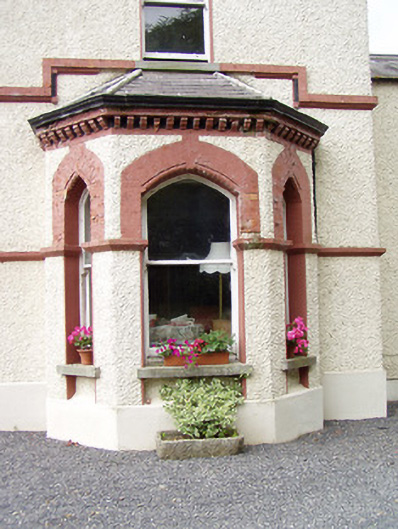
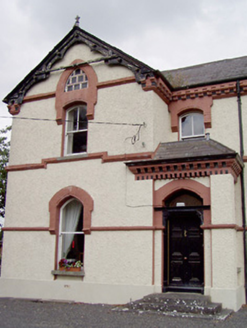
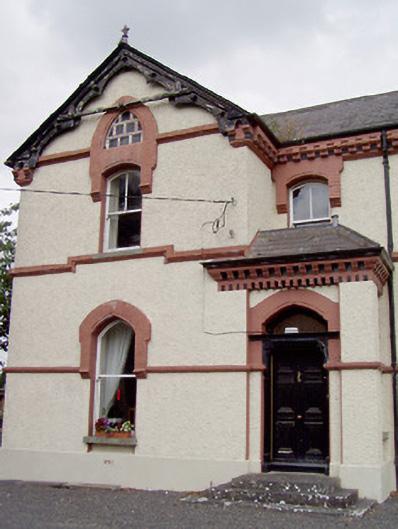
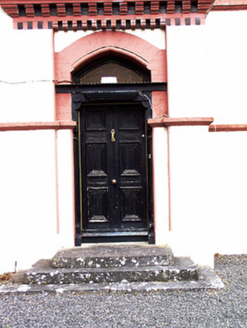
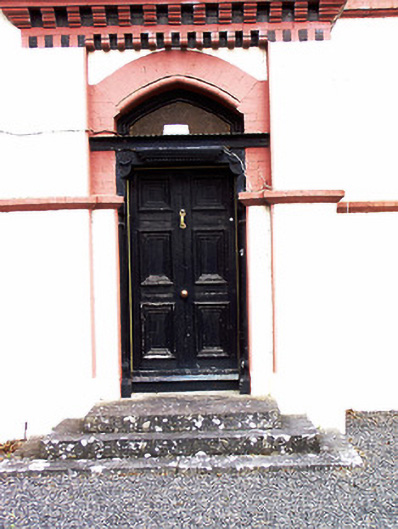
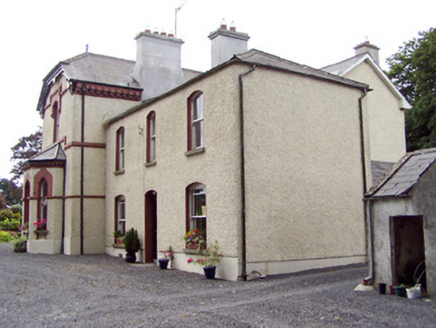
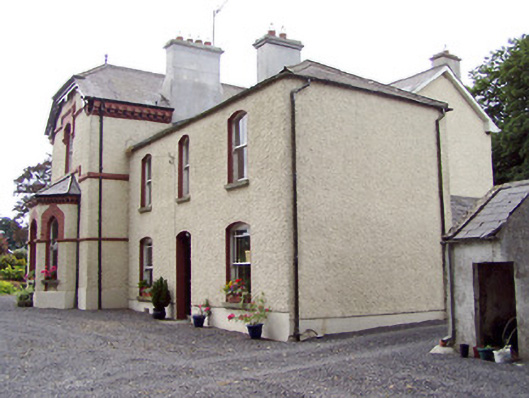
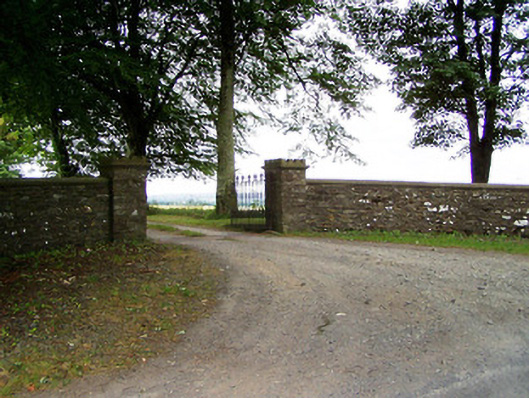
Detached two-storey house on complex-plan, built c. 1860 and c. 1890 Comprising three-bay two-storey block, c. 1860, to the north (facing east) with later three-bay two-storey block, c. 1890, on L-shaped plan attached to the south end, facing south, having a projecting gable-fronted bay to the west end, single-bay single-storey porch adjoining to the east side of projecting bay, and with a single-storey canted bay window to the east elevation. Returns and recent extensions to the rear (west). Possibly incorporating the fabric of earlier house to site/rear (map). Hipped (pitched to south end) natural slate roof to section to north having rendered chimneystack and cast-iron rainwater goods; pitched and half-hipped roofs to block to south having rendered chimneystack, ornate bargeboards to gable ends, ornate terracotta bracketed eaves course, and fleur-de-lis finials over gable apexes. Roughcast rendered walls over smooth rendered plinth course. Ornate brick/terracotta eaves courses to porch and to bay window to east. Chamfered string course/impost course to block to south at ground floor level, continuous sill course at first floor level. Segmental-headed window openings to block to north having rendered reveals, two-over-one pane timber sliding sash windows and limestone sills. Margin glazing pattern to ground floor window openings. Pointed segmental-headed window openings to block to south at ground floor level having painted moulded brick surrounds with one-over-one pane timber sliding sash windows and limestone sills. Segmental-headed window openings to block to south at first floor level having painted moulded brick surrounds with moulded brackets to bases, two-over-one pane timber sliding sash windows and limestone sills. Pointed arch detailing over window opening to gable-fronted bay at first floor level (south) having brick surround with inlaid lattice-work decoration/motif. Main doorway to the south face of comprising pointed segmental-headed arch with painted brick surround, square-headed timber panelled door with ornate brackets, and having overlight. Limestone steps to entrance. Segmental-headed doorway to the centre of the block to east. Set back from road in extensive mature grounds to the southeast of Ballinalee with single-storey outbuildings to site. Main entrance gates to the southeast comprising a pair of rubble stone gate piers (on square-plan) and double-leaf wrought- and cast-iron gates. Gateway flanked to either side by sections of rubble stone walling.
Appraisal
This interesting and complex house, of at least two distinct phases, retains its early form character and fabric. The block to the north, or a two-storey block to the rear (north), was probably the original house (built perhaps c. 1860), while the richly detailed and eclectic block to the south, with a variety of revival-type architectural references, was probably added at the end of the nineteenth century. This building retains its original aspects to the main elevations, the majority of its salient fabric and represents one of the better buildings of its type and date in County Longford. The prominent timber bargeboards to the gable ends of the south block are finely detailed and are good examples of the skill of craftsmen available at the time of construction, while the heavy detailing to eaves of the main block, and to the porch and bay window, helps create a quite muscular character. The heavy moulded brick surrounds to the window opening complement the detailing to the eaves course, together creating a visually pleasing and coherent decorative scheme. Occupying extensive mature grounds, this building is an important element of the built heritage of the local area. The simple entrance gates with ornate gates enhance the composition, adding interest to the roadscape to the southeast of Ballinalee. The present structure may incorporate the fabric of an earlier building to the rear, which is indicated on a 1838 map of the area (Ordnance Survey first edition six-inch map). Indeed, a two-storey block to the rear with square-headed window openings may be the original house to site. Corbeagh House was the residence of a John E. O’Farrell in 1881 (Slater’s Directory).