Survey Data
Reg No
13401427
Rating
Regional
Categories of Special Interest
Architectural, Artistic
Previous Name
Farraghroe House
Original Use
Steward's house
In Use As
House
Date
1840 - 1860
Coordinates
219419, 277475
Date Recorded
18/07/2005
Date Updated
--/--/--
Description
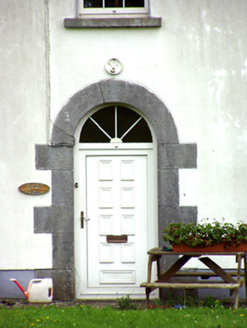
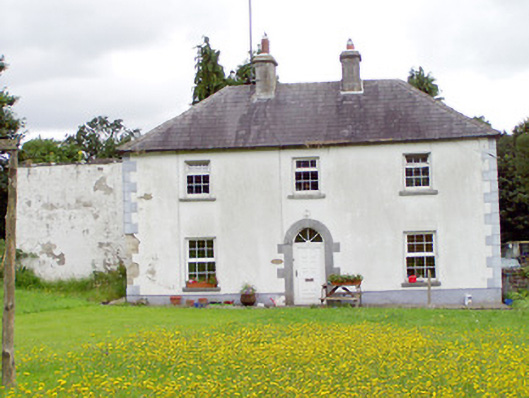
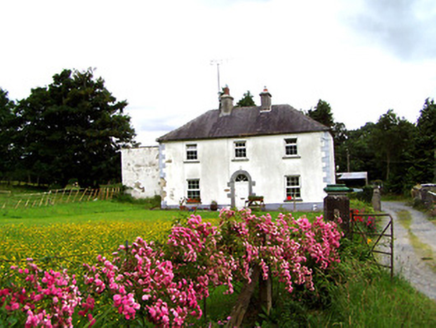
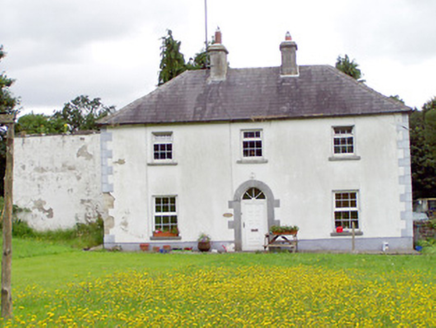
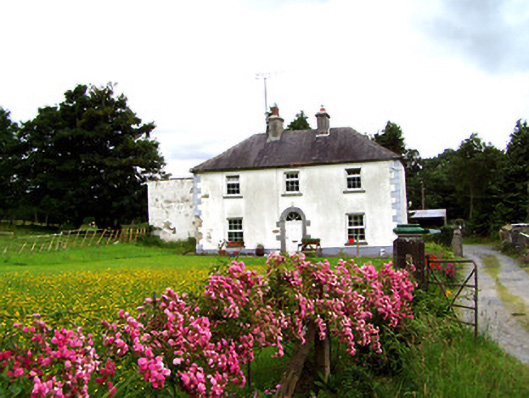
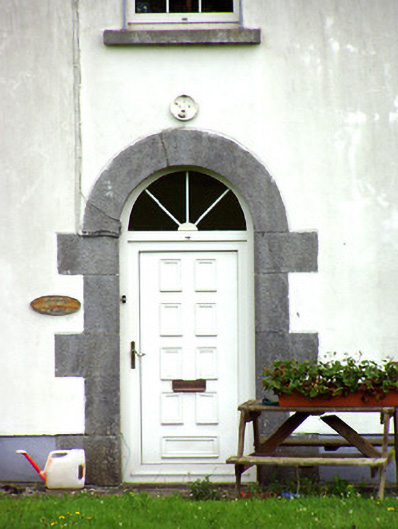
Detached three-bay two-storey former steward's house, built c. 1850, having two-bay single-storey return to rear (west), and extension to south. Formerly associated with Farragh/Farraghroe House having central pair of ashlar limestone chimneystacks and remaining sections of cast-iron rainwater goods. Painted rendered walls over rendered plinth course and with render quoins to the corners. Square-headed windows openings with replacement windows and with tooled limestone sills. Central round-headed opening having carved rusticated limestone surround and replacement door and fanlight. Set within its own grounds to the northwest of the site of Farragh/Farraghroe House (demolished c. 1960). Farmyard complex (13401425) to rear (west), and gateway (13401456) and gate lodge (13401426) to the northeast.
Appraisal
This well-proportioned former steward’s house was originally constructed to serve Farragh/Farraghroe House, now demolished, and forms an integral element of a group of structures associated with this house. Its balanced form, with hipped natural slate roof with central chimneystacks and the central round-headed doorway, is typical of late-Georgian architecture. However, it appears as though this house was not constructed until c. 1850 (map information). Its scale and form is typical of a great many modest farmhouses and houses built throughout the Irish countryside during the first half of the nineteenth century. The front elevation is enlivened by the rusticated cut stone round-headed doorway to centre bay, which provides a central focus and clearly represents the work of highly skilled craftsmen. The chimneystacks are constructed of cut ashlar limestone blocks, which is an uncommon feature of a house of this type and size. The loss of the original fittings to the openings fails to detract substantially from this composition. This structure forms part of an extensive collection buildings and features associated with Farragh/Farraghroe House, which was (re) built by Willoughby Bond, c. 1820, and was in the ownership of the Bond family throughout the nineteenth and twentieth until it was sold and subsequently demolished c. 1960. It is possible that this house was built as part of the works carried out at Farragh/Farraghroe House to designs by Nathaniel Montgomery, c. 1850.