Survey Data
Reg No
13401425
Rating
Regional
Categories of Special Interest
Architectural, Technical
Previous Name
Farraghroe House
Original Use
Outbuilding
In Use As
Outbuilding
Date
1810 - 1870
Coordinates
219366, 277475
Date Recorded
18/07/2005
Date Updated
--/--/--
Description
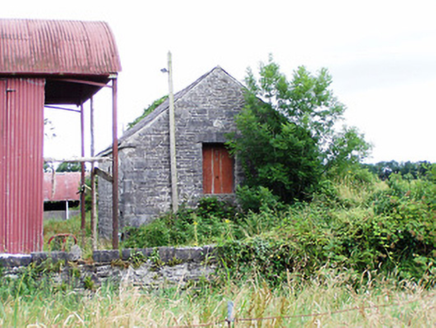
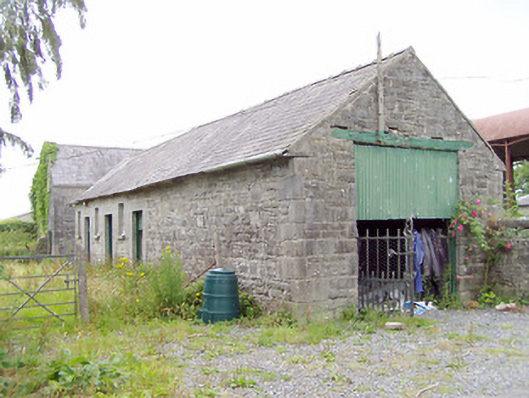
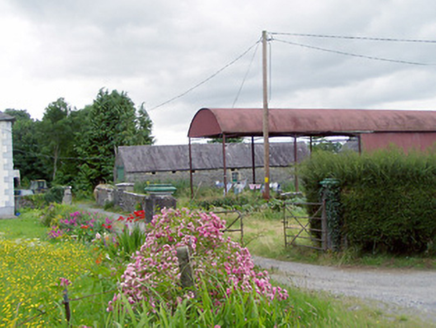
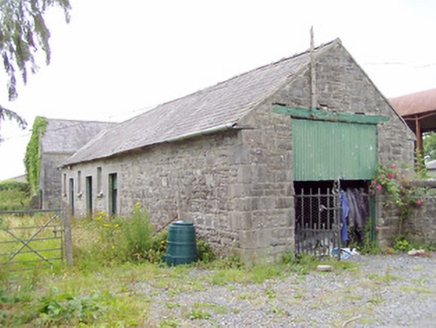
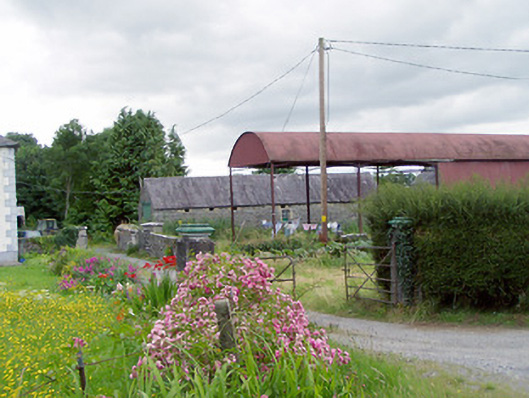
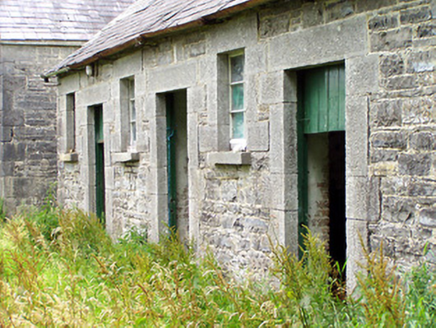
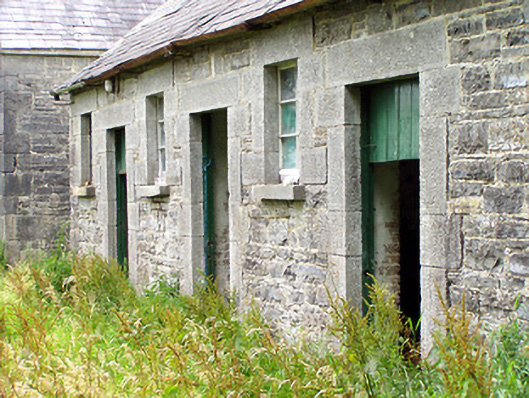
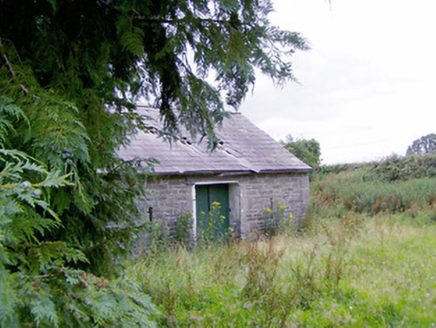
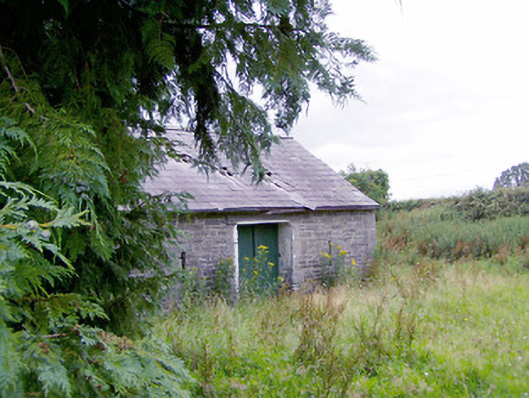
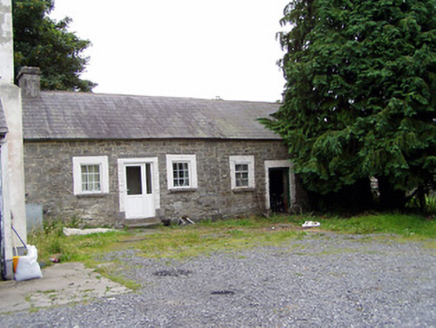
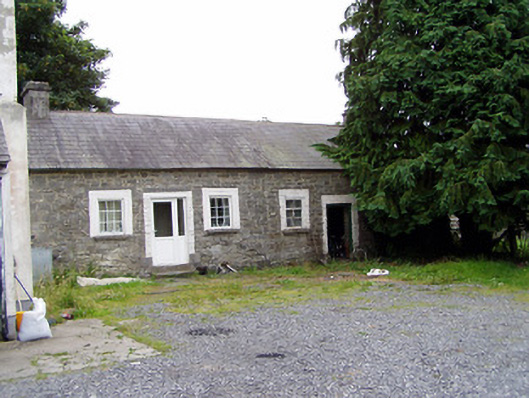
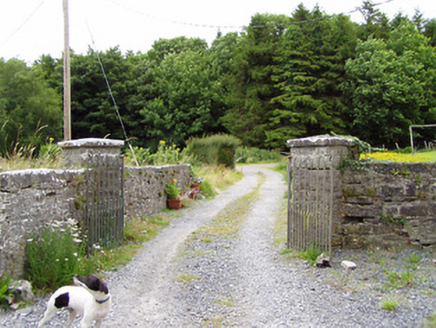
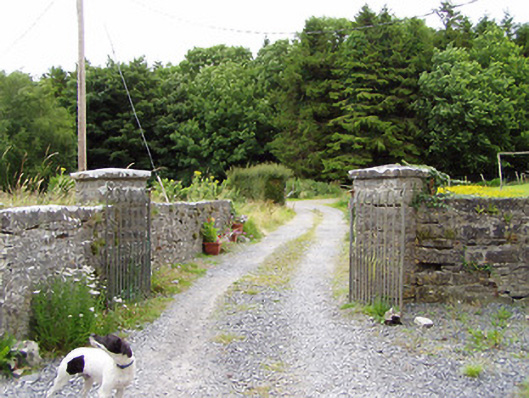
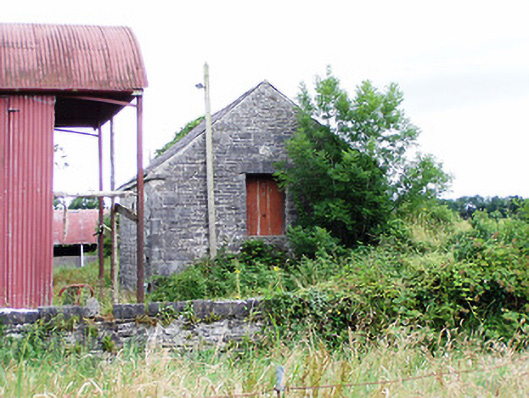
Complex of single-storey outbuildings formerly associated with Farragh/Farraghroe House (demolished c. 1960), built c. 1820 and c. 1850, arranged around a courtyard to the northwest of the site of the house. Now in use as farmyard. Detached six-bay single-storey range to north, c. 1820, with pitched natural slate roof, coursed roughly dressed limestone masonry walls and with flush dressed quoins to the corners. Square-headed window openings with flush dressed limestone block-and-start surrounds having fixed timber windows with limestone sills. Square-headed door openings with timber battened half-doors and flush dressed limestone block-and-start surrounds. Square-headed carriage arch to west gable end having timber lintel and double-leaf wrought-iron flat bar gates. Vents to south elevation, just below eaves. Six-bay single-storey range to south (two three-bay semi-detached buildings), c. 1850, having pitched natural slate roof with rendered end chimneystacks. Coursed roughly squared limestone masonry walls with dressed quoins to the corners. Square-headed window openings with replacement fittings and limestone sills. Square-headed door openings with replacement doors. Single-bay single-storey outbuilding to west having pitched natural slate roof and coursed roughly squared limestone masonry walls with dressed quoins to the corners. Square-headed carriage arch opening with replacement iron doors flanked by loophole openings. Set back from road to the southwest of Ballinalee and to the northwest of the site of Farragh/Farraghroe House. Rubble stone boundary walls, some with cut stone coping, to site. Gateway to the northeast comprising a pair of coursed squared limestone gate piers (on square-plan) having carved capstones and a pair of hooped wrought-iron flat bar gates.
Appraisal
This complex of utilitarian outbuildings formerly served Farragh/Farraghroe House (demolished c. 1960). While modest, these structures are well-built using good quality limestone masonry while their scale gives some impressive of the resources required to run and maintain a large country estate during the nineteenth century. The north range is enlivened by the decorative block-and-start surrounds to the openings which adds an element of artistic interest to this otherwise functional structure. The buildings are enhanced by the retention of features and materials such as the tooled limestone sills, timber battened half doors and natural slate roofs. The three timber half-doors to the north range suggests that this was partially in use as stables, while the form of the range to the south indicates that it may have been in use as two semi-detached estate worker’s houses. These structures form part of an extensive collection of structures and features associated with Farragh/Farraghroe House, which was (re)built by Willoughby Bond, c. 1820, and was in the ownership of the Bond family throughout the nineteenth and twentieth centuries until it was sold and subsequently demolished c. 1960. The noted architect John Hargrave (1788 – 1833) is recorded as designing a ‘new house’ for Willoughby Bond of Farragh/Farraghroe sometime between c. 1811 and c. 1833, and it is probable that the earlier outbuildings here date to this period. Later works at Farragh/Farraghroe were carried out to designs by Nathaniel Montgomery c. 1850, and the later buildings surrounding this courtyard may have been constructed at this time. Various Willoughby Bonds and Bond family members served as high sheriff of Longford in the nineteenth century.