Survey Data
Reg No
13401408
Rating
Regional
Categories of Special Interest
Architectural, Artistic
Original Use
House
Date
1780 - 1820
Coordinates
217859, 275806
Date Recorded
18/07/2005
Date Updated
--/--/--
Description
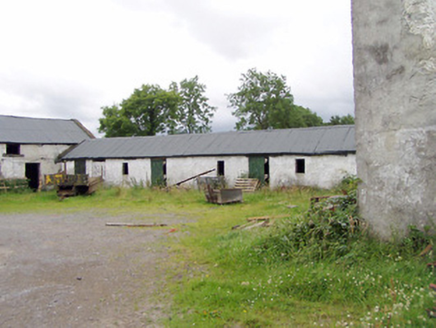
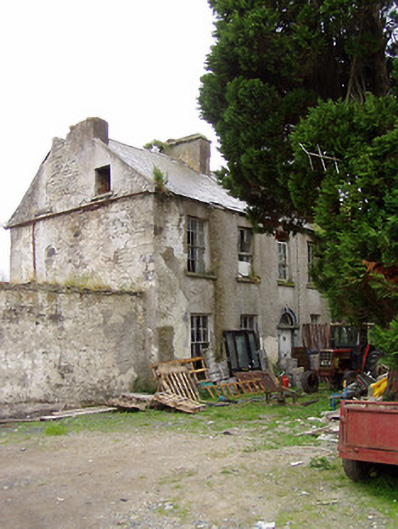
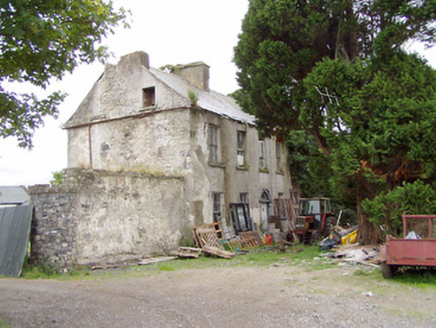
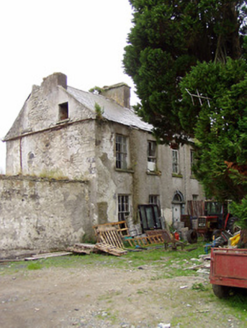
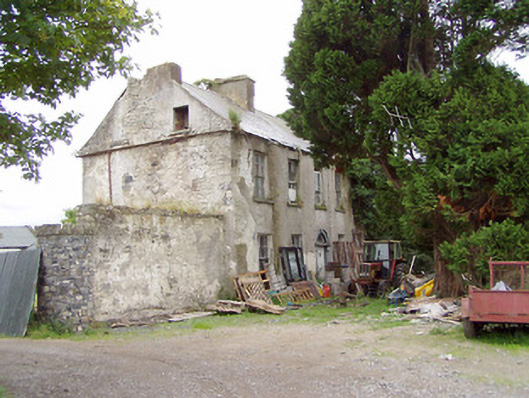
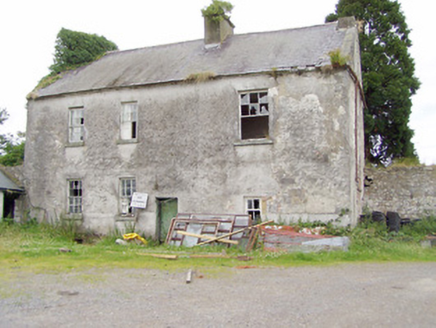
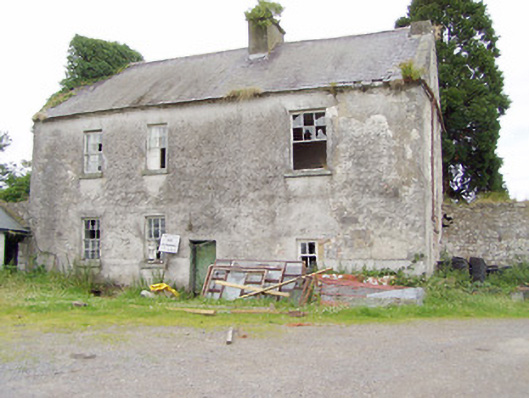
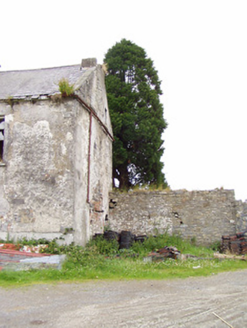
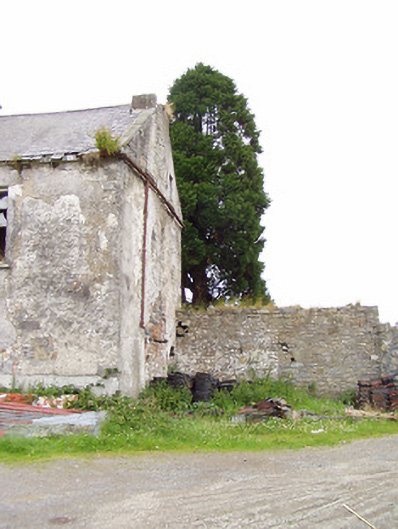
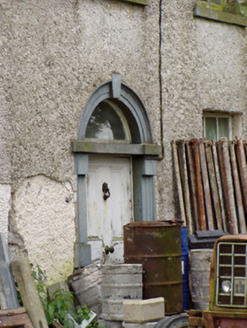
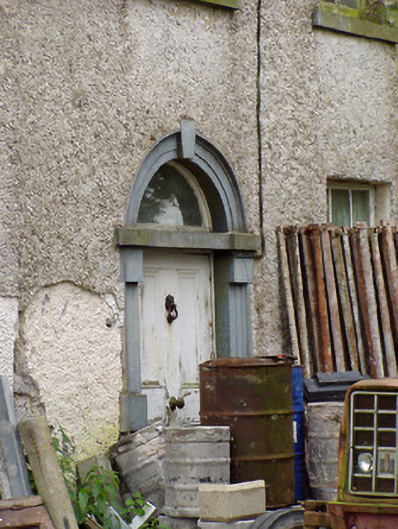
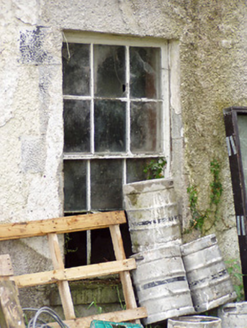
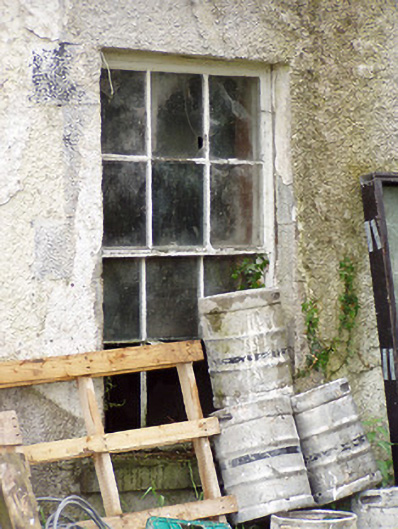
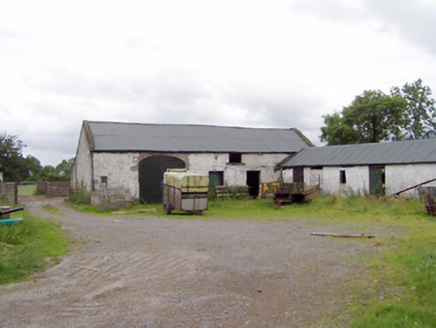
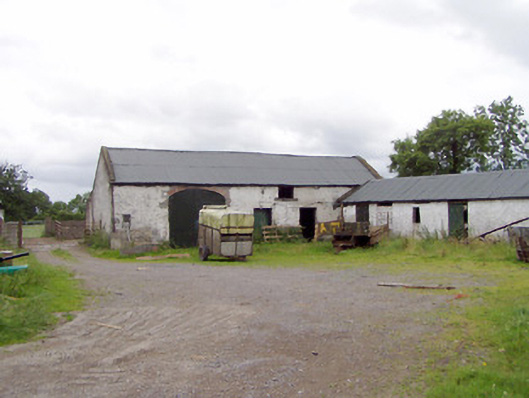
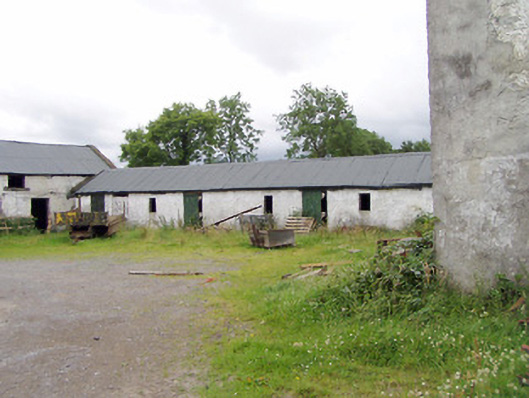
Detached five-bay two-storey house with attic level, built c. 1800, now in disuse. Pitched nature slate roof with raised cut stone verges to gable ends (southwest and northwest) and with cast-iron rainwater goods. Three rendered rubble limestone masonry chimneystacks, one to either gable end and one offset to the centre. Dressed limestone eaves course to the rear. Roughcast render over coursed rubble limestone masonry walls. Flush dressed limestone quoins evident to the corners to the rear (southeast). Square-headed window openings with six-over-six timber sliding sash windows having tooled limestone sills. Square-headed window opening to gable haunch to the northeast end, fittings no longer in-situ. Round-headed opening to the centre of the main elevation with chamfered cut limestone surround having carved keystone and rusticated pilasters with glazed overlight and timber panelled door. Rubble stone boundary wall attached to the northwest gable end. Complex of single and two-storey outbuildings arranged around a courtyard to the rear, c. 1820 and c. 1860. Multiple-bay single-storey outbuilding to southwest having pitched corrugated-metal roof and painted roughcast rendered walls. Four-bay two-storey outbuilding to northeast having pitched corrugated-metal roof. Painted roughcast rendered walls. Square-headed window opening with limestone sill. Square-headed openings with timber battened doors. Full-height segmental-headed carriage arch with brick voussoirs to the northeast end of the main elevation (northwest). Set back from road in extensive grounds to the east of Longford Town. Long approach avenue to the house from the north/northeast.
Appraisal
Although now sadly derelict, this substantial and well-proportioned house retains its early character and form. This house is unusual as it survives intact with no additions or extensions or additions. The house is solidly built of coursed rubble limestone with remnants of the original render in places. The house is enhanced by the retention of notable features and materials such as the timber sash windows with some interior shutters remaining, natural slate roof and tooled limestone sills. The raised cut stone verges and the eaves courses lend it an imposing appearance. The regular façade is enhanced by the ornate doorway with carved limestone rusticated surround, which enhances the front elevation and provides a central focus. The location of the chimneystacks and the fenestration pattern to the rear elevation suggests that this building may have been altered/extended on at least one occasion. Its location in close proximity to Carriglass Manor (13401414) hints that it may have formerly had some connection with this estate, possibly as a dower house etc. The complex of outbuildings arranged around a courtyard to the rear (southeast) add considerably to the setting and context of this interesting composition, which is an integral element of the built heritage of the local area. The long approach avenue from the north/northeast formerly had a gate lodge at the entrance adjacent to the main road (Ordnance Survey first edition six-inch map 1838).