Survey Data
Reg No
13401407
Rating
Regional
Categories of Special Interest
Architectural, Social, Technical
Original Use
Mill (water)
Date
1780 - 1820
Coordinates
218075, 271258
Date Recorded
27/07/2005
Date Updated
--/--/--
Description
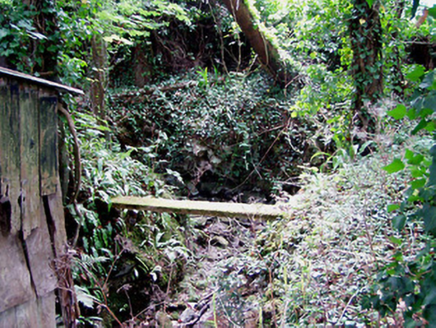
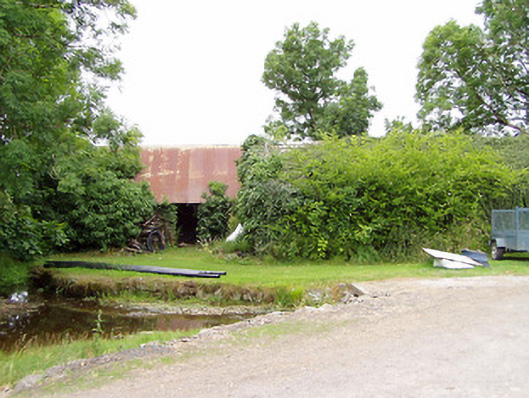
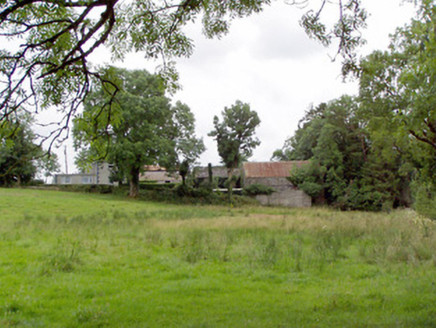
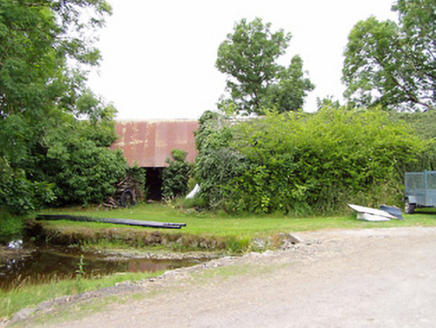
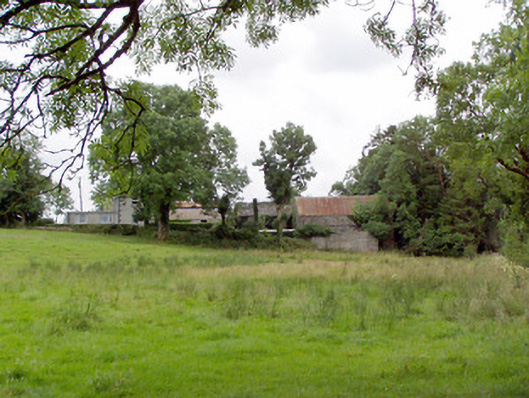
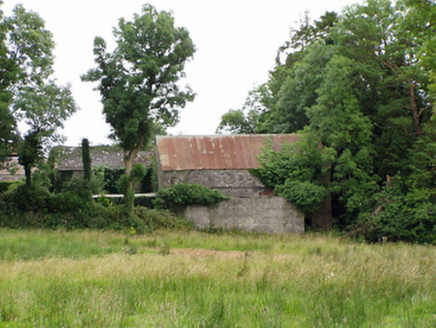
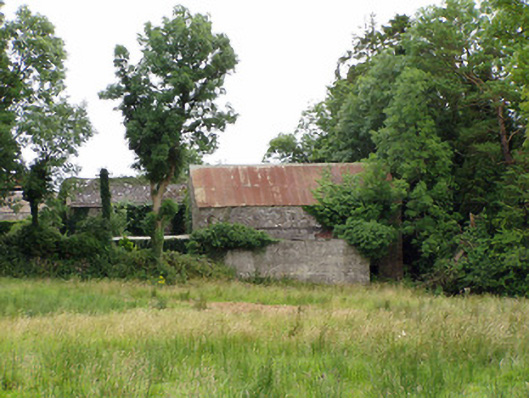
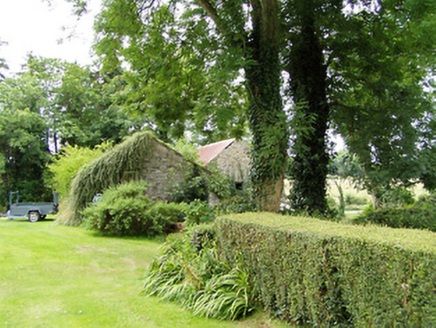
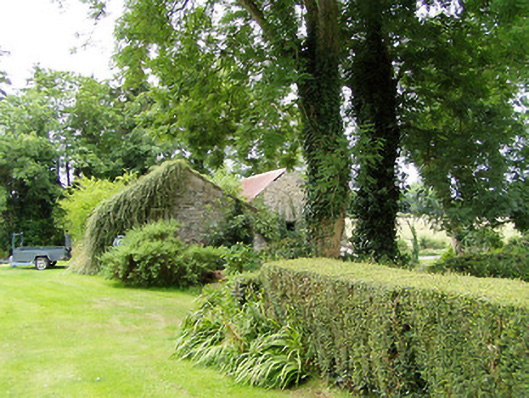
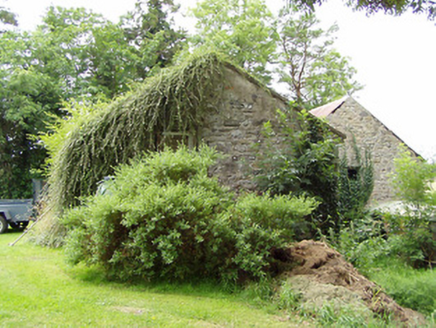
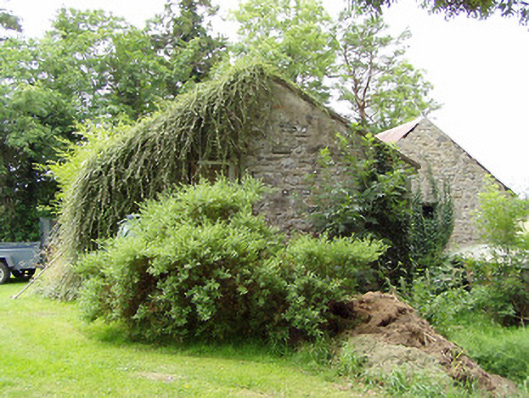
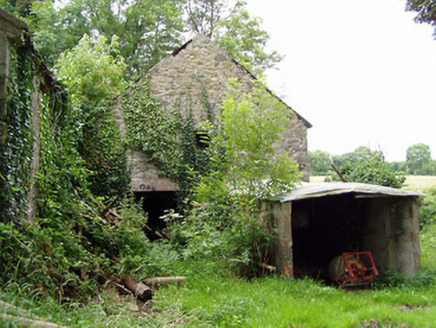
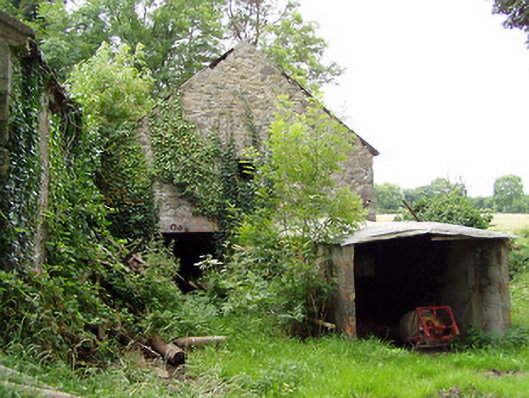
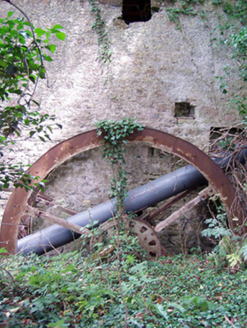
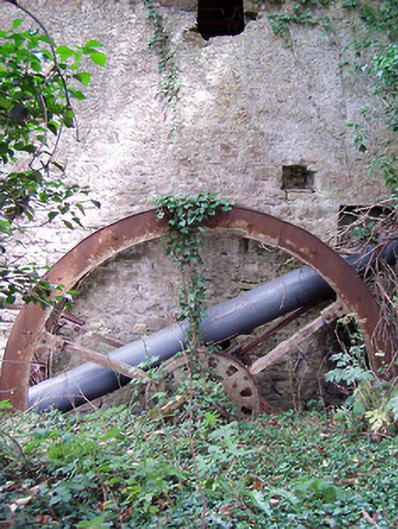
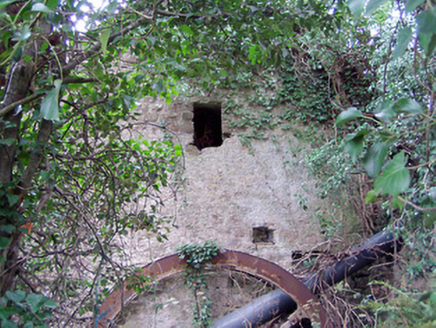
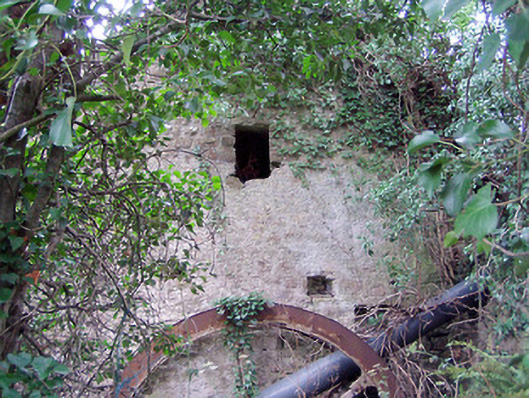
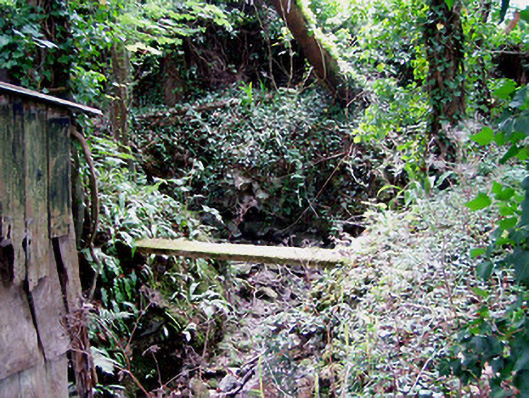
Detached multiple-bay two-storey mill complex, built c. 1800 and extended c. 1860. Now out of use and overgrown. Pitched corrugated-metal roof. Coursed rubble limestone masonry walls, partially rendered. Square-headed window and door openings, original fittings. Remains of mill wheel (c. 12 feet in diameter) to west elevation comprising metal composite wheel. Gable-end facing road. Single-storey ancillary structures to site having rubble stone walls and pitched natural slate and corrugated-metal roofs. Former millrace runs southeast-northwest to the west side of the main mill building. Former mill pond to the east, now dry. Located to the north of Killashee.
Appraisal
Although now derelict, this simple and functional former corn mill complex retains its early form and character. The relatively small-scale of this mill suggests that it was more of a vernacular/toll milling complex than a large scale merchant milling complex, which tend to have much larger and taller mill buildings (such as is found at Clynan and Shrule for example). This corn mill would have provided a basic service to local farmers in grinding and milling their corn, and was also an important source of employment for the local community. It probably dates to the late-eighteenth or the early-nineteenth-century, a period that saw a great boom in the Irish corn milling industry. Of particular interest is the survival of the composite water wheel )c. 12 feet in diameter), which provides an interesting insight into historic industrial processes. This water wheel was apparently formerly an overshot wheel (Industrial heritage report 1976), but little evidence of the elevated millrace now survives. Machinery was also in-situ in 1976. It was in the ownership of a Patrick Blackman c. 1850 (Griffith’s Valuation), consisted of a house, office, mill and land (25 acres) and had a ratable value of £25 at this time. Although this complex is now out of use, it remains an important element of the industrial and economic history of the area, and creates historic incident in the rural countryside to the north of Killashee.