Survey Data
Reg No
13401030
Rating
Regional
Categories of Special Interest
Architectural, Social, Technical
Previous Name
Kilshruley House
Original Use
Bridge
In Use As
Bridge
Date
1860 - 1900
Coordinates
224653, 280958
Date Recorded
15/06/2009
Date Updated
--/--/--
Description
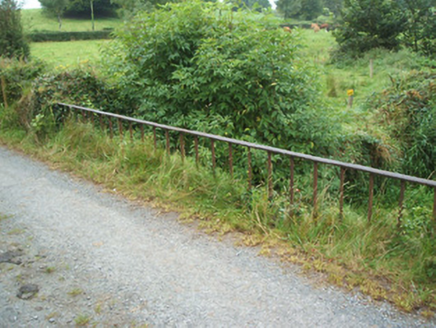
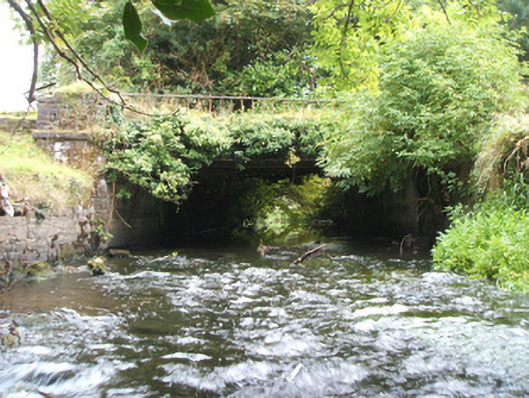
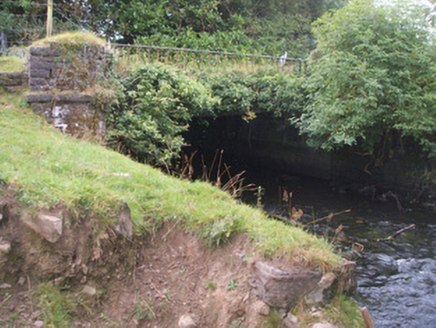
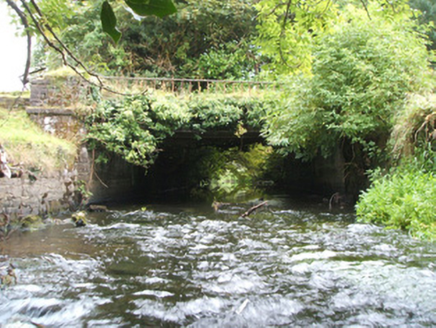
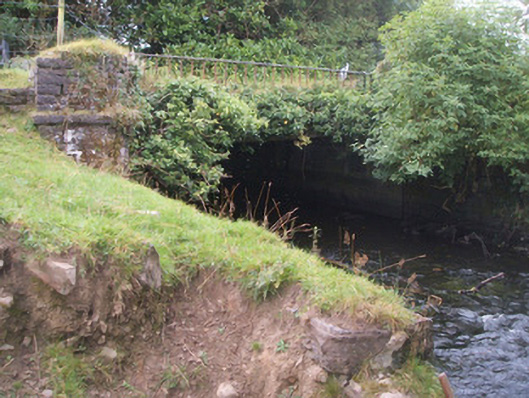
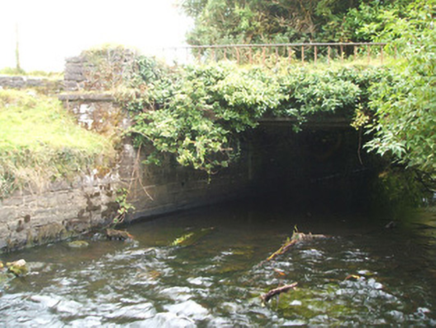
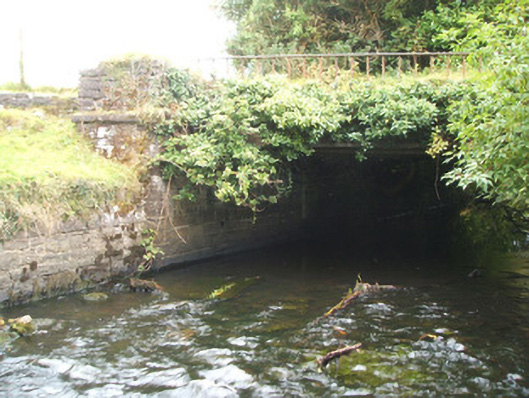
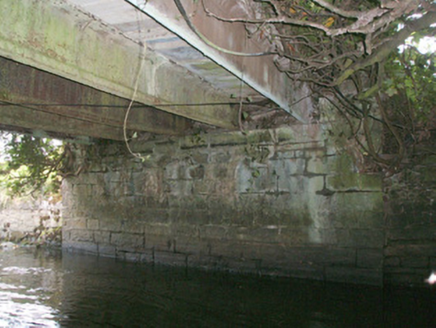
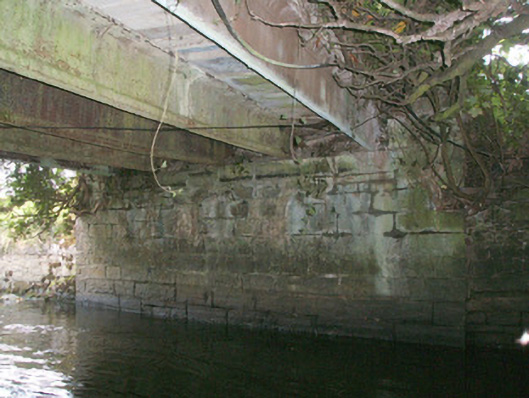
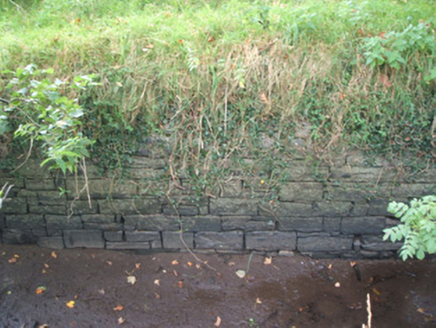
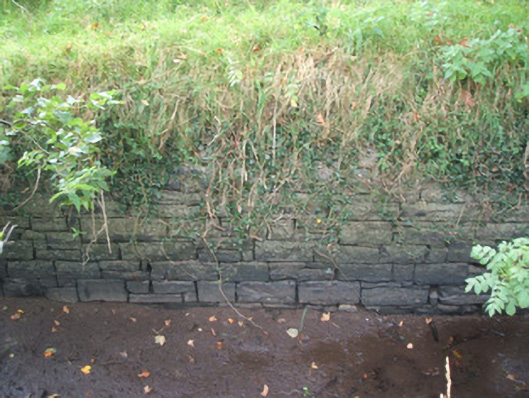
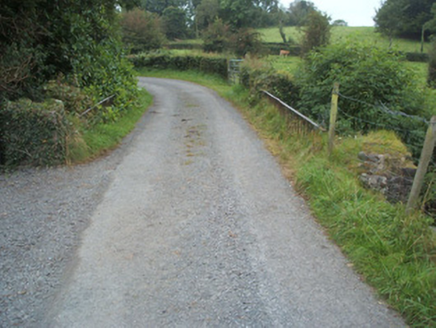
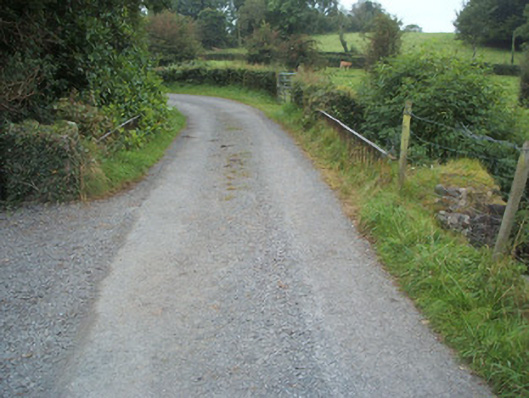
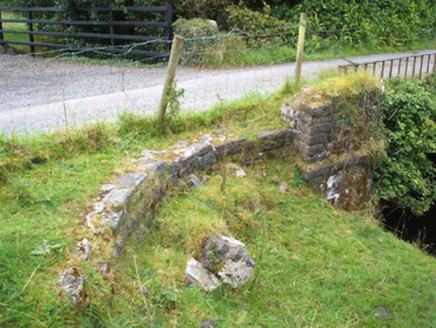
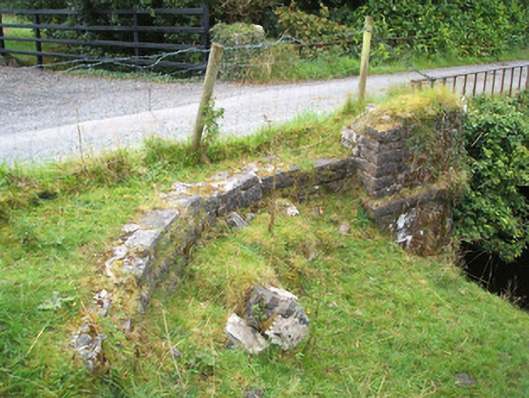
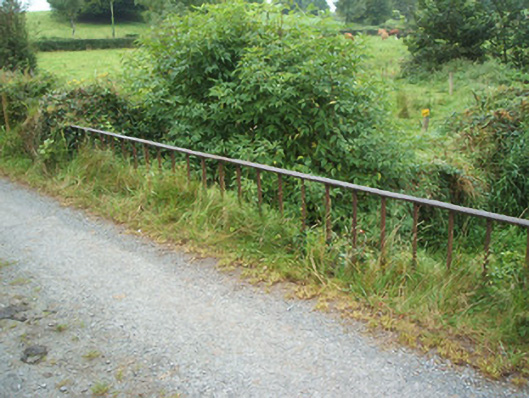
Single-span bridge over the Camlin River, built c. 1880. Originally associated with the Kilshruley Manor estate (house now demolished). Flat deck supported on five steel I-beams with foundry mark ‘I and R Mallet, Dublin'. Cut stone and timber boarding to deck, now with concrete and tarmac over. Wrought-iron parapet railings to either side (east and west). Squared and coursed rubble limestone abutments. Squared and coursed rubble limestone piers to ends of parapets/railings, now damaged, having dressed cut limestone string courses at road deck level. Rubble limestone quadrant wall adjacent to bridge to the northwest end. Squared rubble limestone retaining walls to river channel. Located to the west of the site of Kilshruley Manor, and to the west of Granard. Stone weir (13401031) adjacent to the west.
Appraisal
This interesting bridge was originally associated with the Kilshruley Manor estate (house now demolished). It is one of the few estate/demesne bridges still extant in County Longford. The use of steel beams to support the road deck suggests it dates to the end of the nineteenth century, and it replaced a series of three earlier bridge to site that were associated with an ornamental lake and/or mill pond adjacent to the east (Ordnance Survey first edition six-inch map 1838). Although damaged, it retains its original form and character. The piers and abutments are well built using good-quality squared rubble limestone masonry, while the dressed stone string courses to the piers and the surviving quadrant wall adds a formal architectural character. Its form, having a flat deck supported on steel beams and with stone piers and abutments to either end, is unusual in rural County Longford and it is an interesting addition to the architectural heritage of the local area. The simple but elegant wrought-iron railings survive in good condition and add further interest. It acts as an historical reminder of the Kilshruley Manor estate. Kilshruley Manor has historical connections with a branch of the Edgeworth family, who had their main seat at Edgeworthstown House (13309029) and another seat at Lissard (house demolished). The Edgeworth family had a house at Kilshruley (or Kilshewly) probably from the late-seventeenth century (the owner of the lands at this time, Sir Robert Edgeworth (1659 – 1730), was knighted by King Charles II in 1672 and later raised a regiment for William III during the wars of 1689 – 92. He served as an M. P. for St. Johnston, Longford, from 1713 – 27). It was later the home of Edward Edgeworth (1696 – 1767); a Major Newcomen Edgeworth (died 1791); Thomas Newcomen Edgeworth (1778 – 1857 ), who served as High Sheriff of Longford in 1814 – 15); and a Thomas Newcomen Edgeworth Esq. (1850 – 1931), Deputy Lieutenant for County Longford, in 1894 (Slater’s Directory).