Survey Data
Reg No
13401028
Rating
Regional
Categories of Special Interest
Architectural
Original Use
Outbuilding
In Use As
Outbuilding
Date
1800 - 1840
Coordinates
231768, 278361
Date Recorded
24/08/2005
Date Updated
--/--/--
Description
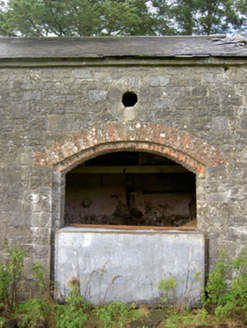
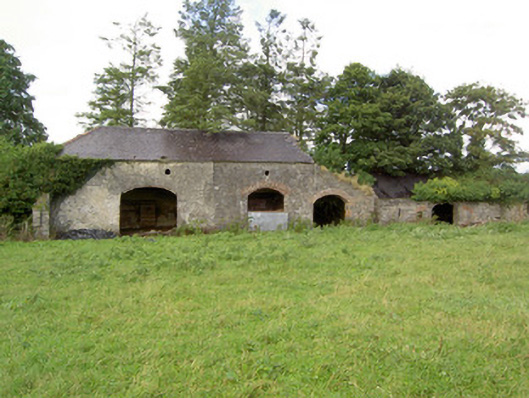
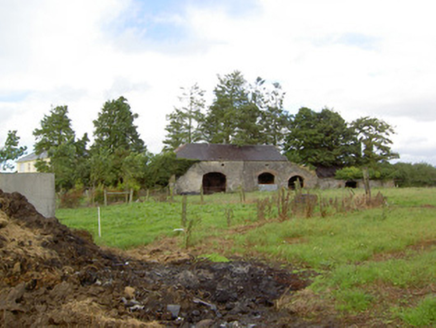
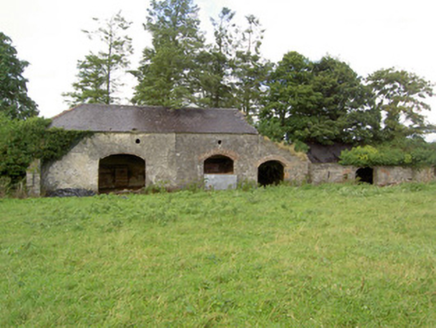
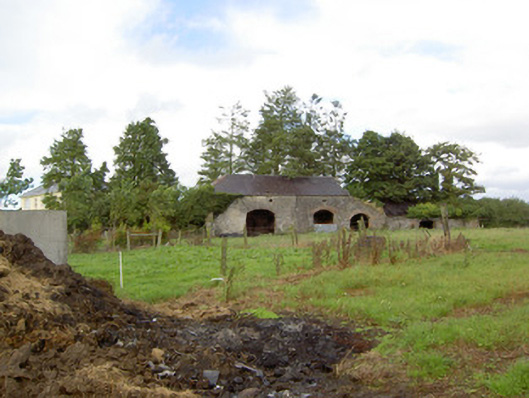
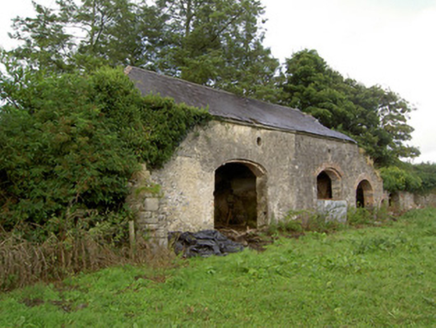
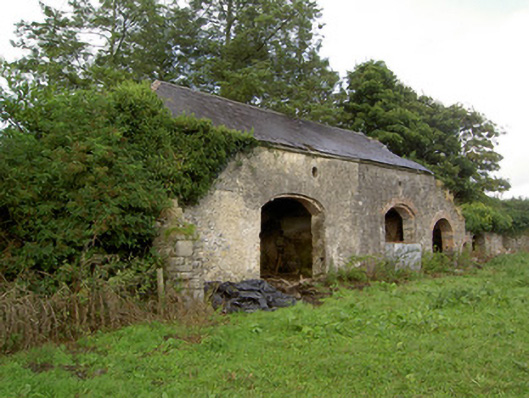
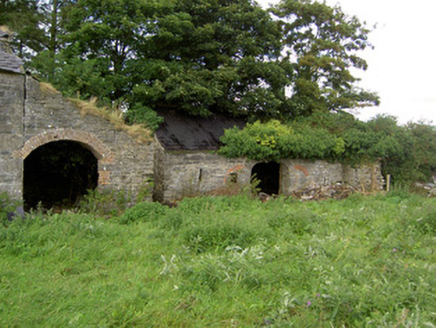
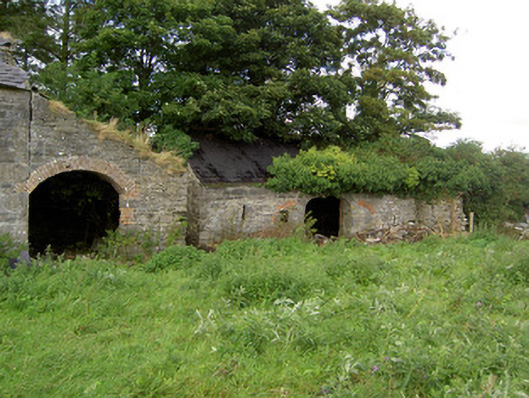
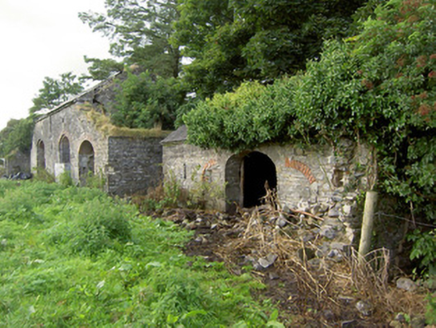
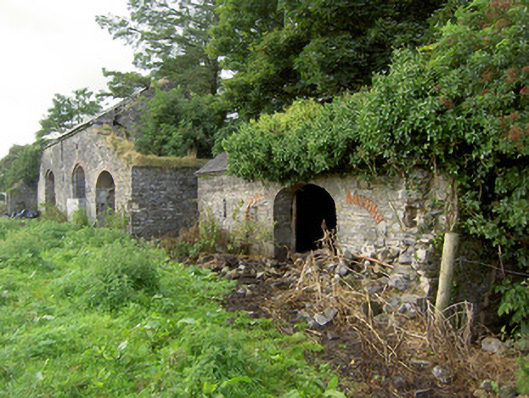
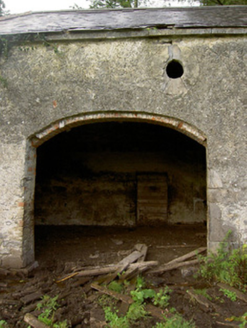
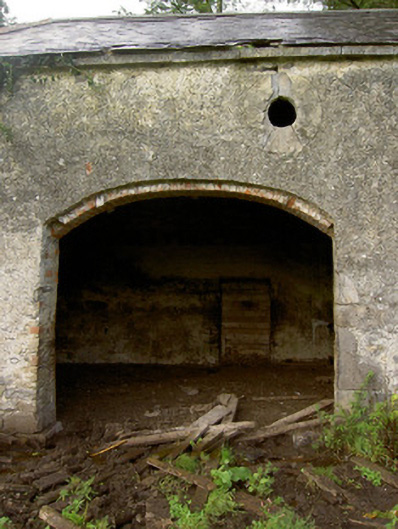
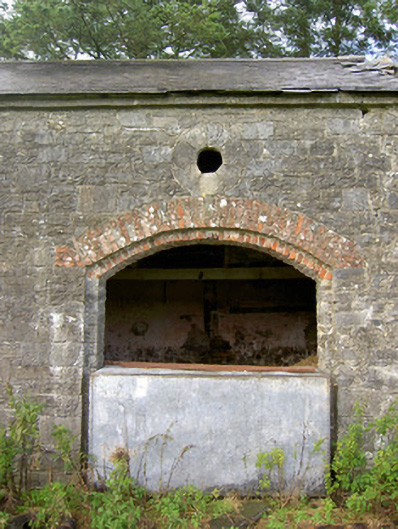
Complex of single- and two-storey outbuildings, built c. 1820. Formerly associated with Mossvale House (now demolished). Two-storey range to the west side of complex having hipped natural slate roof, and with roughcast rendered and roughly coursed squared limestone rubble walls with cut limestone eaves course. Two segmental-headed carriage arch openings, diminishing in size to the east, with red brick voussoirs, and having oculus openings over having dressed limestone surrounds. Single-bay lean-to addition to the east gable end having segmental-headed carriage arch with red brick voussoirs. Adjacent detached multiple-bay single-storey outbuilding to east having pitched natural slate roof and roughly coursed rubble and dressed limestone walls. Segmental-headed door opening with cut limestone voussoirs and having flanking red brick relieving arches. Loop hole/slit window openings to either side of arch. Located to the north of the site Mossvale House (now demolished) and to southeast of Granard.
Appraisal
This attractive and substantial complex of outbuildings was formerly associated with Mossvale House, now demolished. Although now derelict and out of use, they retains much of their early character and form. They are well-built in good quality masonry and exhibit good-quality craftsmanship throughout. The carriage arches to the building to the west suggest that it was in use as a barn. The two-storey range to the west may have contained a pigeon loft, the pigeons entering via the occuli in the upper storey. The scale of these buildings give an interesting historical insight into the resources required to run and maintain a small country estate in Ireland during the nineteenth century. This complex is the only surviving part of the former Mossvale estate. They form a pleasant group of farm buildings and contribute positively to the architectural heritage of the area. Mossvale was the residence of the Barber family during the early-nineteenth century. James Barber, Esq., Mossvale, was a magistrate (from c. 1825), a High Sheriff of Longford in 1826 and was appointed a Deputy Lieutenant of Longford in 1834. It was later the home of a J. Barton, Esq., in 1837 (Lewis), and a William Lewis (J.P.), Esq., in 1846 (Slater’s Directory).