Survey Data
Reg No
13401014
Rating
Regional
Categories of Special Interest
Architectural
Original Use
Outbuilding
In Use As
Outbuilding
Date
1780 - 1820
Coordinates
227345, 279873
Date Recorded
24/08/2005
Date Updated
--/--/--
Description
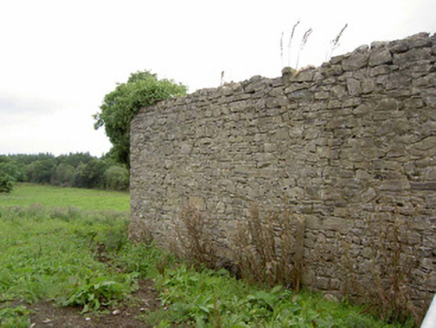
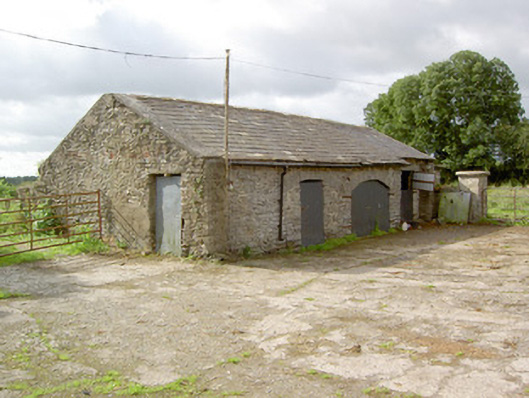
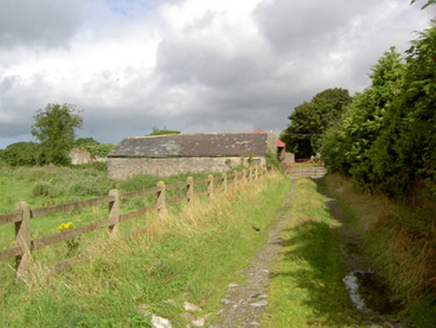
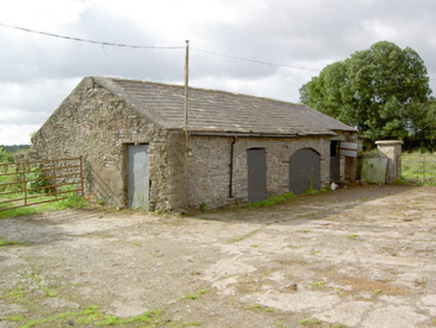
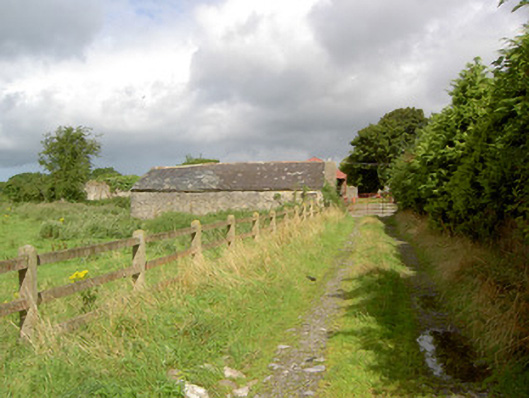
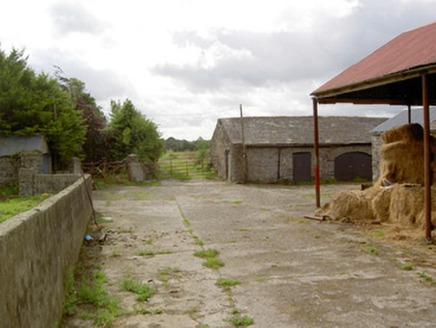
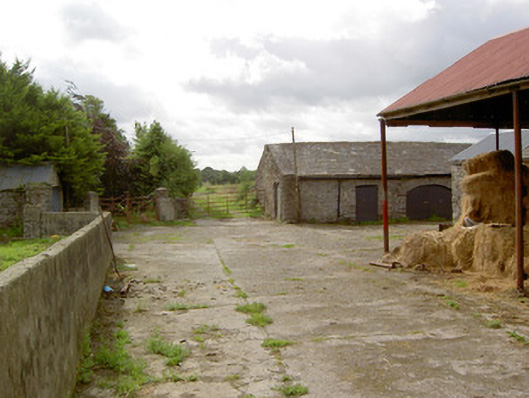
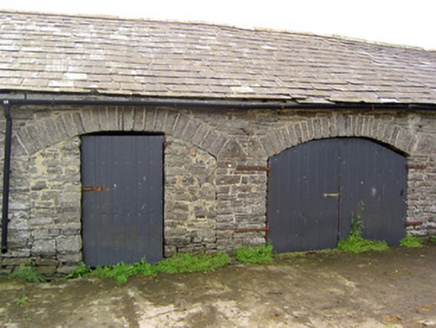
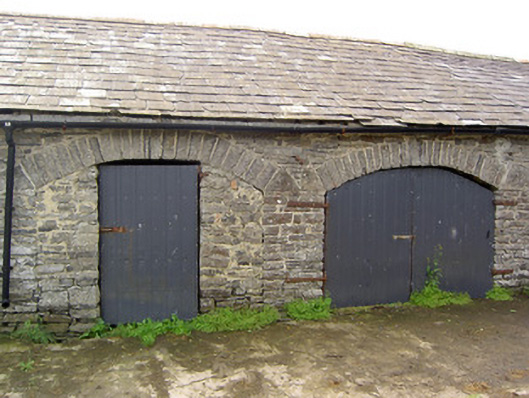
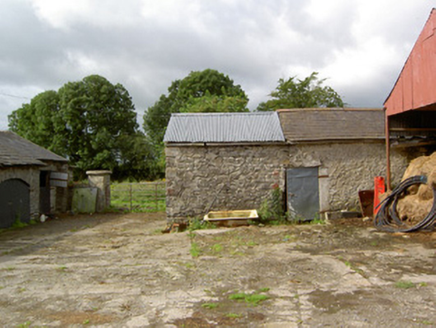
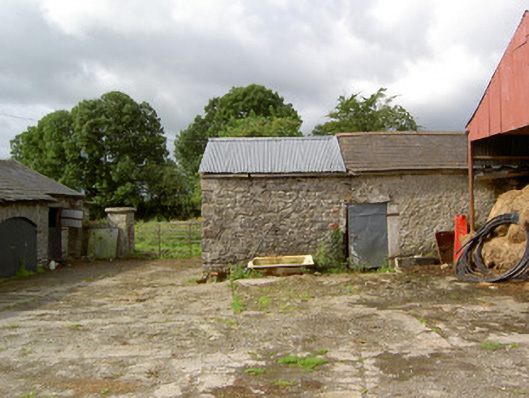
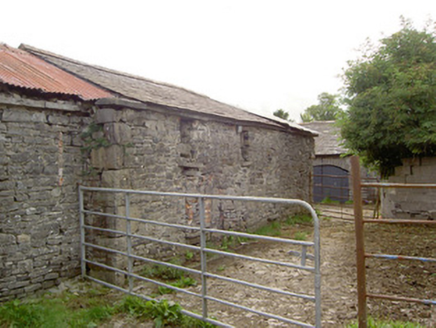
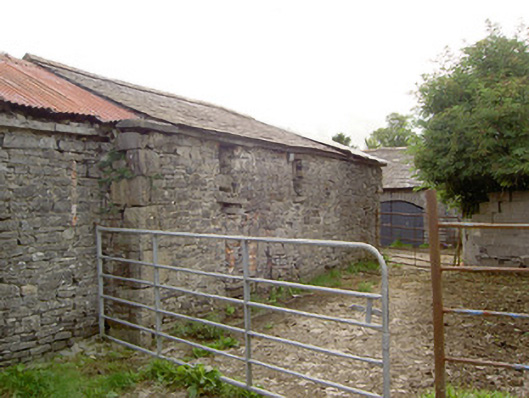
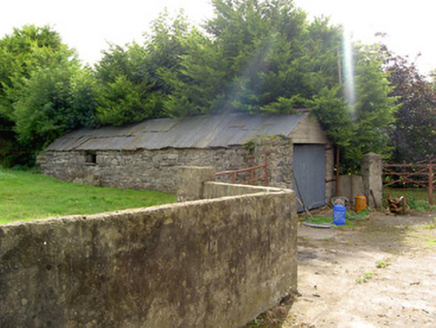
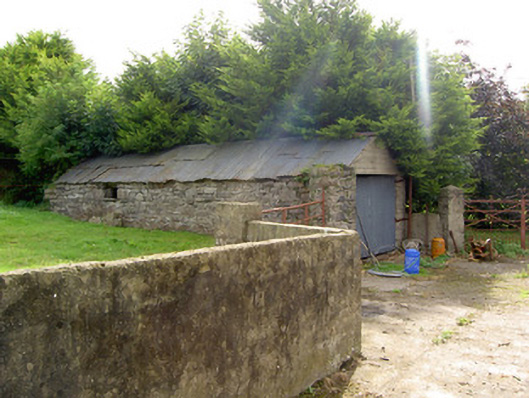
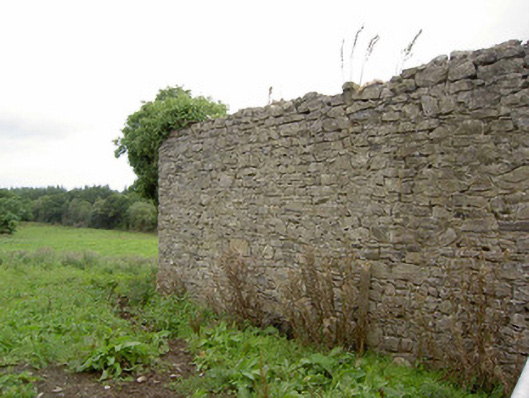
Complex of single- and two-storey outbuildings arranged around a yard to the rear (north) of Cloonfin/Clonfin House (now demolished), built c. 1800. Comprising a three-bay single-storey outbuilding/former coach house to the southeast having two integral segmental-headed carriage arches; two-storey outbuilding to the east, and a single-bay gable-fronted outbuilding to the west. Pitched natural slate and corrugated-metal roofs. Cut stone eaves course to outbuildings to the southeast and east. Roughly coursed limestone rubble walls. Square-headed window openings, now mostly blocked to two-storey outbuilding having tooled limestone sills. Square-headed door openings with modern doors. Two-segmental-headed carriage arches to outbuilding to the east, one now infilled, having dressed limestone voussoirs and modern sheet metal doors. Wrought-iron flat bar gates to site. Former walled garden (on rectangular-plan) to the northwest of yard, built c. 1800, having rubble limestone exterior walls. Located to the northwest of site of house and to the southwest of Granard. Modern farm buildings to site.
Appraisal
This modest complex of outbuildings and former walled garden were originally constructed to serve Clonfin/Cloonfin House, now demolished. The outbuildings are well-built using rubble stone masonry but have been altered in recent years with many of the original openings now infilled. The rubble masonry used in their construction lends these buildings a vernacular character. This complex of outbuildings is of a lower architectural quality compared to many such complexes associated with former country estates in rural Ireland. These structures, together with former gate lodges and gateways to the south (13401022) and east (13401017), are the only remaining structures associated with Cloonfin/Clonfin House, an estate formerly associated with the Thompson family from the early-eighteenth century until c. 1900 (Taylor and Skinner 1777 – 83; Pigot 1824; Lewis 1837; Slater’s Directories). Clonfin was described by Lewis (1837) as the 'handsome residence of J. Thompson, Esq., pleasantly situated in a well-cultivated demesne'. The Thompsons were an important family that originally came to Ireland during the second half of the seventeenth century and various family members served as High Sheriff of County Longford during the nineteenth century. This group of outbuildings and the walled garden form a pleasant group in the landscape and remain and integral part of the built heritage of the area.