Survey Data
Reg No
13401005
Rating
Regional
Categories of Special Interest
Architectural
Original Use
House
In Use As
House
Date
1800 - 1840
Coordinates
233490, 283533
Date Recorded
24/08/2005
Date Updated
--/--/--
Description
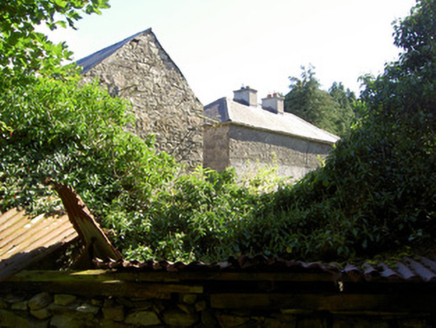
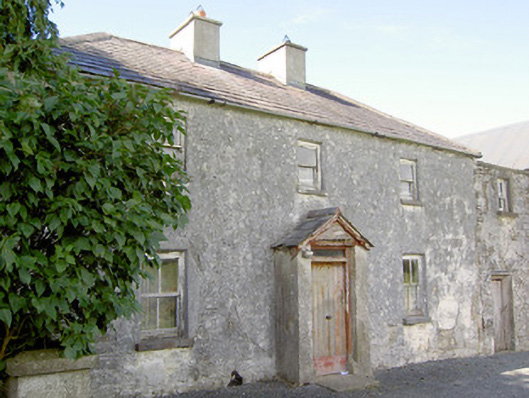
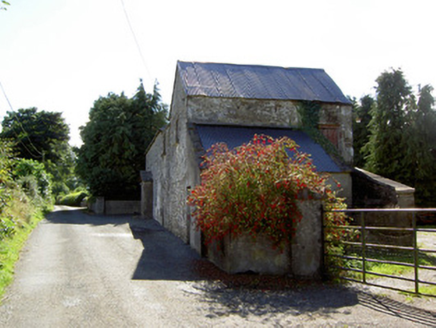
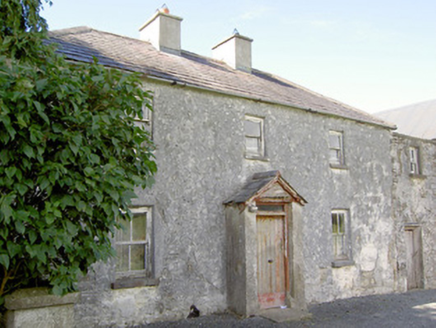
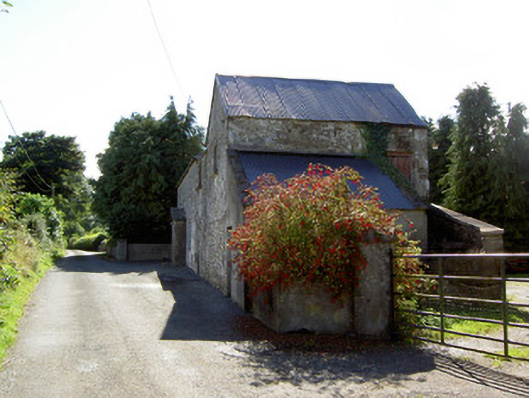
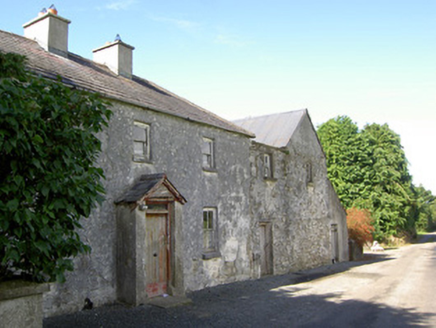
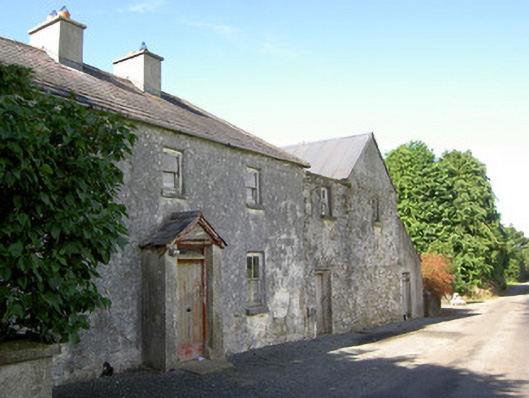
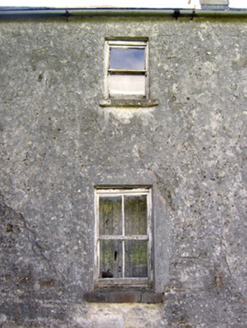
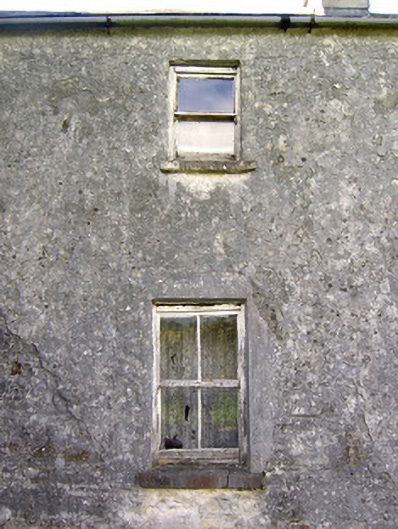
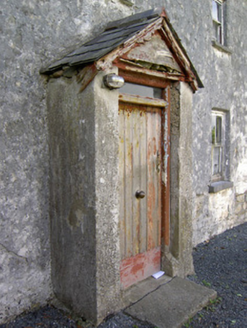
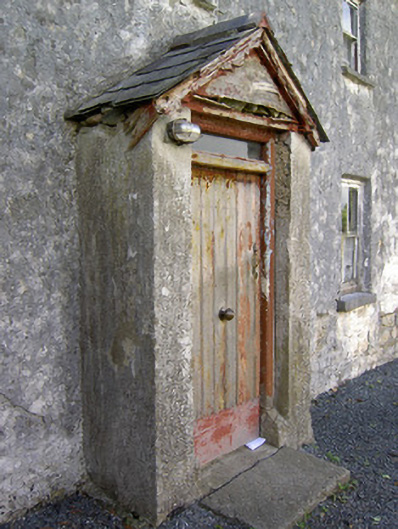
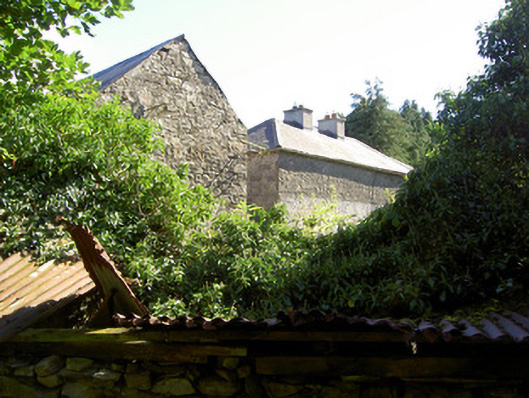
Detached three-bay two-storey vernacular house, built c. 1820, having projecting gable-fronted porch addition to the centre of the front façade (east). Single-bay single-storey addition and two-storey outbuilding attached to the north end. Hipped natural slate roof with central pair of rendered chimneystacks. Pitched natural slate roof to porch with remains of carved timber bargeboard. Lime rendered walls, over rubble stone construction, with cement rendered finish to porch. Square-headed window openings with one-over-one timber sliding sash windows and rendered sills to first floor, two-over-two timber sliding sash windows and tooled cut limestone sills to ground floor. Blank façade to rear at first floor level. Square-headed door opening to porch with timber battened door and plain overlight. Attached outbuildings to north having pitched corrugated-metal roof and lime rendered random rubble limestone walls. Road-fronted with yard to the rear (west). Located to the north of Granard.
Appraisal
This modest two-storey house is an interesting example of the vernacular farmhouse tradition in Ireland. The house retains its early form and traditional materials, including timber sliding sash windows and lime rendering. The irregular spacing of the windows is a characteristic feature of vernacular architecture. This building is of a type that was, until recently, a very common feature of the rural Irish landscape but is becoming increasingly rare due to insensitive alterations and demolition. There were a number of other buildings on this site in the early-nineteenth century and it is possible that this house and its outbuildings once formed part of an early nucleated/clachan settlement. The attached outbuilding/building to the north is unusually large for such a modest house and is almost reminiscent of a small-scale mill. This simple structure is an interesting addition to the rural landscape to the north of Granard, and is an important element of the vernacular heritage of County Longford.