Survey Data
Reg No
13401003
Rating
Regional
Categories of Special Interest
Architectural, Artistic
Previous Name
Rockfield House
Original Use
Gates/railings/walls
In Use As
Gates/railings/walls
Date
1810 - 1840
Coordinates
232577, 284029
Date Recorded
24/08/2005
Date Updated
--/--/--
Description
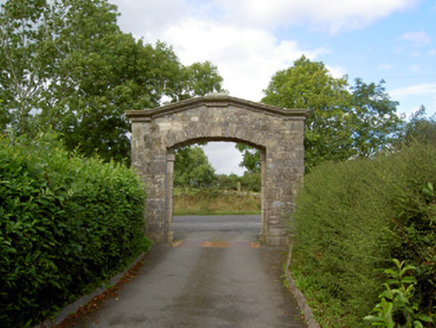
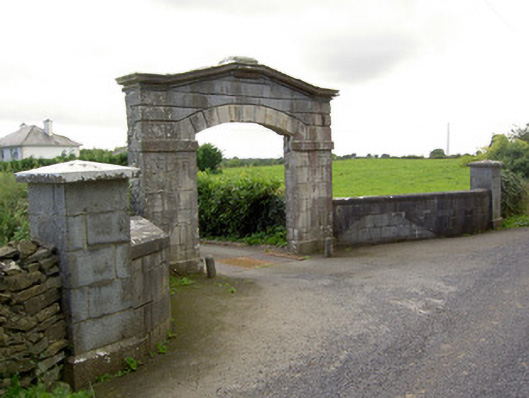
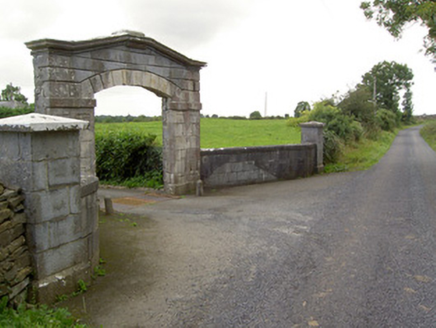
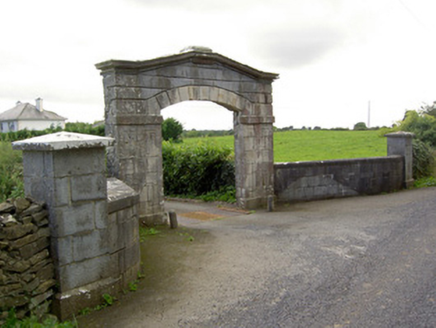
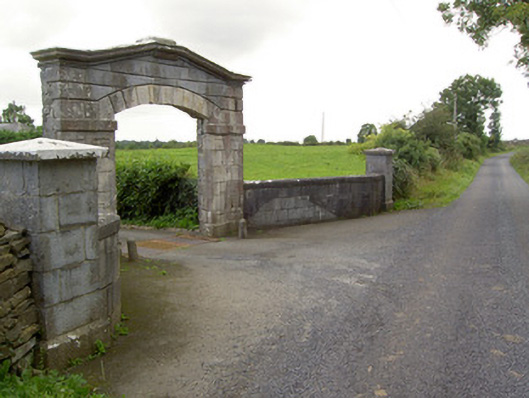
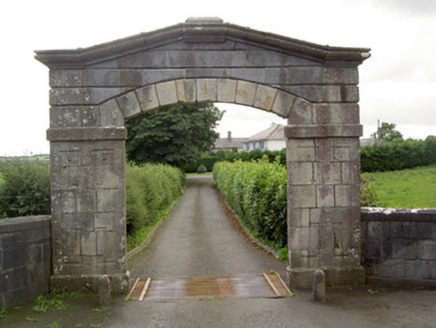
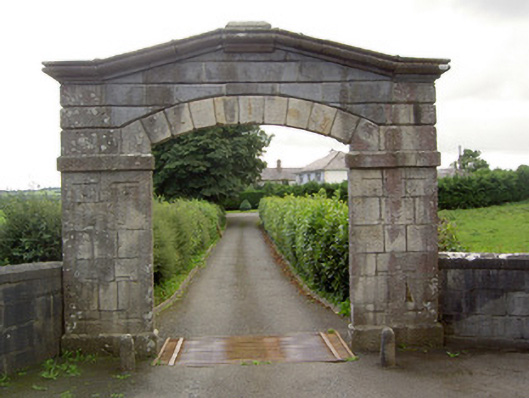
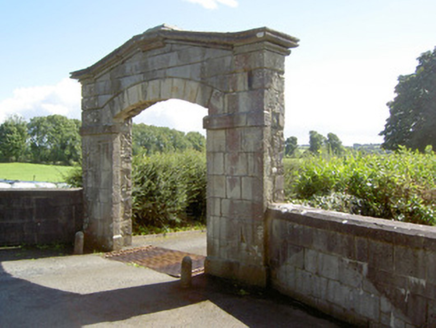
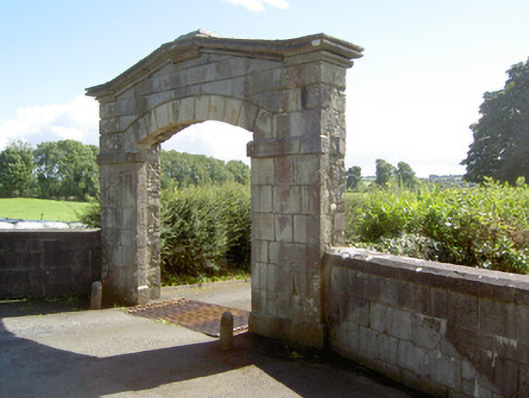
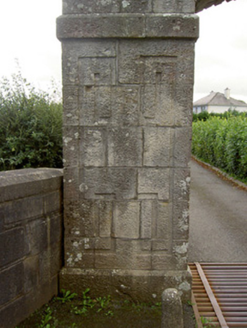
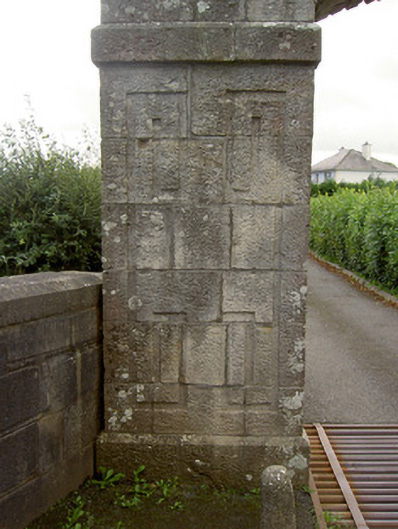
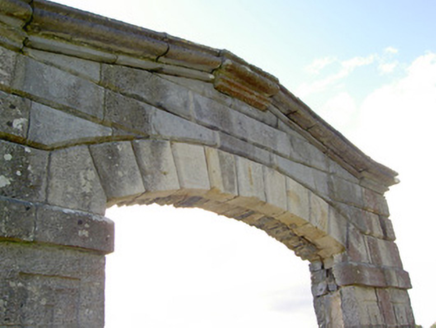
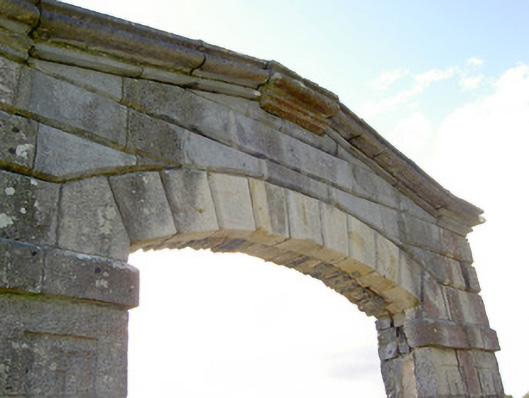
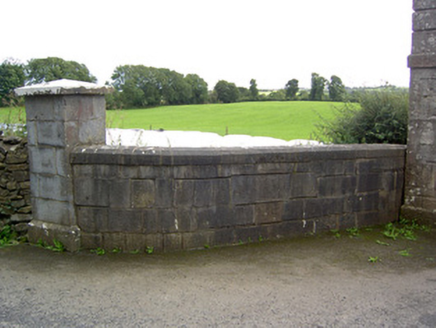
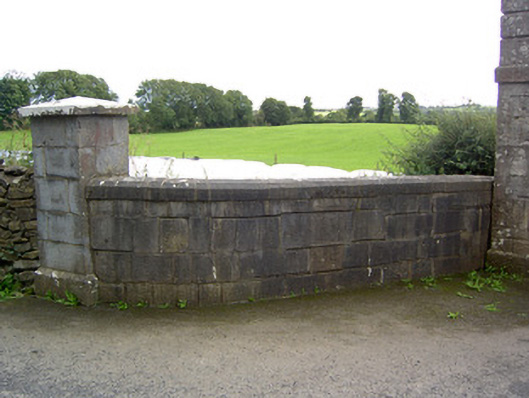
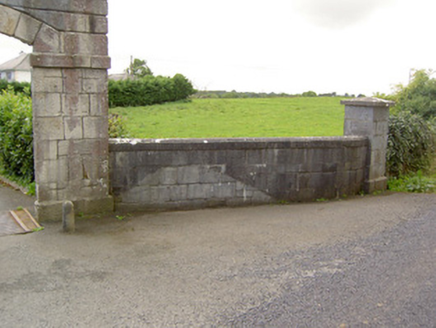
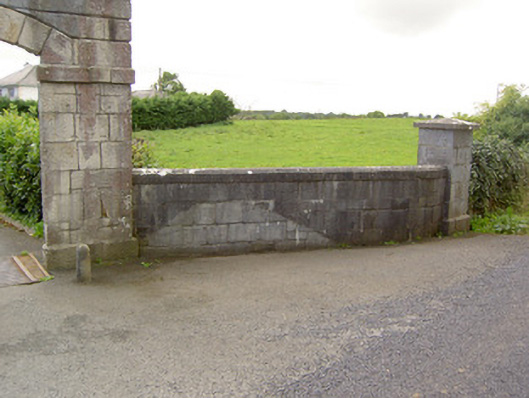
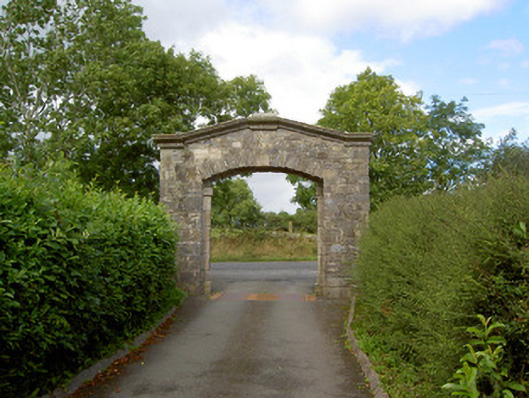
Gateway with integral segmental-headed carriage arch, built c. 1830, originally serving Rockfield House/Dalystown House (now demolished). Faced with dressed V-jointed ashlar limestone over chamfered plinth and having moulded stone coping/cornice over. Greek key pattern incised to columns, flanking arch. Dressed sandstone voussoirs to arch, with projecting dressed limestone string course at arch spring point. Rubble stone construction to the rear elevation (south). Cut limestone wheel guards to exterior of gateway. Gateway flanked to either side by curved sections of dressed limestone wall having chamfered dressed limestone coping over, and terminated by dressed limestone gate piers (on square-plan) having dressed capstones over. Located to the north of complex of outbuildings (13401002) and the site of Rockfield/Dalystown House. Road-fronted to the north of Granard.
Appraisal
An impressive and imposing classical entranceway, of finely executed limestone and sandstone construction, that is reminiscent of a triumphal arch. It is well-detailed throughout, exhibiting a distinctive incised Greek key pattern and with finely carved coping/cornice over. It is built in a vaguely Greek Revival style, a style that was popular during the late-eighteenth and (particularly) the early-nineteenth century. This fine archway was apparently originally located at the entrance to the outbuilding complex (13401002) to the rear of the now demolished Rockfield House/Dalystown House, and was moved to its present site during the late-twentieth century. However, this gateway is of a higher architectural quality than the surviving outbuildings, suggesting that it may have originally come from another site/house. It is a feature of some artistic and architectural merit, adding interest to its rural location to the north of Granard. The curved sections of boundary wall and the piers complete the setting and add to this distinctive composition.