Survey Data
Reg No
12505003
Rating
Regional
Categories of Special Interest
Architectural, Artistic, Historical, Social, Technical
Previous Name
Maryborough District Lunatic Asylum
Original Use
Church/chapel
In Use As
Church/chapel
Date
1890 - 1900
Coordinates
247988, 198449
Date Recorded
29/08/2008
Date Updated
--/--/--
Description
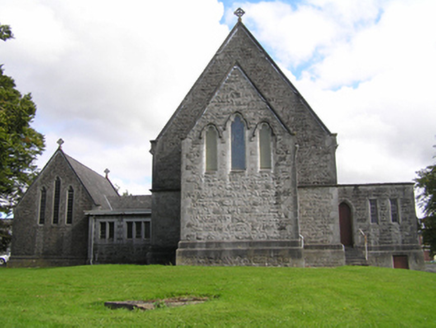
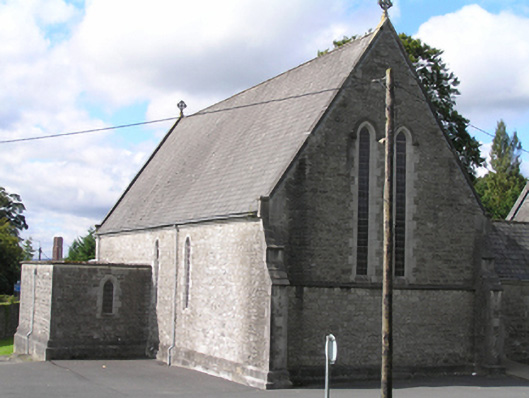
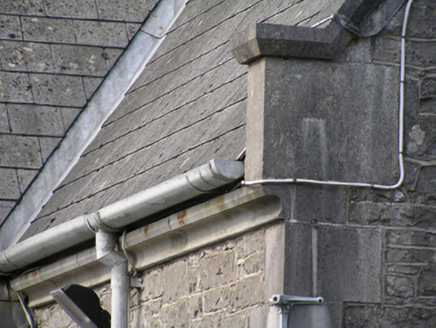
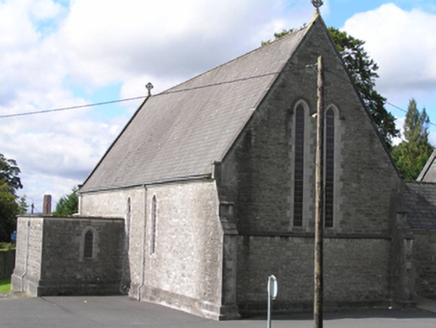
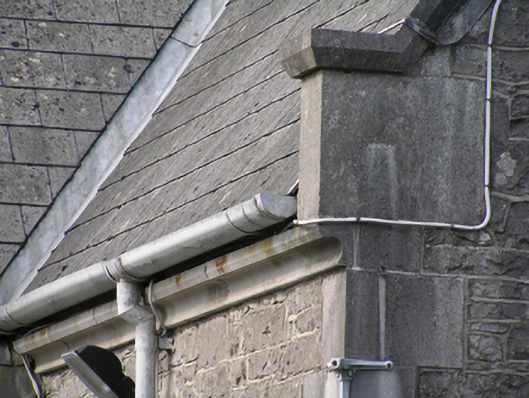
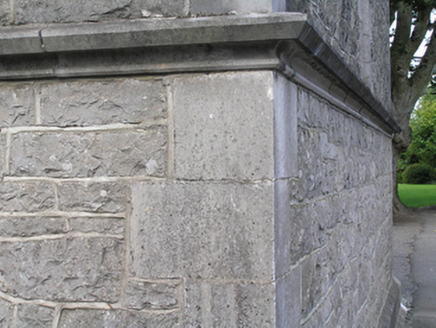
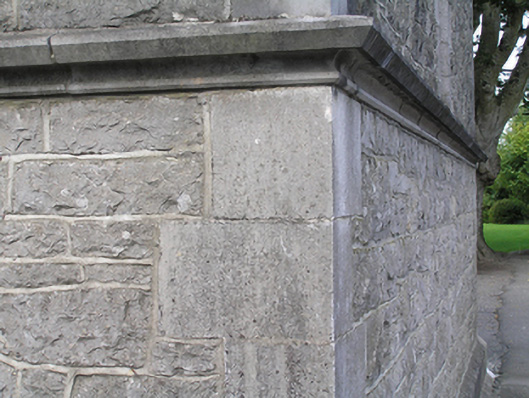
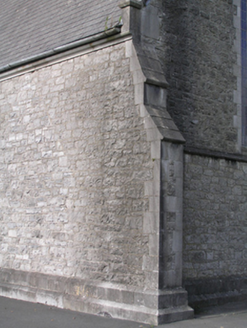
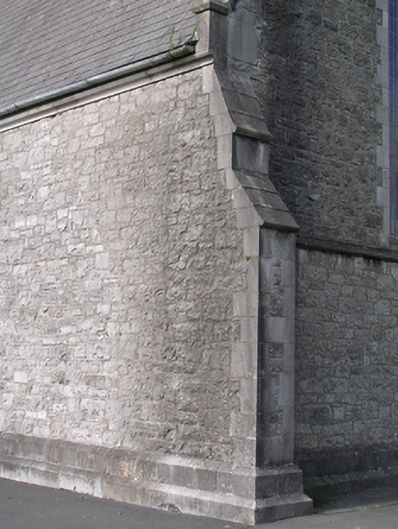
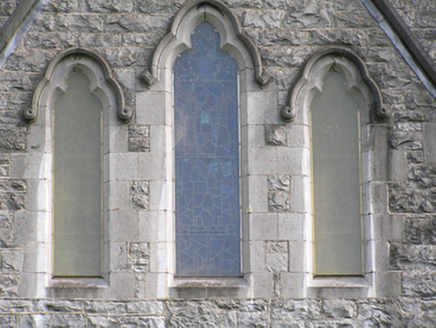
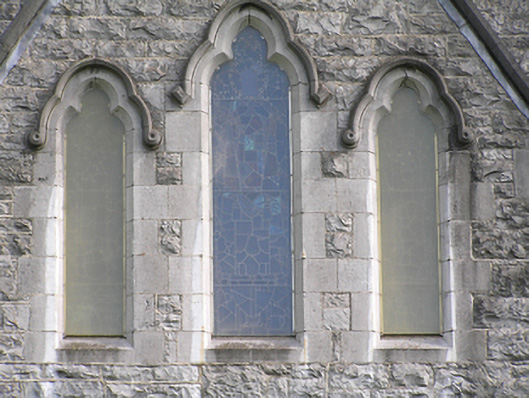
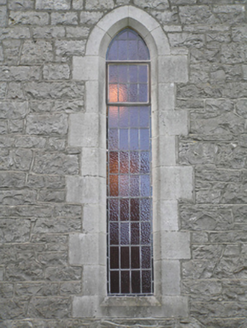
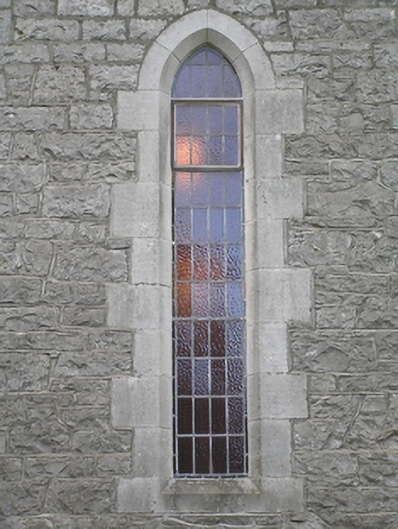
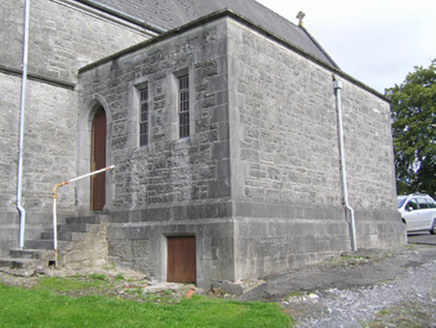
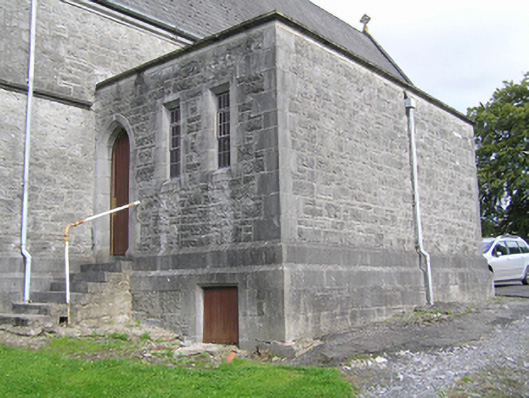
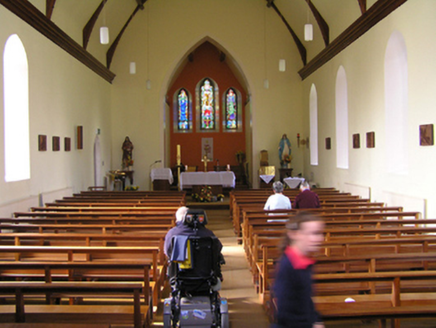
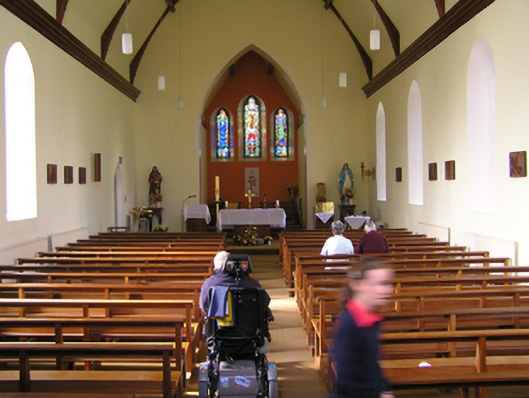
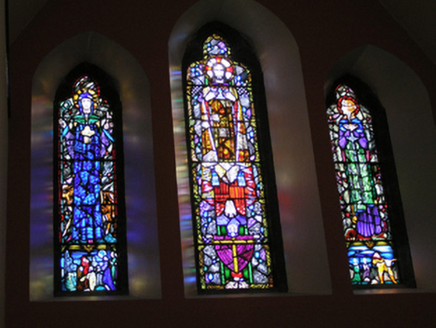
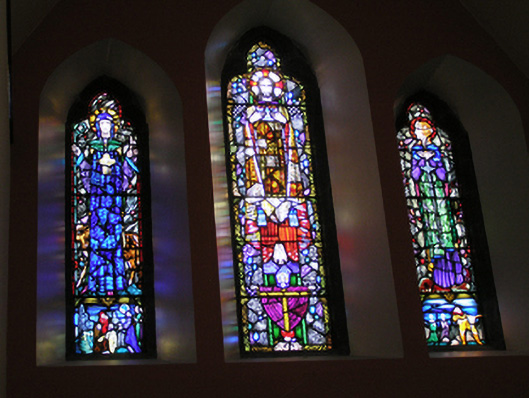
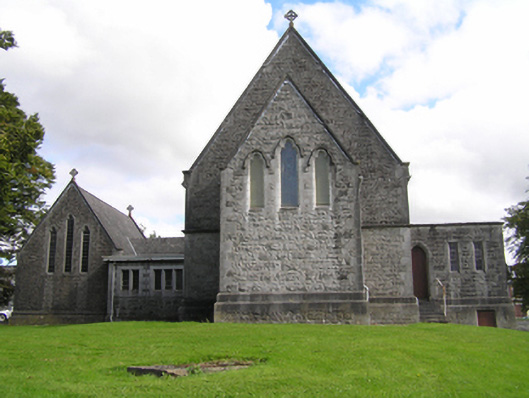
Attached single-cell double-height gable-fronted limestone Catholic chapel, built c.1895, forming a mortuary chapel complex with entrance block (12505002) and Church of Ireland chapel (12505001). Steeply-pitched artificial slate roof, synthetic ridge tiles, limestone ashlar fractable to gable end surmounted by stone Celtic cross terminating with skew corbels at eaves course, roll-moulded limestone ashlar eaves course, replacement rainwater goods, flat-roof to vestry with cement coping. Random rough-hewn limestone walls, cement pointing, stepped buttresses to either end of front gable, double-splayed tooled limestone ashlar plinth course, tooled limestone ashlar quoins to corners, roll-moulded limestone string course below sill level to front and rear gables, pair of pointed-headed lancet window openings to front gable, three to north elevation, two to south elevation and three trefoil-headed lancet window openings to west elevation, pointed-headed door opening to vestry with square-headed windows to west and single lancet opening to east, flush chamfered limestone ashlar surrounds to openings with chamfered sills, continuous limestone hood moulding to gable windows. Leaded glass windows, three stained glass windows to west gable, possibly Harry Clarke Studio c. 1940, weather-glazed to exterior, replacement timber door to vestry opening onto flight of limestone steps.
Appraisal
A simple stone chapel, forming part of a mortuary complex, executed in a restrained Gothic idiom displaying excellent masonry craftsmanship and retaining all its exterior features except the roof materials and rainwater goods. This mortuary complex further enhances the architectural interest of the St. Fintan's hospital complex.