Survey Data
Reg No
12402505
Rating
Regional
Categories of Special Interest
Architectural, Artistic, Historical, Social
Original Use
Church/chapel
In Use As
Church/chapel
Date
1815 - 1835
Coordinates
268420, 149387
Date Recorded
12/11/2004
Date Updated
--/--/--
Description
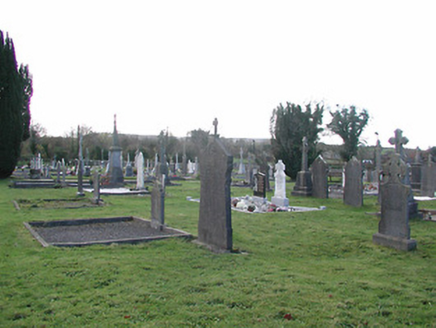
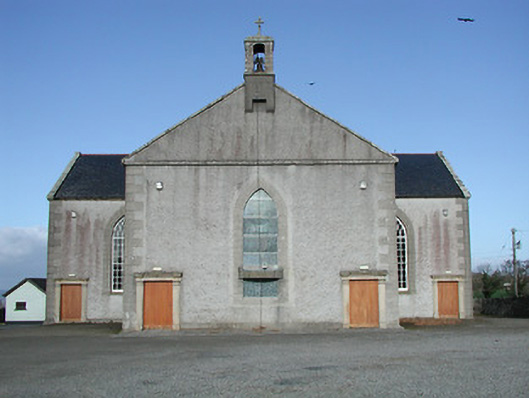
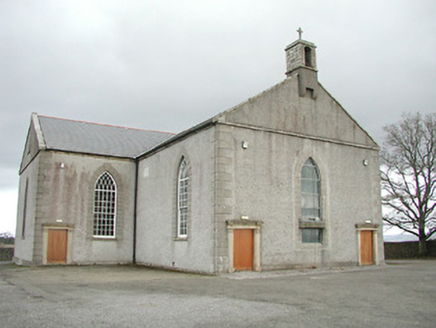
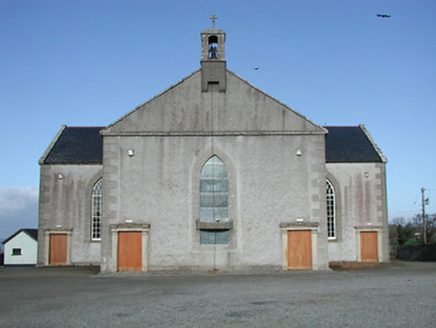
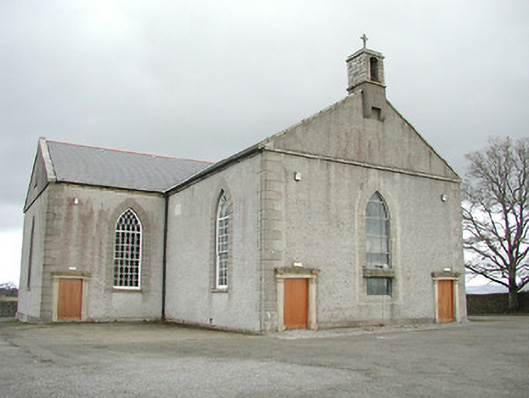
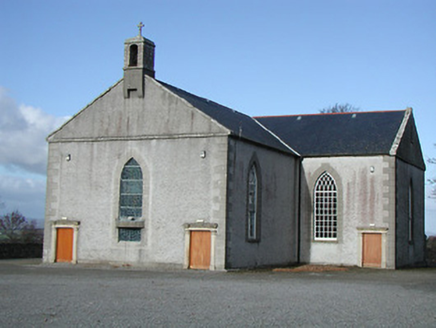
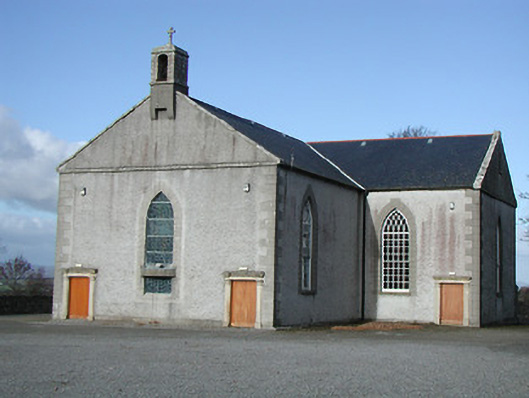
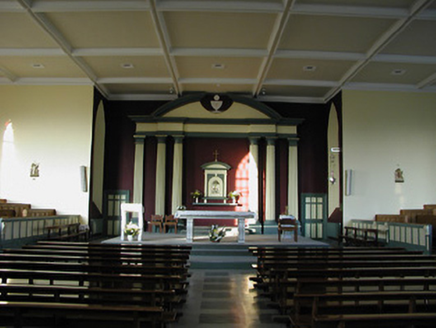
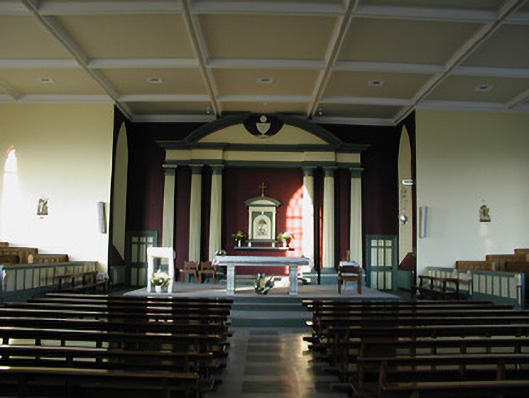
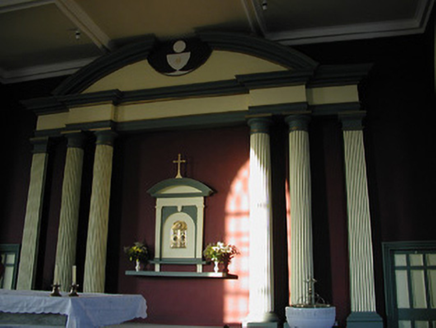
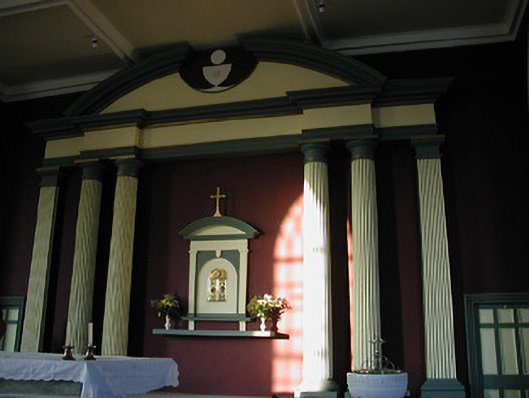
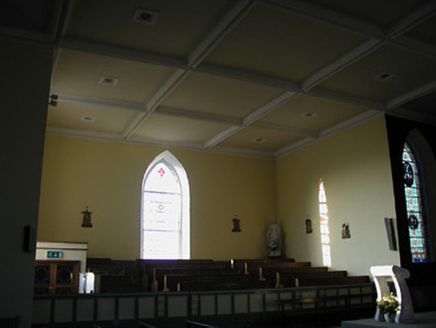
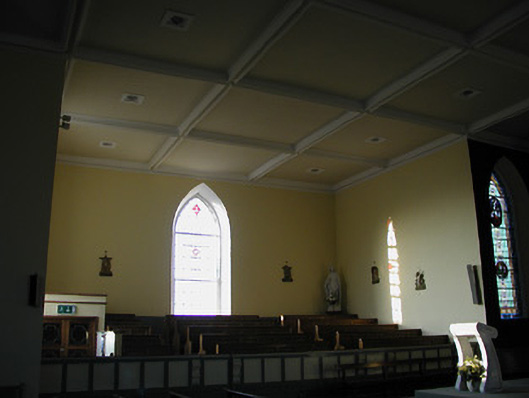
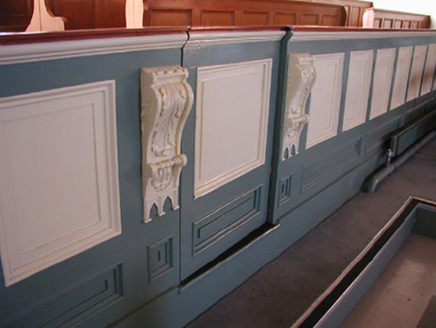
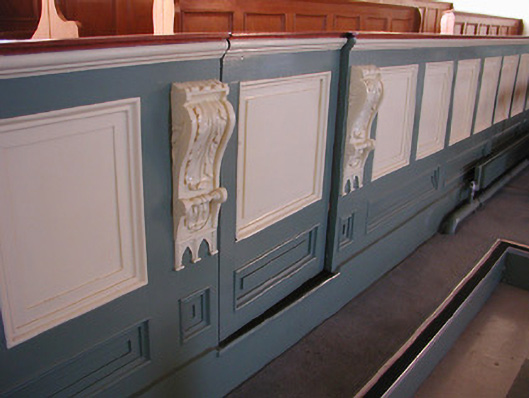
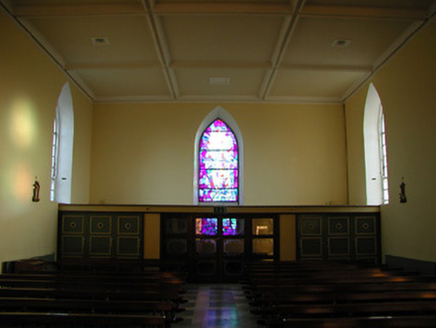
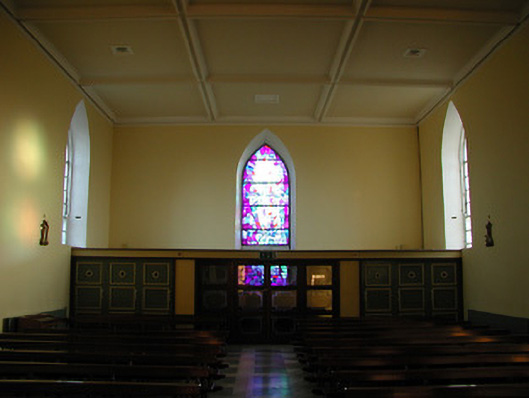
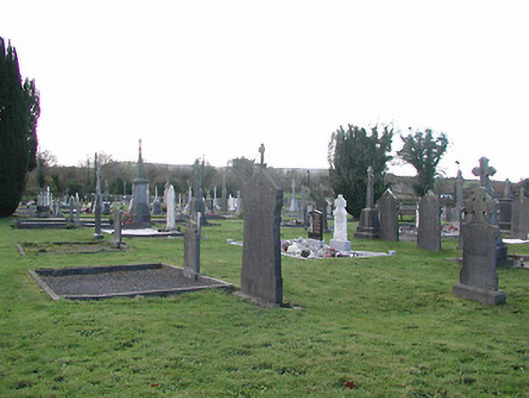
Detached three-bay double-height Catholic church, c.1825, on a cruciform plan comprising single-bay double-height nave, single-bay double-height transepts to east and to west, and single-bay double-height shallow chancel to north continuing into single-bay two-storey double-pile sacristy to north. Pitched slate roofs on a cruciform plan (pitched double-pile (M-profile) to sacristy) with clay ridge tiles, cut-limestone coping to gables having bellcote, dated 1865, to apex to south (with limestone ashlar 'machicolation' supporting stringcourse, camber-headed aperture having cast-iron bell, and cut-limestone coping having cross finial), and cast-iron rainwater goods on cut-limestone eaves. Unpainted roughcast walls with cut-limestone quoins to corners, and cut-limestone surround to gable. Pointed-arch window openings with cut-limestone sills, rendered quoined surrounds incorporating voussoirs having 'keystones', and twenty-over-twenty timber sash windows having tracery overlights (fixed pane fitting to south having leaded stained glass panels). Square-headed door openings with cut-granite pilaster surrounds supporting friezes having entablatures, and tongue-and-groove timber panelled doors. Square-headed window openings to sacristy with cut-limestone sills, rendered surrounds, six-over-six (ground floor) and three-over-six (first floor) timber sash windows having wrought iron bars. Square-headed door opening with four cut-stone steps, rendered surround, and timber door. Full-height interior reordered, post-1973, with glazed internal porch (incorporating glazed timber double doors having sidelights) having timber panelled flanking confessionals, timber pews, timber panelled pews to transepts having timber panelled parapet screen incorporating Acanthus console accents, Classical-style reredos to chancel (with paired full-height fluted Doric columns flanking aedicule (with sill on consoles, pilasters flanking round-headed recess, frieze, and segmental pediment having cross finial) having full-height fluted flanking Doric pilasters supporting entablature, frieze, cornice, and broken segmental pediment), replacement altar fittings, post-1973, and coffered ceiling. Set back from road in own grounds. (ii) Graveyard to site with various cut-stone markers, c.1825-present.
Appraisal
A well-composed middle-size rural parish church of solid, almost monolithic appearance on account of attributes including the compact plan, the disproportionate bias of solid to void in the massing, the sparse detailing, and so on. Additional characteristics including the profiled openings introducing a pared-done Gothic theme, the Classically-derived doorcases exhibiting fine stone masonry, the pretty glazing patterns to the window openings, and so on all further enhance the aesthetic aspirations of the composition. Having been carefully maintained the church continues to present an early aspect with most of the historic fabric surviving in place both to the exterior and to the interior where a decorative scheme, although modified retains an elaborate Classical-style reredos displaying expert craftsmanship. An attendant graveyard containing a collection of markers of artistic design interest contributes to the group and setting values of the site in Skeaghvasteen (Skeoghvasteen).