Survey Data
Reg No
12401302
Rating
Regional
Categories of Special Interest
Architectural, Artistic, Historical, Social
Original Use
Church/chapel
In Use As
Church/chapel
Date
1845 - 1850
Coordinates
244350, 161365
Date Recorded
09/11/2004
Date Updated
--/--/--
Description
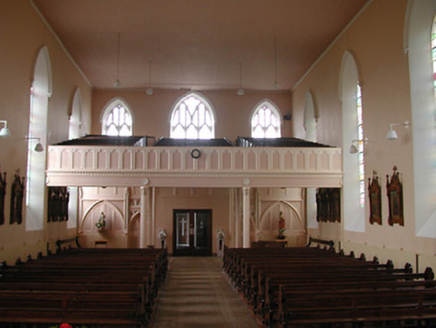
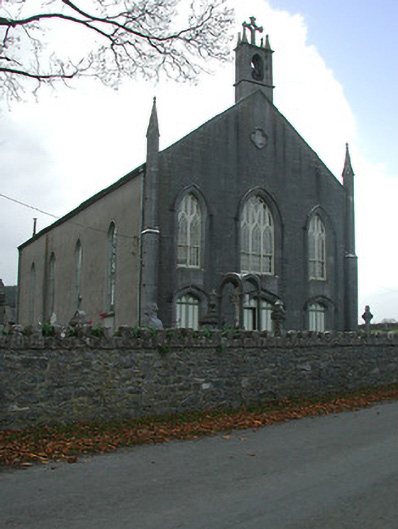
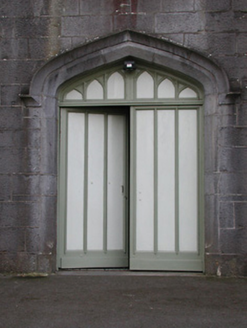
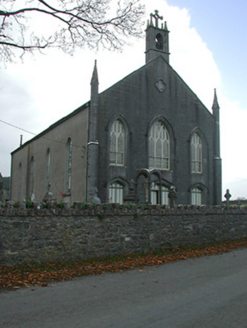
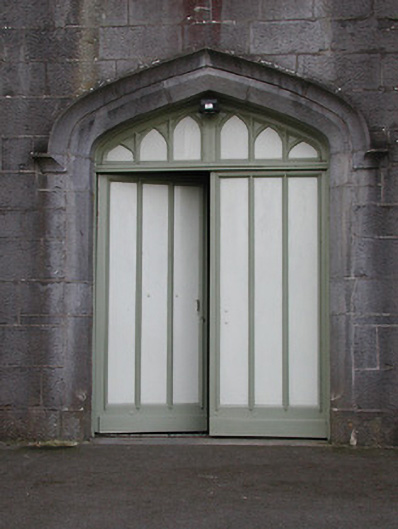
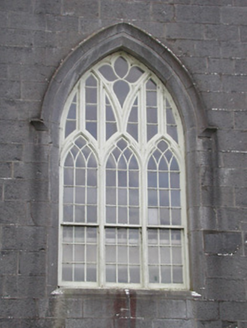
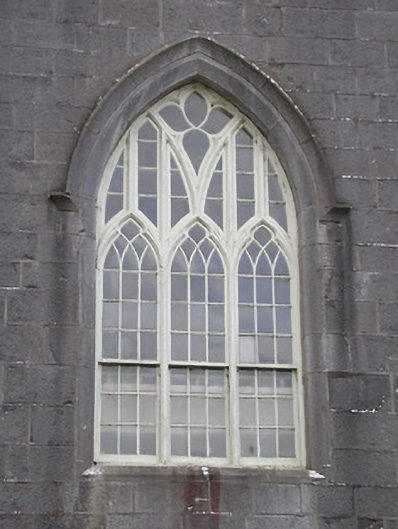
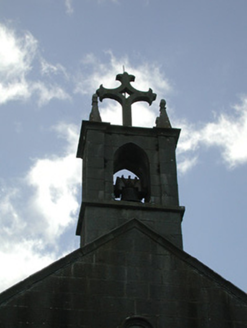
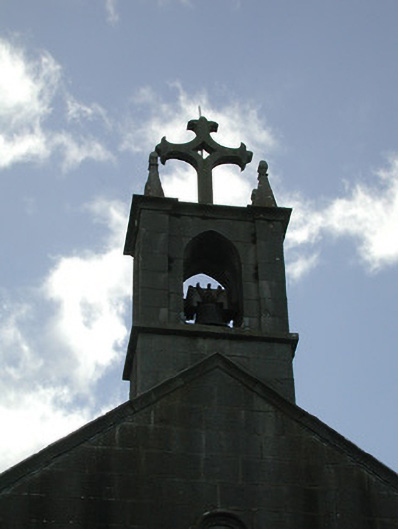
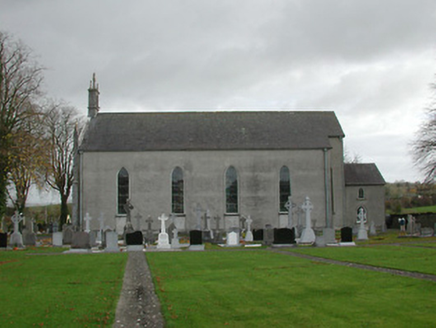
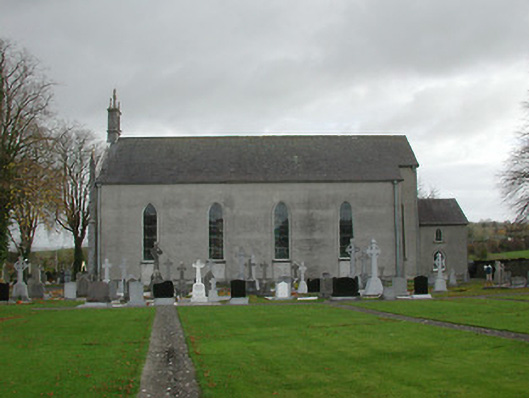
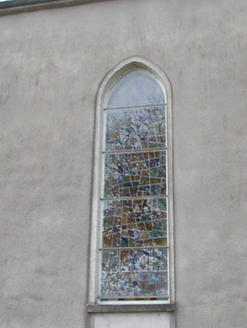
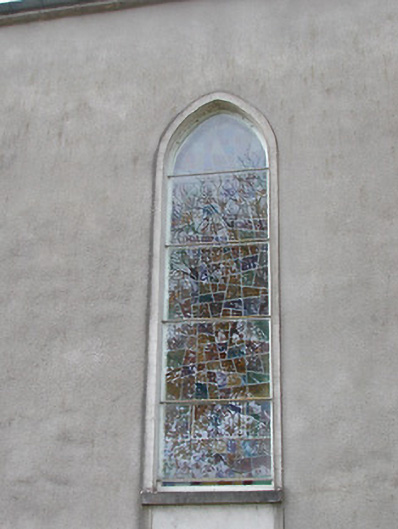
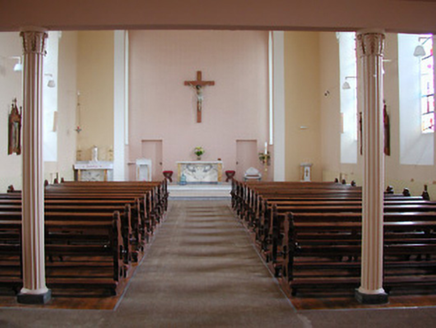
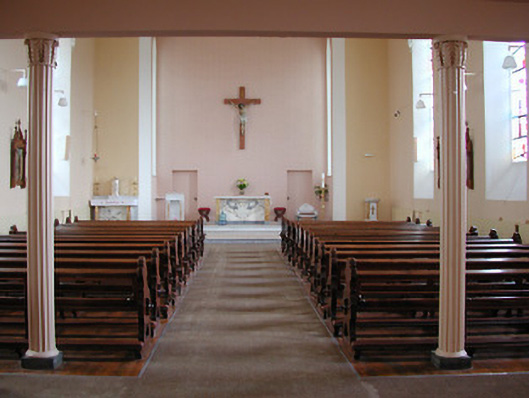
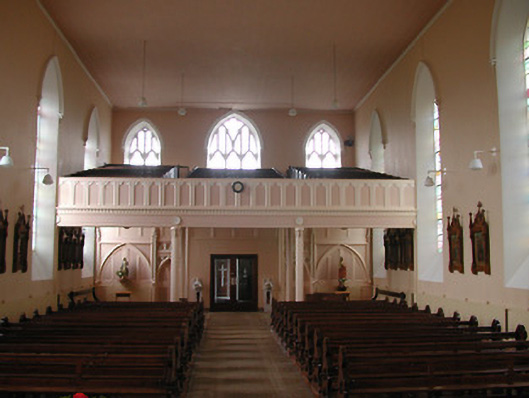
Detached five-bay double-height Gothic-style Catholic church, built 1846-7, comprising four-bay double-height nave with single-bay double-height shallow chancel to south continuing into single-bay two-storey lower sacristy to south. Pitched slate roofs with clay ridge tiles, cut-limestone coping to gable to north having cut-limestone bellcote to apex (with pointed-arch aperture on stringcourse having cast-iron bell, and advanced flanking piers rising through carved cornice as pinnacles flanking cross finial), and cast-iron rainwater goods on cut-limestone eaves. Tooled limestone ashlar wall to entrance (north) front with tooled limestone ashlar stepped corner piers rising into broach finials, and unpainted rendered walls to remainder. Pointed-arch window openings to nave with cut-limestone sills, rendered surrounds, and fixed-pane timber fittings having leaded stained glass panels. Grouped (three-part arrangement) pointed-arch window openings to entrance (north) front with cut-limestone surrounds having chamfered reveals, hood mouldings over, Y-mullions forming tripartite trefoil-headed arrangement, and nine-over-nine timber sash windows having decorative overlights. Grouped (three-part arrangement) Tudor-headed door openings with cut-limestone surrounds having chamfered reveals, hood mouldings over, and timber panelled double doors having overpanel. Pointed-arch window openings to sacristy with cut-limestone sills, rendered surrounds, and six-over-six timber sash windows having overlights. Full-height interior with timber panelled Gothic-style confessional boxes, timber pews, trefoil-headed timber panelled stepped gallery to north on fluted cast-iron pillars, plasterwork hood mouldings to window openings, and Gothic-style altar furniture to raised chancel. Set back from road in own grounds with random rubble limestone boundary wall to perimeter of site having cut-limestone battlemented coping, limestone ashlar piers having cut-limestone profiled capping, and iron double gates. (ii) Graveyard to site with various cut-stone markers, post-1847-present.
Appraisal
A well-appointed substantial church making a strong visual statement in a rural setting on account of distinctive attributes including the stern Gothic theme produced by the construction in dour locally-sourced limestone exhibiting little light relief. Displaying high quality craftsmanship the carved details ranging from the dressings to the door openings to the fittings to the window openings enhance the architectural design value of the composition: by contrast the relatively plain treatment elsewhere indicates the modest means of the local community immediately following Emancipation in 1829. Having been carefully maintained an early interior scheme appears to have undergone little alteration following the Second Vatican Council (1963-5), thereby retaining a range of fittings of artistic design importance. Maximising on the setting values of the site an attendant graveyard contains a collection of markers exhibiting expert stone masonry.