Survey Data
Reg No
12400801
Rating
Regional
Categories of Special Interest
Architectural, Artistic, Historical, Social
Original Use
Church/chapel
In Use As
Church/chapel
Date
1830 - 1835
Coordinates
226857, 168925
Date Recorded
20/10/2004
Date Updated
--/--/--
Description
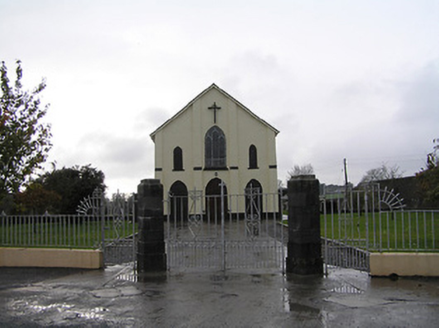
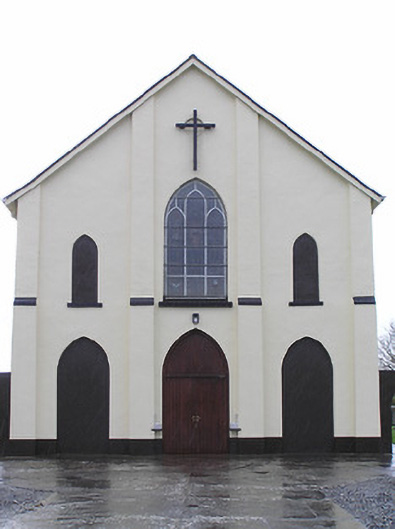
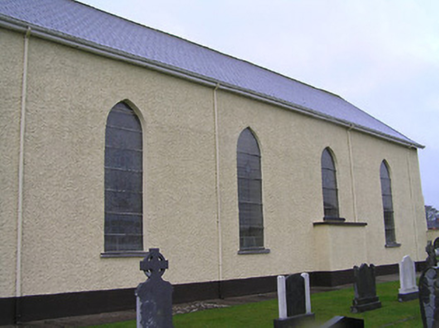
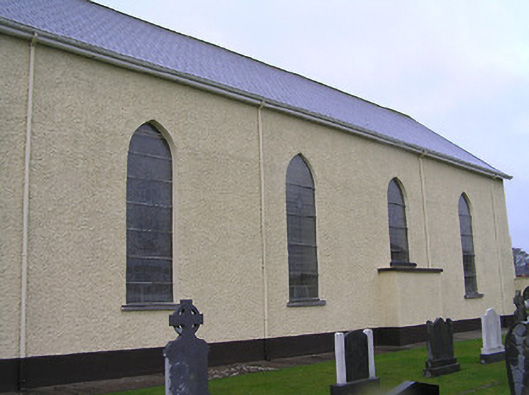
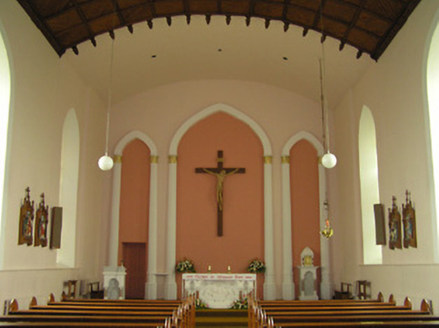
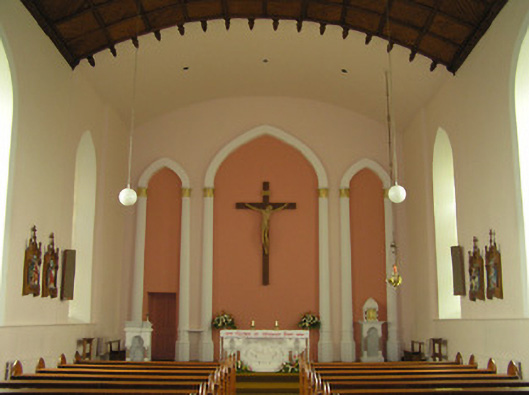
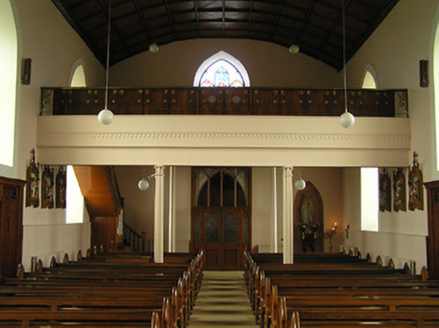
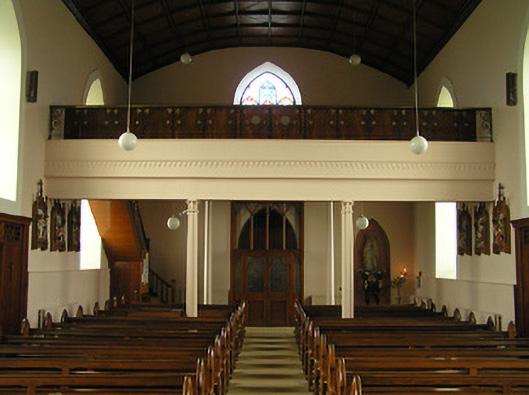
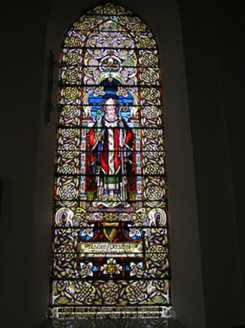
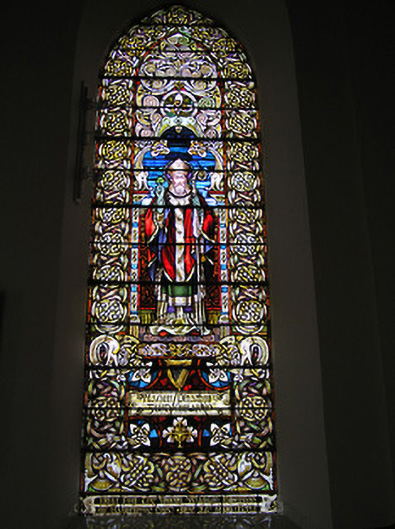
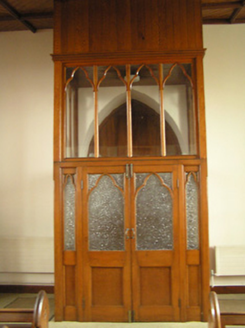
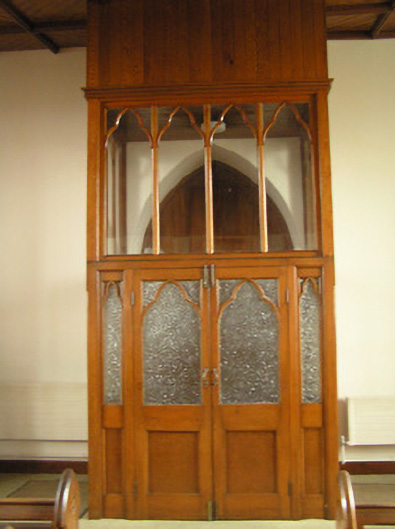
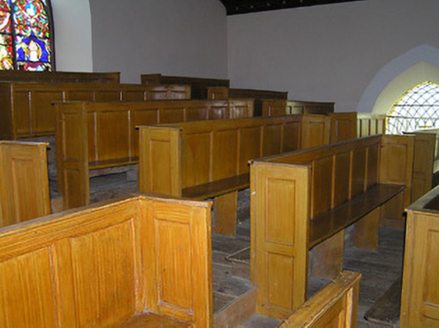
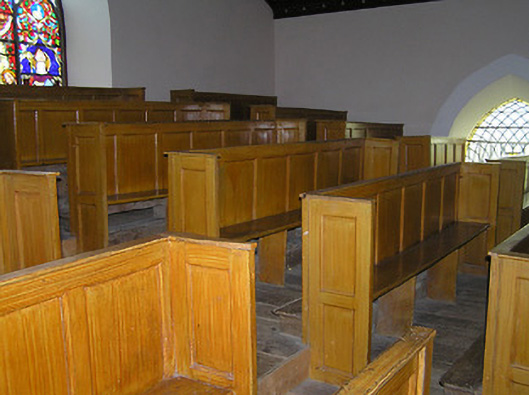
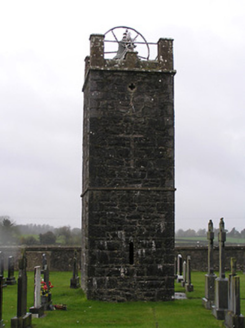
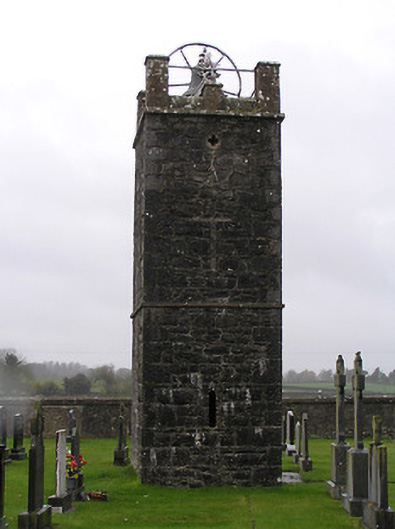
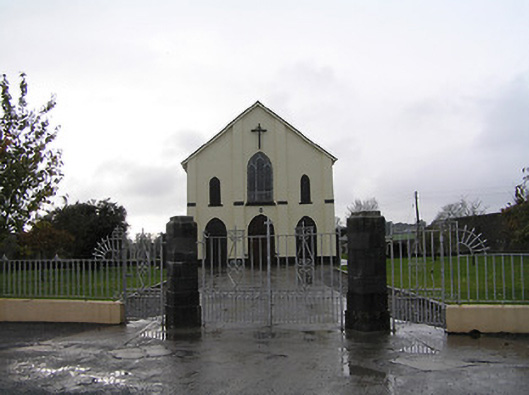
Detached four-bay double-height single-cell Catholic church, built 1832. Extensively renovated, post-1965. Pitched slate roof with clay ridge tiles, rendered bargeboards to gables, and iron rainwater goods on replacement timber eaves, post-1965. Painted rendered wall to front (north-east) elevation with rendered stepped buttresses, and painted replacement roughcast walls, post-1965, to remainder. Pointed-arch window openings with rendered sills, Y-mullions to front (north-east) elevation over entrance bay forming tripartite pointed-arch arrangement, and fixed-pane fittings having leaded stained glass panels. Pointed-arch door openings with replacement tongue-and-groove timber panelled double doors, post-1965, having overpanels. Full-height interior with glazed timber panelled internal porch, timber pews, timber panelled stepped gallery to first floor to north-east on clustered colonette pillars having timber panelled pews, Gothic-style reredos to chancel having fluted Corinthian columns on octagonal stepped pedestals supporting pointed-arch archivolts, and segmental barrel-vaulted diagonal tongue-and-groove timber panelled coffered ceiling. Set back from road in own grounds. (ii) Graveyard to site with various cut-stone markers, post-1832-present. (iii) Freestanding single-bay two-stage belfry, pre-1832, to west on a square plan probably originally bell tower of earlier church. Random rubble limestone walls with dressed limestone quoins to corners, square-headed slit-style apertures to first stage, cut-limestone stringcourse over, quatrefoil apertures to second stage, cut-stone stringcourse supporting battlemented parapet having cut-stone coping, and wrought iron railings surrounding cast-iron bell incorporating decorative bracket.
Appraisal
A well-composed middle-size church of modest architectural aspirations occupying an important position in the centre of Crosspatrick, thereby contributing significantly to the visual appeal of the area. Superseding an earlier chapel in the village the remains of which may survive to the present day in the form of a repositioned/reconstructed belfry the present church exhibits characteristics redolent of a period of construction shortly following Catholic Emancipation (1829) including a simple plan with minimal extraneous ornamentation: the frontispiece resulting from the application of pared-down Gothic details is comparable with the Catholic Church of Saint Kieran and Saint Michael (1831) in nearby Johnstown (12302002/KK-08-02-02) together with the Catholic Church of the Immaculate Conception (1845) in nearby Galmoy (12400301/KK-03-01) suggesting a common architect or builder. Having been well maintained the church presents an early aspect with most of the original composition attributes in place both to the exterior and to the interior where a range of features of artistic importance survive in place including carved timber joinery, delicate stained glass panels, and so on. An attendant graveyard containing markers displaying high quality craftsmanship enhances the setting value of the church in the landscape.