Survey Data
Reg No
12324003
Rating
Regional
Categories of Special Interest
Architectural, Historical, Social
Original Use
Church/chapel
In Use As
Church/chapel
Date
1815 - 1820
Coordinates
270720, 134021
Date Recorded
17/05/2004
Date Updated
--/--/--
Description
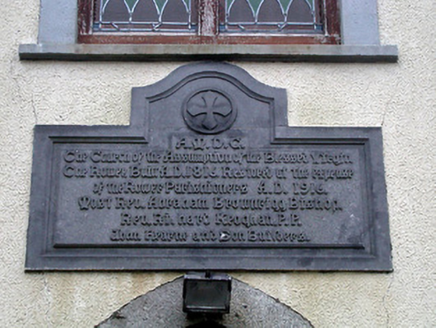
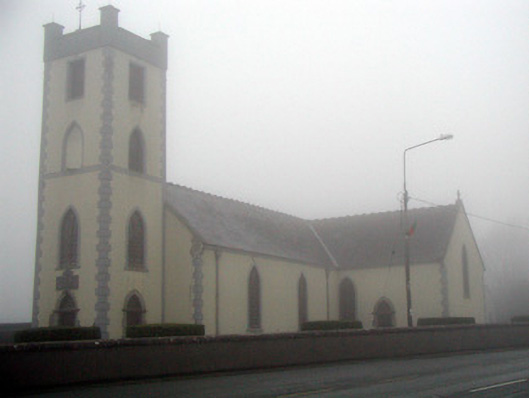
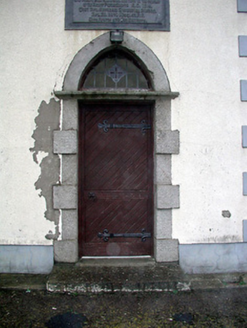
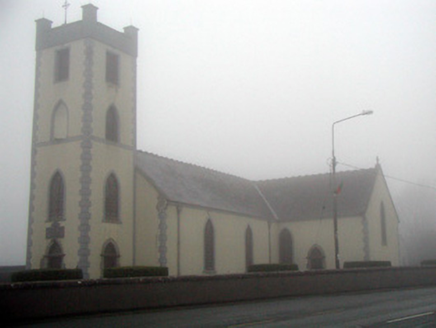
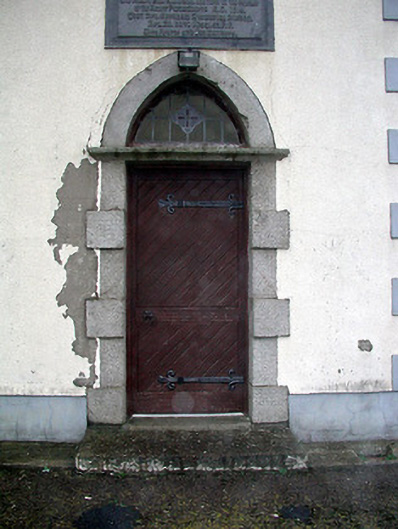
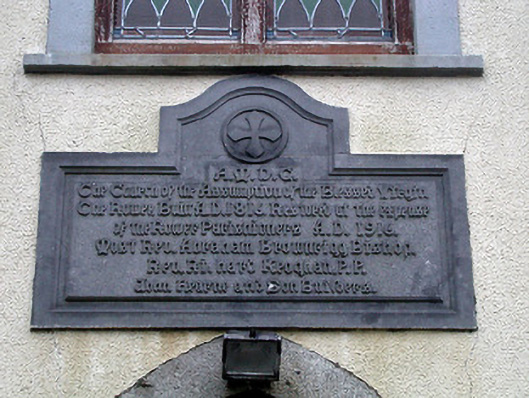
Detached six-bay double-height Catholic Church, built 1816, on a cruciform plan comprising two-bay double-height nave with single-bay (two-bay deep) double-height transepts to north-west and to south-east having single-bay single-storey gabled projecting porch to north-west, and single-bay double-height chancel to north-east continuing into two-bay double-height sacristy to north-east. Renovated, 1916, with single-bay four-stage entrance tower added to south-west on a square plan. Pitched slate roofs on a cruciform plan (gabled to porch) with profiled clay ridge tiles, cut-stone coping having cross finials to apexes, and cast-iron rainwater goods on rendered eaves. Roof to tower not visible behind parapet. Painted rendered walls over random rubble granite construction with rendered quoins to corners, cut-limestone date stone/plaque to tower, rendered stringcourse to third stage to tower, and rendered advanced parapet having rendered coping with corner 'pinnacles'. Pointed-arch window openings with cut-stone chamfered sills, rendered surrounds, timber Y-mullions forming bipartite lancet arrangement, and fixed-pane fittings having leaded stained glass panels. Pointed-arch window openings to second and to third stage to tower (one blind to third stage) with cut-stone chamfered sills (forming part of sill course to third stage), rendered surrounds, Y-mullions forming bipartite lancet arrangement to second stage having leaded stained glass panels, and louvered panel fittings to third stage. Square-headed openings to top (bell) stage to tower with chamfered reveals, and louvered panel fittings. Pointed-arch door openings with cut-granite block-and-start surrounds, and diagonal tongue-and-groove timber panelled doors having overlights. Square-headed door opening to sacristy (forming part over overall pointed-arch opening) with rendered block-and-start surround, and diagonal tongue-and-groove timber panelled double doors. Set back from road in own grounds with unpainted rendered boundary wall to perimeter of site having unpainted rendered piers, and iron double gates having Fleur-de-Lys finials.
Appraisal
A well-appointed substantial church the scale and massing of which is uncommon in Catholic churches pre-dating Emancipation (1829): however, the reserved external treatment indicates the modest means of the local community in the early nineteenth century. A later slender tower built by John Kearne (n. d.) for Bishop Abraham Brownrigg (1836-1928) and Reverend Richard Keoghan (n. d.) forms an elegant focal point in the composition while enhancing the landmark status of the church in the townscape on account of the articulation of the skyline. Having been reasonably well maintained the presentation of an early aspect contributes significantly to the historic character of The Rower.