Survey Data
Reg No
12320007
Rating
Regional
Categories of Special Interest
Architectural, Artistic, Historical, Social
Original Use
Rectory/glebe/vicarage/curate's house
In Use As
House
Date
1815 - 1820
Coordinates
245669, 134403
Date Recorded
14/06/2004
Date Updated
--/--/--
Description
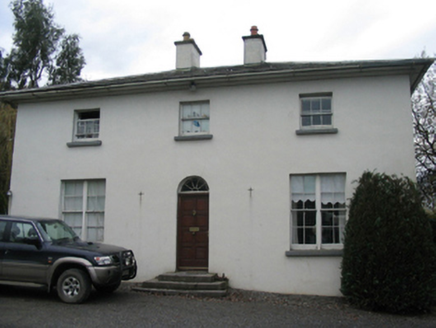
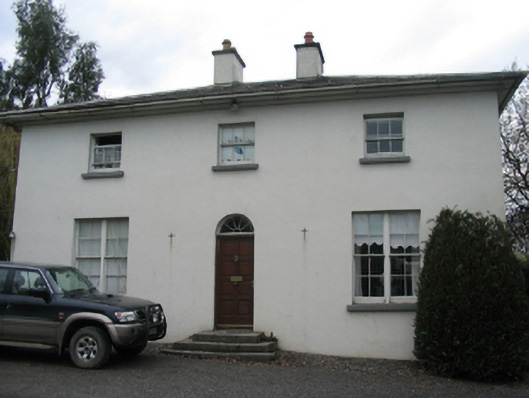
Detached three-bay two-storey Board of First Fruits Church of Ireland glebe house, built 1819, on a rectangular plan. Occupied, 1901; 1911. Hipped slate roof with pressed or rolled lead ridges, paired cement rendered central chimney stacks having concrete capping supporting terracotta or yellow terracotta tapered pots, and cast-iron rainwater goods on slightly overhanging rendered stepped eaves retaining cast-iron downpipes. Rendered walls. Segmental-headed central door opening approached by flight of three cut-limestone steps with concealed dressings framing replacement timber panelled door having fanlight. Square-headed flanking window openings in bipartite arrangement with cut-limestone sills, timber mullions, and concealed dressings framing four-over-four timber sash windows without horns. Square-headed window openings (first floor) with cut-limestone sills, and concealed dressings framing three-over-three timber sash windows without horns. Interior including (ground floor): central hall retaining carved timber surrounds to door openings framing timber panelled doors; and carved timber surrounds to door openings to remainder framing timber panelled doors with carved timber surrounds to window openings framing timber panelled shutters. Set in landscaped grounds.
Appraisal
A glebe house erected with financial support from the Board of First Fruits (fl. 1711-1833) representing an important component of the early nineteenth-century built heritage of County Kilkenny with the architectural value of the composition confirmed by such attributes as the compact rectilinear plan form centred on a restrained doorcase showing a simple radial fanlight; the diminishing in scale of the openings on each floor producing a graduated tiered visual effect with the principal "apartments" defined by elegant bipartite glazing patterns; and the slightly oversailing roofline. Having been well maintained, the elementary form and massing survive intact together with substantial quantities of the original fabric, both to the exterior and to the interior, including crown or cylinder glazing panels in hornless sash frames: meanwhile, contemporary joinery; and sleek plasterwork refinements, all highlight the artistic potential of a glebe house having historic connections with the Kilmaganny parish Church of Ireland clergy including Reverend Robert Madden (1847-1926), 'Clerk in Holy Orders' (NA 1901); and Reverend Charles Angus Cutts Purkis (1876-1956), 'Priest in Church of Ireland' (NA 1911; cf. 12305001).