Survey Data
Reg No
12317081
Rating
Regional
Categories of Special Interest
Architectural, Historical, Social
Original Use
Mill (water)
Historical Use
Museum/gallery
In Use As
House
Date
1765 - 1785
Coordinates
258294, 141497
Date Recorded
18/05/2004
Date Updated
--/--/--
Description
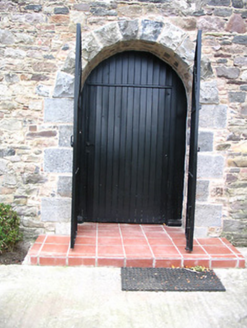
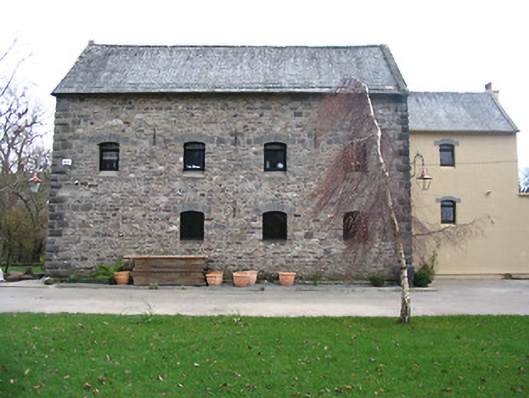
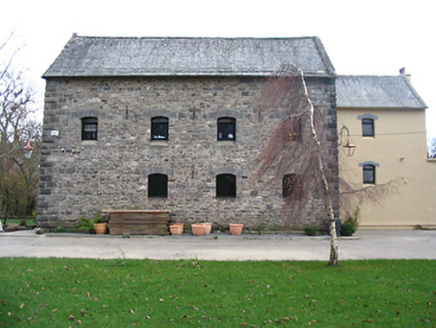
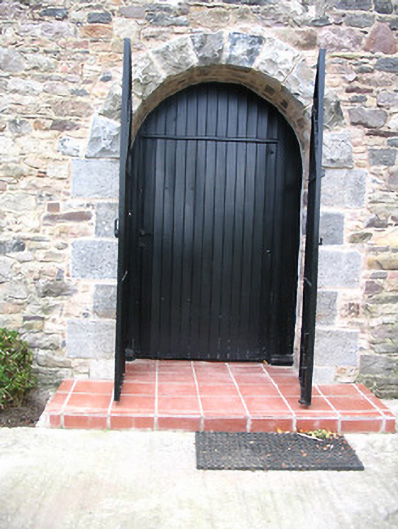
Corn mill complex, c.1775, including: (i) Detached four-bay two-storey over basement mill with half-attic. Extended, c.1850, comprising five-bay two-storey parallel range along rear (south) elevation forming single-bay two-storey recessed end bay to right. Decommissioned, pre-1948. In use as offices, post-1948. Renovated, c.1975, with some openings remodelled. In use as gallery, pre-2002. Extensively renovated, 2002, to accommodate continued residential use. Pitched slate roofs with clay ridge tiles, rendered chimney stacks, rendered coping, rooflights, and cast-iron rainwater goods on rendered eaves. Random rubble limestone walls to original block with cut-limestone quoins to corners, iron tie bars, and painted replacement rendered walls, 2002, to additional range. Camber-headed window openings (some remodelled, c.1975) with no sills (some having chamfered sills), tooled cut-limestone voussoirs (rendered voussoirs to additional range), and replacement timber fittings, 2002. Round-headed door opening with tiled step, tooled cut-limestone block-and-start surround having rock-faced cut-limestone voussoirs, and tongue-and-groove timber panelled door. Interior retaining vaulting to basement, and timber floors to upper floors. Set back from road in own grounds.
Appraisal
An attractive substantial range forming an important artefact of the mid to late eighteenth-century industrial legacy of Thomastown. Although having been decommissioned by the mid twentieth century, sympathetic restoration works in the course of adapting the complex to an alternative use have included the retention of most of the original composition qualities together with some of the early fabric, both to the exterior and to the interior, thereby maintaining the character or integrity of the site. Positioned overlooking the River Nore, the building presents a picturesque landmark enhancing the aesthetic value of the locality. The mill remains of additional importance for the connections with the Somerville-Large and the Lawlor families.