Survey Data
Reg No
12313008
Rating
Regional
Categories of Special Interest
Architectural, Artistic, Historical, Social
Original Use
Rectory/glebe/vicarage/curate's house
Historical Use
Farm house
Date
1810 - 1815
Coordinates
261933, 148854
Date Recorded
19/05/2004
Date Updated
--/--/--
Description
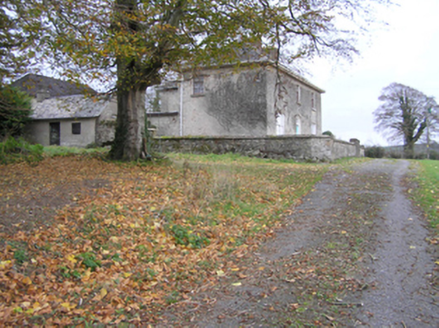
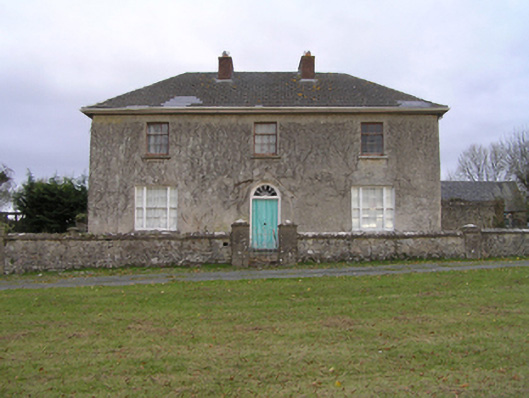
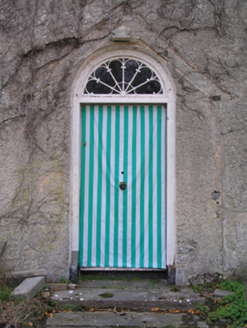
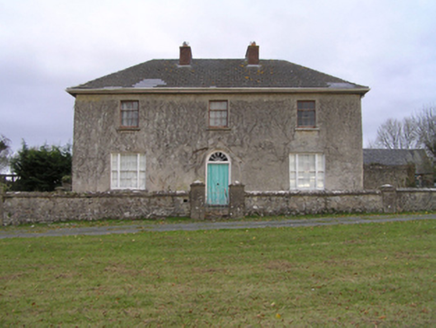
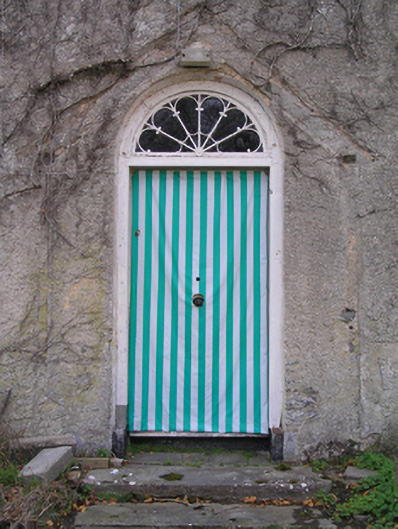
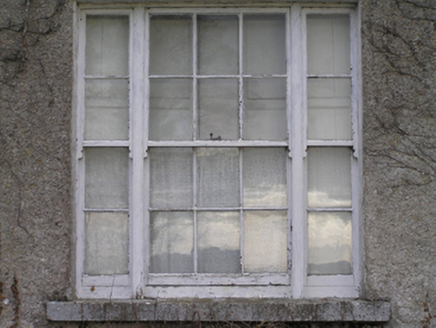
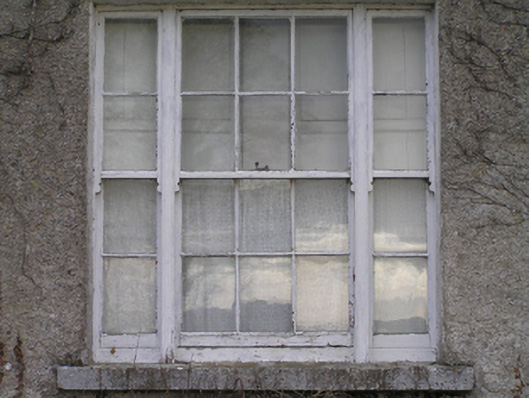
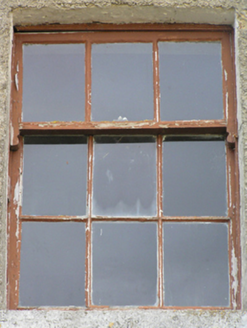
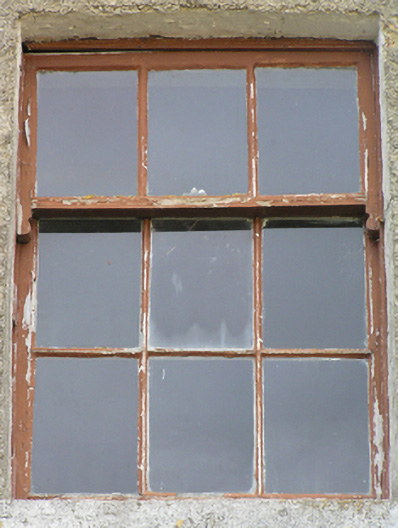
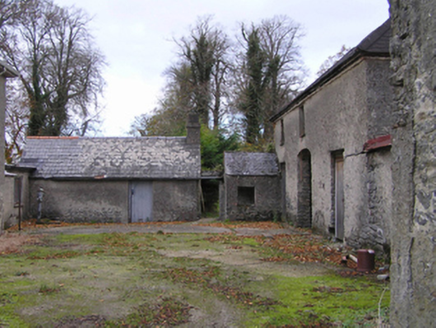
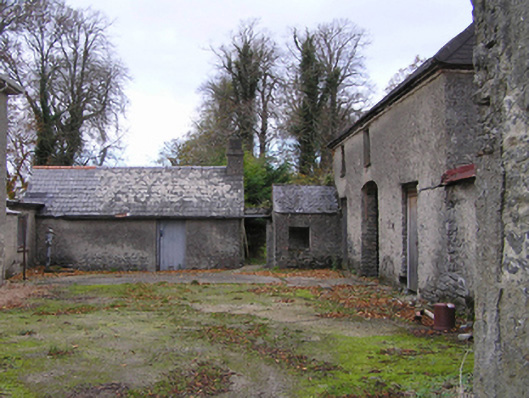
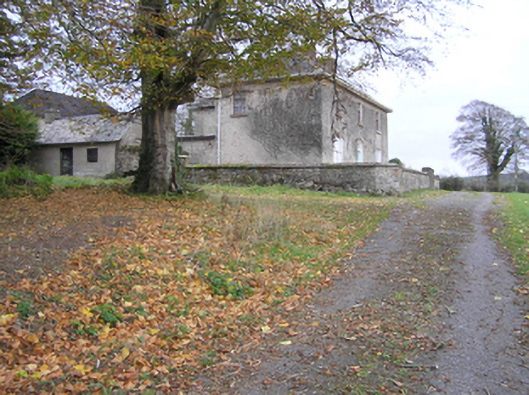
Detached three-bay two-storey Board of First Fruits Church of Ireland glebe house, built 1813, on an L-shaped plan; single-bay (north) or two-bay (south) two-storey side elevations. Occupied, 1901; 1911. Reroofed, ----. Now disused. Replacement hipped fibre-cement slate roof on an L-shaped plan with lichen-covered clay ridge tiles, paired red brick Running bond central chimney stacks having capping supporting terracotta pots, and uPVC rainwater goods on slightly overhanging timber boarded box eaves retaining some cast-iron downpipes. Part creeper-covered fine roughcast coursed or snecked limestone walls with concealed cut-limestone flush quoins to corners. Segmental-headed central door opening with step threshold, and concealed red brick block-and-start surround framing timber panelled door having fanlight. Square-headed flanking window openings in tripartite arrangement with drag edged dragged cut-limestone sills, timber mullions, and concealed red brick block-and-start surrounds framing six-over-six timber sash windows having two-over-two sidelights. Square-headed window openings (first floor) with drag edged dragged cut-limestone sills, and concealed red brick block-and-start surrounds framing three-over-six timber sash windows. Interior including (ground floor): central hall retaining carved timber surrounds to door openings framing timber panelled doors; and carved timber surrounds to door openings to remainder framing timber panelled doors with timber panelled shutters to window openings. Set in unkempt grounds with rendered, ruled and lined piers to "cottage garden" having lichen-covered pyramidal capping supporting arrow head-detailed looped wrought iron gate.
Appraisal
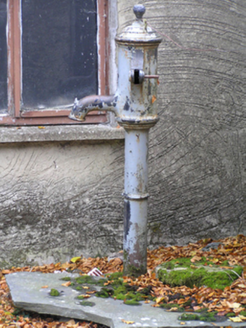
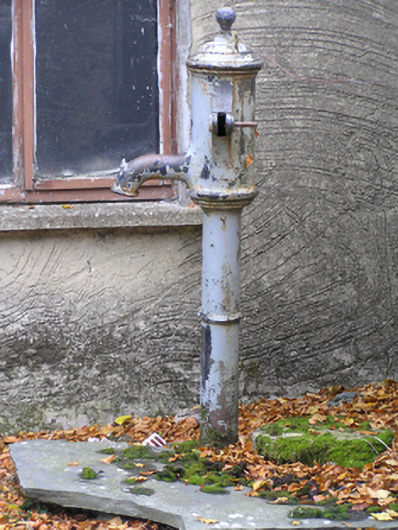
A glebe house erected with financial support from the Board of First Fruits (fl. 1711-1833) representing an important component of the early nineteenth-century built heritage of County Kilkenny with the architectural value of the composition confirmed by such attributes as the compact plan form centred on a restrained doorcase showing a simplified "peacock tail" fanlight; and the diminishing in scale of the openings on each floor producing a graduated tiered visual effect with the principal "apartments" defined by Wyatt-style tripartite glazing patterns. A period of unoccupancy notwithstanding, the elementary form and massing survive intact together with substantial quantities of the original fabric, both to the exterior and to the interior, thus upholding the character or integrity of the composition. Furthermore, adjacent outbuildings (----); and a "cow tail" waterpump (----), all continue to contribute positively to the group and setting values of a self-contained ensemble having historic connections with the Dungarvan parish Church of Ireland clergy including Reverend William Browne (Reports from Commissioners 1858, 426). NOTE: Occupied (1901; 1911) by Lawrence Bolger (----), 'Farmer' (NA 1901; NA 1911)].