Survey Data
Reg No
12309006
Rating
Regional
Categories of Special Interest
Architectural, Historical, Social
Previous Name
Kilkenny District Lunatic Asylum
Original Use
Church/chapel
In Use As
Church/chapel
Date
1890 - 1895
Coordinates
252044, 155576
Date Recorded
10/08/2004
Date Updated
--/--/--
Description
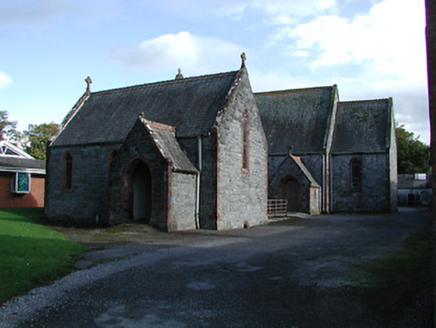
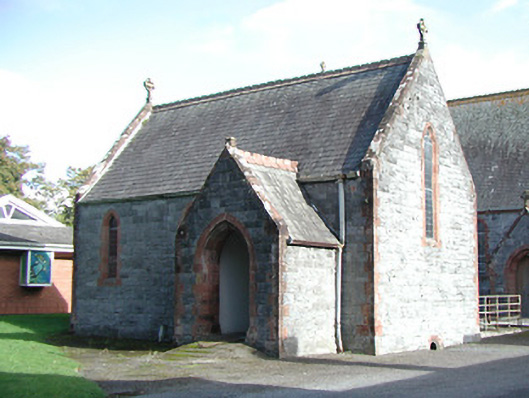
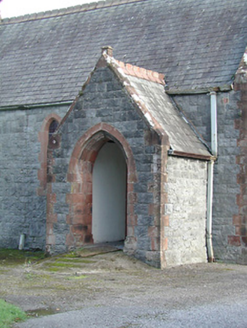
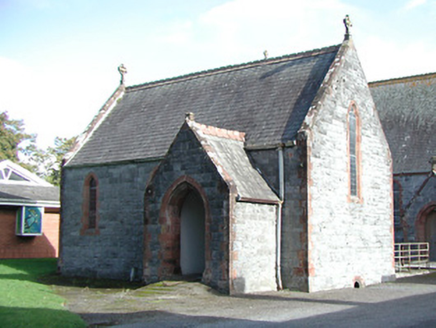
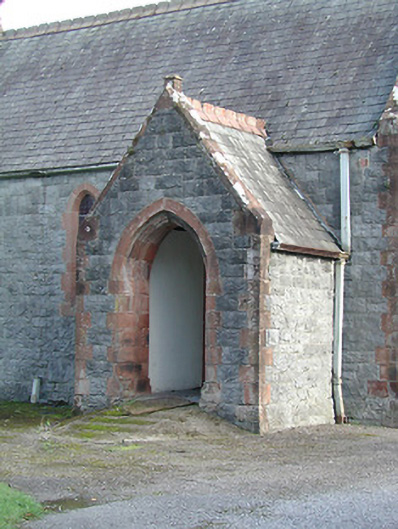
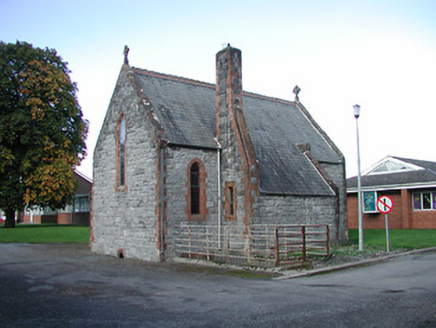
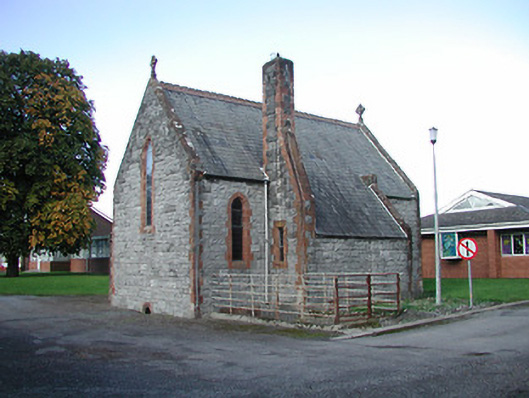
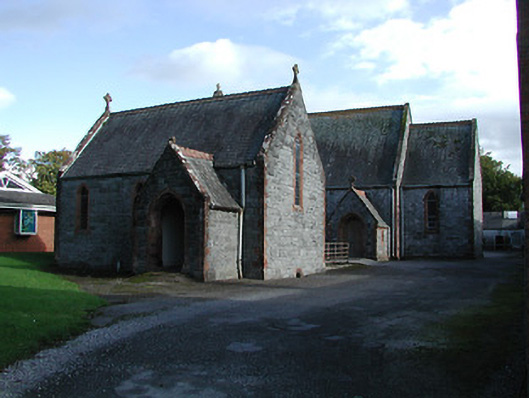
Detached three-bay single-storey over basement Gothic Revival single-cell Church of Ireland chapel, built 1893, with single-bay single-storey gabled projecting lower porch to right, and single-bay single-storey lean-to lower vestry off-shoot to south-east. Pitched slate roof (gabled to porch; continuing into lean-to to vestry) with profiled terracotta ridge tiles, rock-faced cut-limestone chimney stack to vestry having cut-sandstone quoins, cut-stone coping to gables having cross finials to apexes, and cast-iron rainwater goods on cut-sandstone eaves. Broken coursed rock-faced cut-limestone walls with sandstone ashlar dressings including quoins to corners. Pointed-arch window openings (trefoil-headed window openings to ends; square-headed window openings to vestry) with cut-sandstone block-and-start surrounds having chamfered reveals, and fixed-pane fittings having leaded stained glass panels. Pointed-arch door opening to porch with cut-sandstone block-and-start surround having chamfered reveals. Set back from road in grounds shared with Saint Canice's Hospital.
Appraisal
A small-scale building representing one of a pair of adjacent chapels (with 12309003/KK-19-09-03) built to designs prepared by Sir Thomas Drew (1838-1910) and/or Richard Langrishe (1834-1922) enhancing the group and setting values of the Saint Canice's Hospital complex. Displaying particularly fine stone masonry throughout the construction in rock-faced limestone produces a pleasant textured visual effect in the composition while sandstone accents introduce an element of the polychromy popular in the late nineteenth century. Having been carefully maintained the chapel presents an early aspect with much of the original fabric intact, thereby making a positive impression on the historic character of the site.