Survey Data
Reg No
11904005
Rating
Regional
Categories of Special Interest
Architectural, Historical, Social
Original Use
Gate lodge
In Use As
Gate lodge
Date
1850 - 1890
Coordinates
276139, 182948
Date Recorded
--/--/--
Date Updated
--/--/--
Description
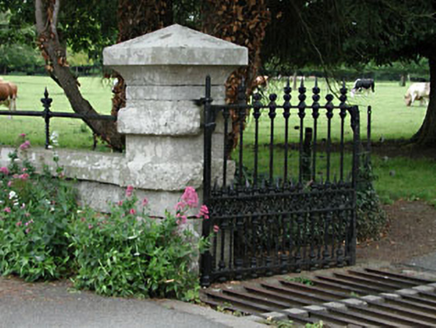
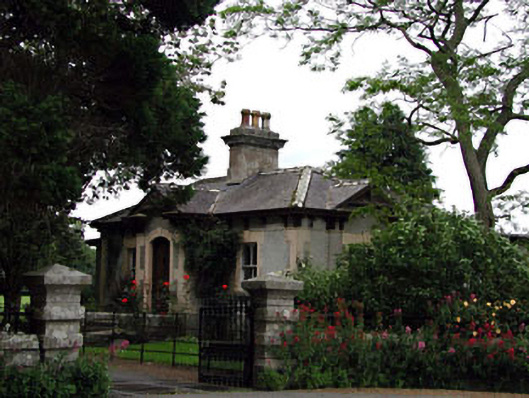
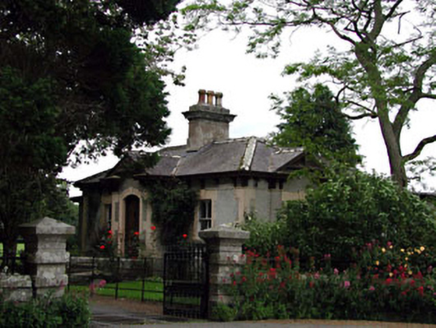
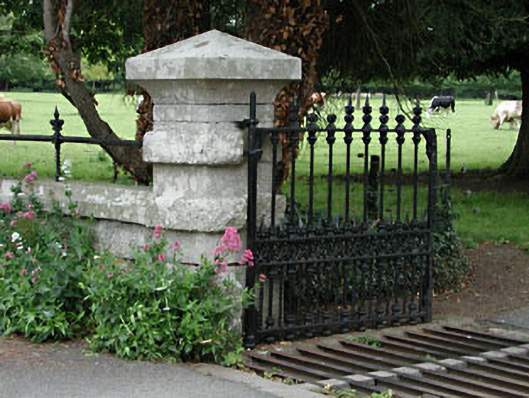
Detached three-bay single-storey gate lodge, c.1870, retaining early fenestration with single-bay single-storey gabled advanced entrance bay to centre and gablets to side elevations to north-east and to south-west. Extended, c.1940, comprising single-bay single-storey flat-roofed return to rear to south-east with single-bay single-storey box bay window added to side elevation to north-east. Hipped roof with slate (gablets to entrance bay and to side elevations in style of broken pediments with finials). Clay ridge tiles. Rendered chimney stack. Timber eaves on decorative consoles. Cast-iron rainwater goods. Flat-roof to return. Bitumen felt. Roughcast walls. Painted. Rendered quoined strips to corners. Moulded stringcourse to eaves. Square-headed window openings. Stone sills (concrete to return). Rendered block-and-start surrounds with keystones. 2/2 timber sash windows with round-headed panes. Timber sash and timber casement windows to return. Segmental-headed door opening. Rendered surround. Timber panelled door. Set back from road in grounds shared with Prumplestown House fronting on to avenue. Gateway, c.1870, to west comprising pair of rusticated banded granite piers with curved walls having cast-iron gates with spike finials.
Appraisal
The gate lodge to Prumplestown House is an attractive small-scale mid to late nineteenth-century building that retains much of its original character. Originally built on a simple symmetrical plan the elevations are much more ornate in quality and are typical of mid-Victorian architecture - the gate lodge therefore acts as the perfect visual foil to the austere main house. The front (north-west) elevation is dominated by the advanced entrance bay to the centre, the gable of which is treated as a broken pediment (a feature continued in the side elevations), while the eaves are decorated with a stringcourse and corbels. Render is also used effectively, providing surrounds to the openings and quoins to the corners of the composition. Although extended in the mid twentieth century, the additions do not impinge on the original integrity of the building. Important surviving original features include the timber sash fenestration and a slate roof. The gate lodge is picturesquely located adjacent to the avenue to Prumplestown House and is an attractive feature off the road side. Announcing the entrance to the estate to the passer-by, and possibly conveying the opulence of the main house, is the fine cut-stone gateway that reveals the high quality stone masonry practised in the locality, while the decorative gates are early surviving examples of cast-iron work.