Survey Data
Reg No
11904001
Rating
Regional
Categories of Special Interest
Architectural, Historical, Social
Original Use
Farm house
In Use As
Farm house
Date
1860 - 1900
Coordinates
276812, 184555
Date Recorded
30/10/2002
Date Updated
--/--/--
Description
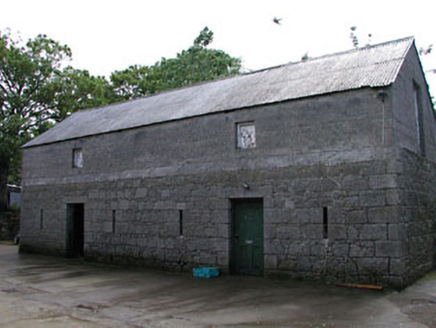
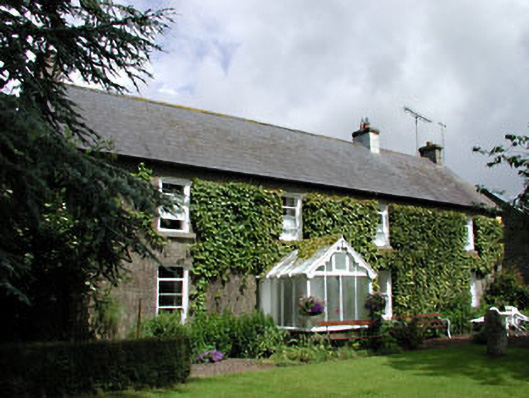
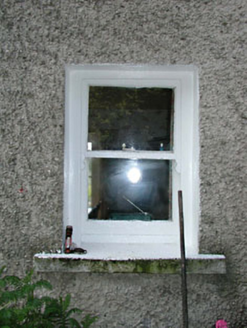
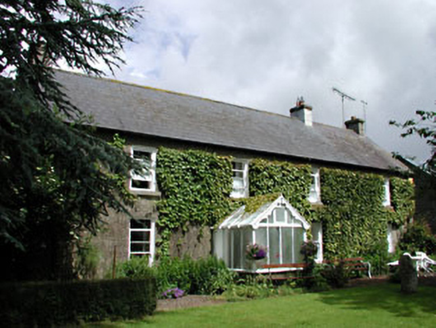
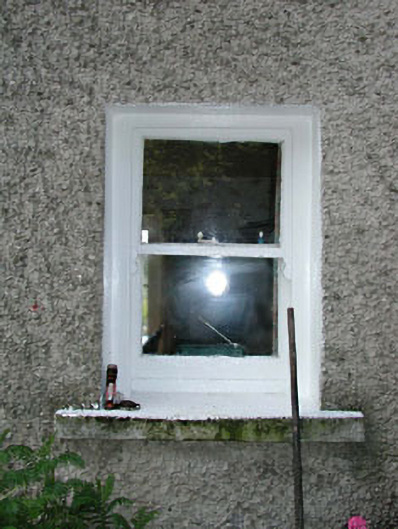
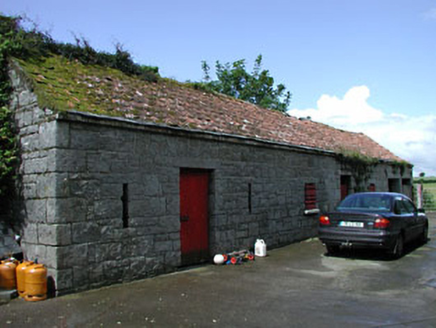
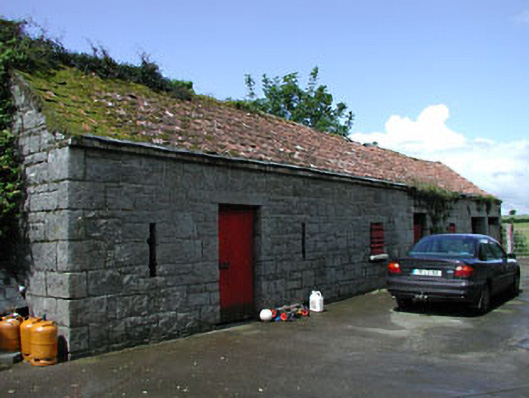
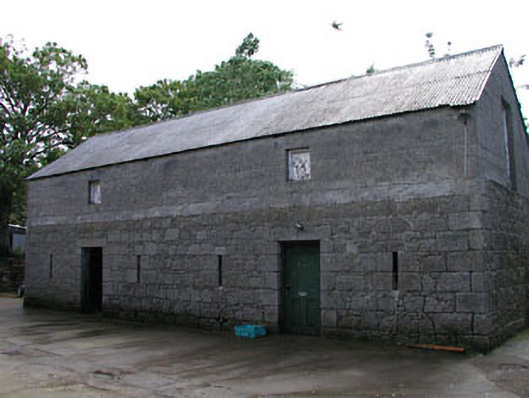
Detached four-bay two-storey house, c.1880, retaining early fenestration with single-bay single-storey gabled projecting glazed porch, single-bay single-storey recessed end bay to south-west and single-bay single-storey lean-to return to rear to north-west. Extended, c.1970, comprising single-bay two-storey return to rear to north-west. Gable-ended roof with slate (lean-to to return). Clay ridge tiles. Rendered chimney stacks. Timber eaves and bargeboards. Cast-iron rainwater goods. Glazed roof to porch. Roughcast walls. Unpainted. Square-headed window openings. Stone sills (concrete to additional return). 1/1 timber sash windows (timber casement windows to additional return). Fixed-pane windows to porch. Square-headed door opening. Glazed timber door. Set back from road in own landscaped grounds. Detached eight-bay single-storey coursed granite outbuilding, c.1880, to north-west. Reroofed, c.1970. Gable-ended roof. Replacement red clay pantile, c.1970. Clay ridge tiles. Yellow brick eaves course. Coursed snecked granite walls. Square-headed openings (some in style of slit openings). Cut-stone sills. Cut-granite lintels. Pair of square-headed integral carriageways with cut-granite lintels on cut-granite pier. Timber fittings. Detached six-bay two-storey outbuilding, c.1880, to north-west originally single-storey. Renovated, c.1940, with first floor added. Gable-ended roof. Replacement corrugated-iron, c.1940. Iron ridge tiles. Coursed snecked granite walls to ground floor. Mass concrete walls, c.1940, to first floor. Square-headed openings (including door opening to first floor). Cut-stone lintels to ground floor. Timber fittings.
Appraisal
Woodlands House is a fine and very well maintained late nineteenth-century middle size farm house that retains most of its original character. The long front (south-east) elevation is characterised by small window openings and is decorated with a small glazed porch incorporating ornate carved bargeboards. Extended in the late twentieth century the addition is discrete and does not impinge on the original character of the house. Important surviving early salient features include timber sash fenestration and a slate roof, and the retention of such items to the exterior suggests that the interior may also contain some important early features. The house is attractively set in its own mature grounds and is complemented by a range of stone outbuildings that reveal the high quality stone masonry practised in the locality, while the use of mass concrete to raise the height of one building is an early use of that material. The house is of some social and historic interest, representing the continued development of the outskirts of Castledermot in the late nineteenth century, while the construction of the outbuildings in locally-sourced granite is a feature shared with some of the building stock in the historic core of the town.