Survey Data
Reg No
11903806
Rating
Regional
Categories of Special Interest
Architectural
Original Use
Farm house
Date
1800 - 1837
Coordinates
281706, 185498
Date Recorded
29/10/2002
Date Updated
--/--/--
Description
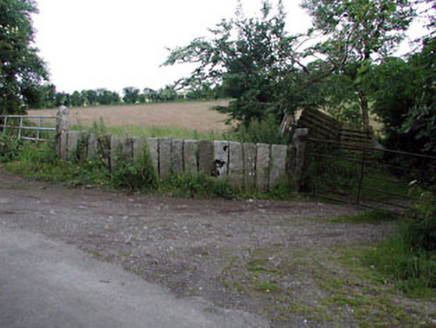
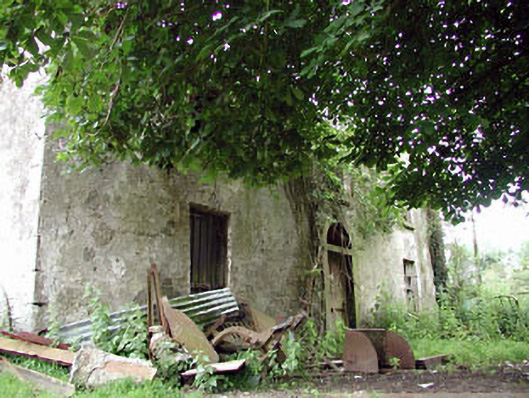
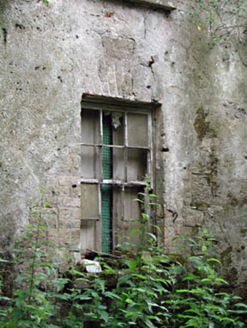
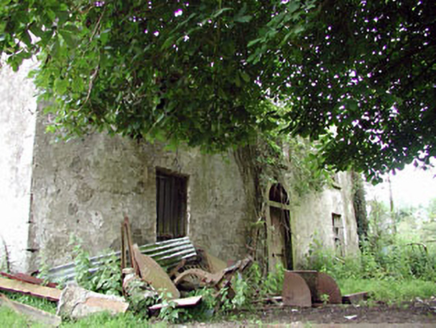
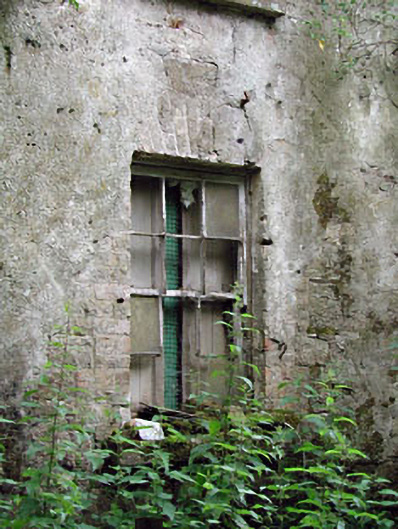
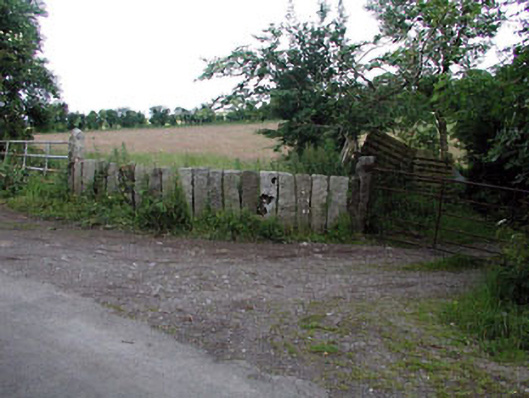
Detached three-bay two-storey farmhouse, extant 1837, on a rectangular plan. Now disused. Pitched slate roof with ridge tiles, rendered red brick Running bond chimney stacks having capping, and remains of cast-iron rainwater goods on slate flagged eaves. Lime rendered coursed rubble stone battered walls with rough cut granite flush quoins to corners. Segmental-headed central door opening with overgrown threshold, and cut-granite monolithic surround centred on keystone framing timber panelled door with fanlight now missing. Square-headed window openings with cut-granite sills, and concealed red brick block-and-start surrounds framing six-over-six (ground floor) or two-over-two (first floor) timber sash windows. Square-headed central door opening to rear (west) elevation with lintel framing timber boarded door. Set in overgrown grounds with rough cut granite monolithic piers to perimeter supporting tubular steel "farm gate".
Appraisal
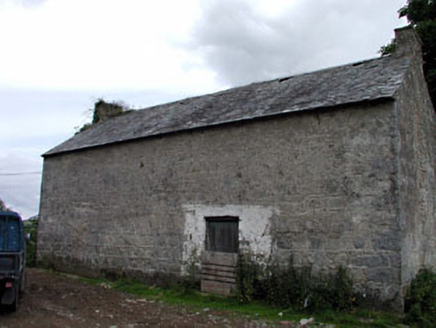
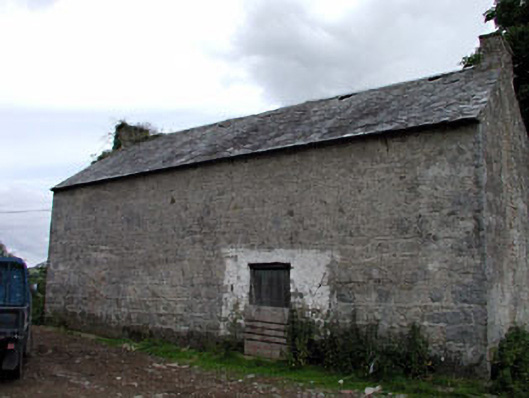
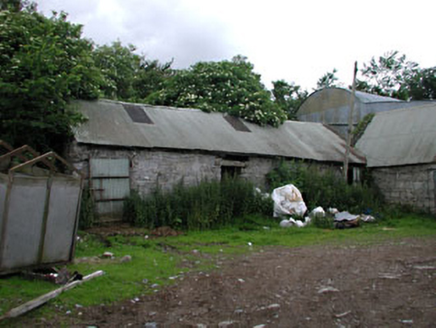
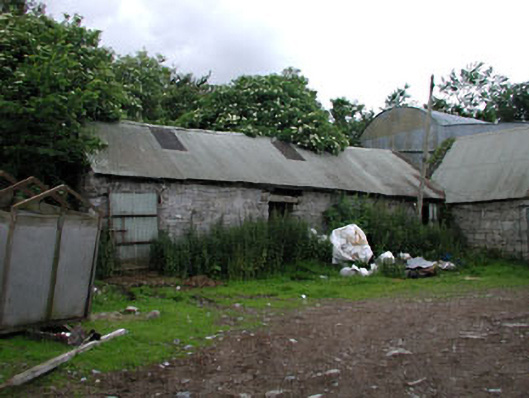
A farmhouse representing an integral component of the domestic built heritage of County Kildare with the architectural value of the composition suggested by such attributes as the compact rectilinear plan form centred on a restrained doorcase demonstrating good quality workmanship in a silver-grey granite; the feint battered silhouette; the disproportionate bias of solid to void in the massing compounded by the diminishing in scale of the openings on each floor producing a graduated visual impression; and the high pitched roof showing a small cut slate finish. A prolonged period of neglect notwithstanding, the form and massing survive intact together with substantial quantities of the original fabric, both to the exterior and to the interior, thus upholding the character or integrity of the composition. Furthermore, adjacent "tin roofed" outbuildings (----) continue to contribute positively to the group and setting values of a self-contained ensemble making a pleasing, if increasingly forlorn visual statement in a rural street scene.