Survey Data
Reg No
11903703
Rating
Regional
Categories of Special Interest
Architectural, Artistic
Original Use
Farm house
In Use As
Farm house
Date
1700 - 1779
Coordinates
272772, 190920
Date Recorded
25/10/2002
Date Updated
--/--/--
Description
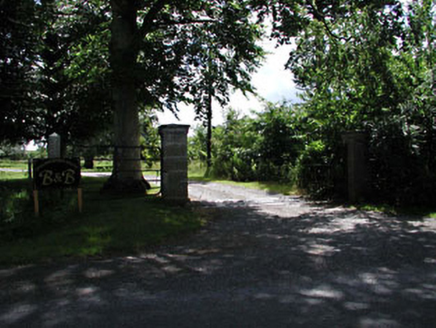
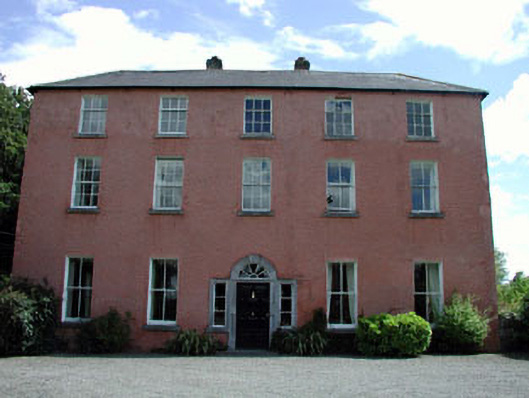
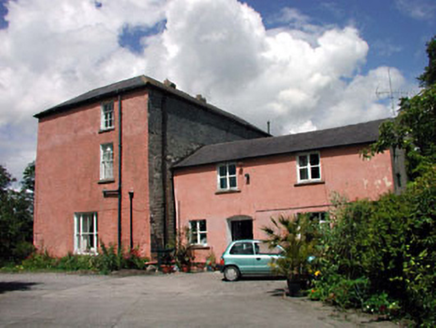
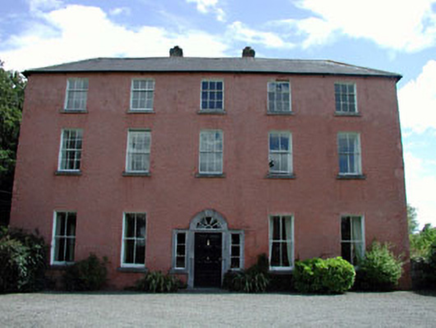
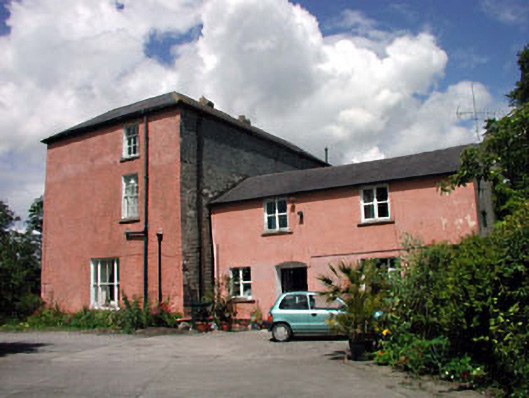
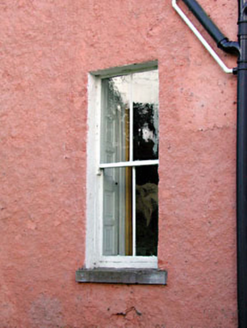
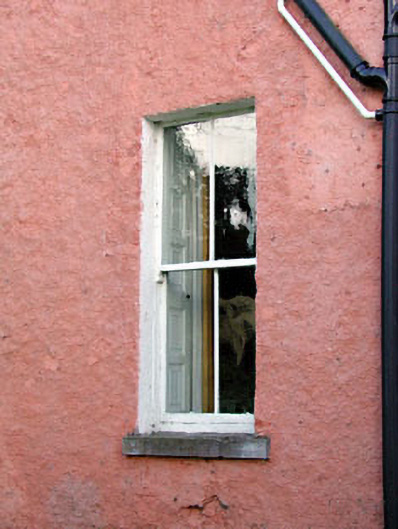
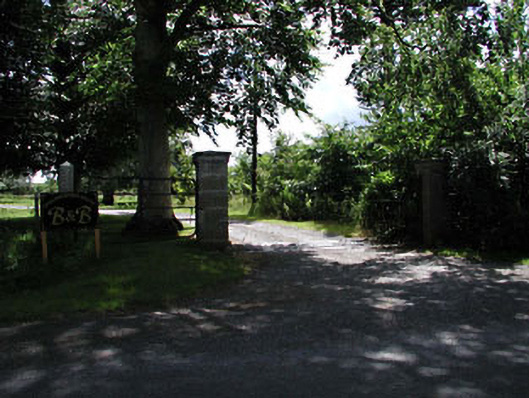
Detached five-bay three-storey farmhouse, extant 1779, on a T-shaped plan; single-bay (two-bay deep) two-storey double-pile central return (east). Hipped slate roof on a quadrangular plan with clay ridge tiles, paired rendered central chimney stacks having rendered capping supporting terracotta pots, and cast-iron rainwater goods on rendered cut-limestone eaves with cast-iron downpipes; pitched double-pile (M-profile) slate roof (east), clay ridge tiles with rendered chimney stacks to apexes having rendered capping supporting louvered terracotta pots, and cast-iron rainwater goods on rendered eaves with cast-iron downpipes. Lime rendered or roughcast battered walls; slate hung surface finish to rear (east) elevation; rendered walls (east). "Venetian" door opening with cut-limestone threshold supporting cast-iron bootscraper, and drag edged dragged cut-limestone Gibbsian doorcase with archivolt centred on rosette-detailed keystone framing timber panelled door having fanlight with fixed-pane timber sidelights. Square-headed window openings with cut-limestone sills, and concealed dressings framing two-over-two (ground floor), six-over-six (first floor) or three-over-six (top floor) timber sash windows. Square-headed window openings (side elevations) with cut-limestone sills, and concealed dressings framing two-over-two (ground floor), six-over-six (first floor) or three-over-six (top floor) timber sash windows. Square-headed window openings (east) with sills, and concealed dressings framing timber casement windows. Interior including (ground floor): central hall retaining carved timber surrounds to door openings framing timber panelled doors, moulded plasterwork cornice to ceiling, staircase on a dog leg plan with "spindle" balusters supporting carved timber banister terminating in volute, and carved timber surrounds to door openings to landings framing timber panelled doors; and carved timber surrounds to door openings to remainder framing timber panelled doors with carved timber surrounds to window openings framing timber panelled shutters on panelled risers. Set in landscaped grounds with limestone ashlar piers to perimeter having shallow pyramidal capping.
Appraisal
A farmhouse representing an important component of the eighteenth-century domestic built heritage of County Kildare with the architectural value of the composition, one named as one of the three "Chief Seats" of the Duke of FitzGerald in "The Peerage of the Nobility of England Scotland and Ireland" (1779, 148), confirmed by such attributes as the compact plan form centred on a "Venetian" doorcase not only demonstrating good quality workmanship in a silver-grey limestone, but also showing a simple hub-and-spoke fanlight; and the diminishing in scale of the openings on each floor producing a graduated visual impression. Having been well maintained, the form and massing survive intact together with substantial quantities of the original fabric, both to the exterior and to the interior, including a partial slate hung surface finish: meanwhile, contemporary joinery; restrained chimneypieces; and sleek plasterwork refinements, all highlight the artistic potential of a farmhouse having historic connections with the Dunne family including Patrick Dunne (d. 1804) and Anne Dunne (née FitzGerald) (d. 1849) '[of] Dollardstown' (cf. 11506014); Andrew Dunne (----) '[of] Dollardstown near Athy' (Lewis 1837 II, xxiv); Laurence Stanislaus Dunne (d. 1908) and Margaret Dunne (d. 1908) 'late of Dollardstown House Athy County Kildare' (Calendars of Wills and Administrations 1908, 154); and George Campbell (d. 1928) and Margaret Campbell (d. 1924) '[of] Dollardstown' (cf. 11506014).