Survey Data
Reg No
11903503
Rating
Regional
Categories of Special Interest
Architectural, Historical, Social
Original Use
Farm house
In Use As
Farm house
Date
1720 - 1760
Coordinates
269268, 196687
Date Recorded
--/--/--
Date Updated
--/--/--
Description
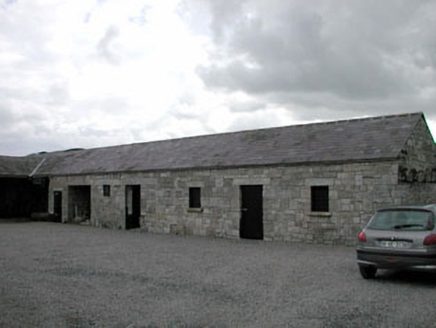
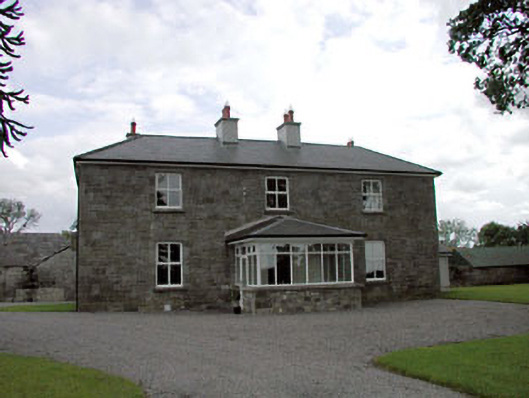
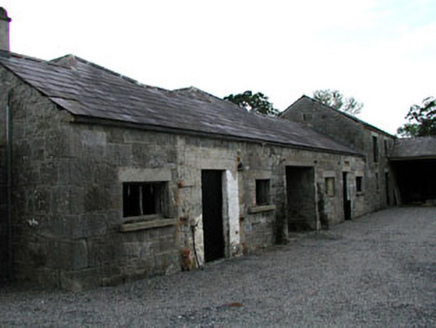
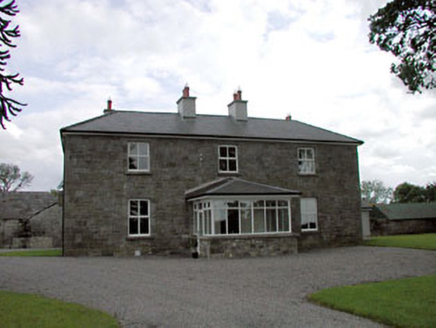
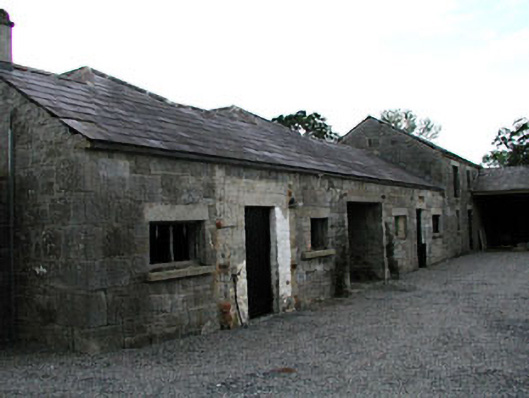
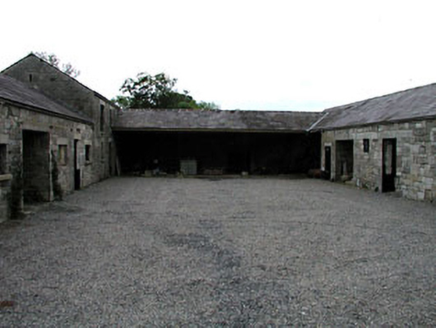
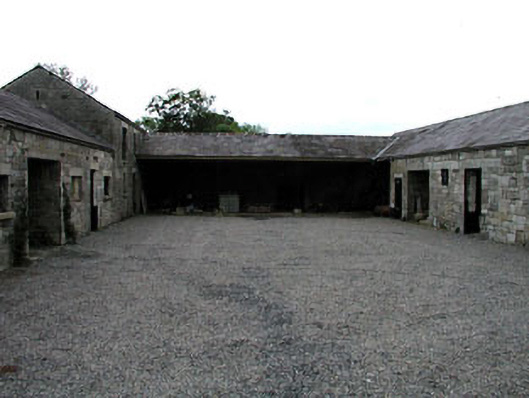
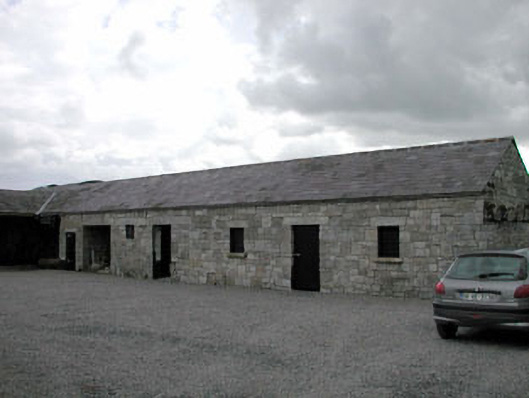
Detached three-bay two-storey former tenant farmer's house, c.1740. Renovated and extended, c.1995, comprising three-bay two-storey parallel range along rear elevation to south forming double-pile with single-bay single-storey end bay to west, two-bay single-storey lean-to return to rear to south and single-bay single-storey gabled projecting glazed porch added to centre front elevation to north. Now in private residential use. Hipped roof (M-profile) (gable-ended to end bay; lean-to to return; gabled to porch). Replacement artificial slate, c.1995. Concrete ridge tiles. Rendered chimney stacks. Timber eaves. Replacement uPVC rainwater goods, c.1995. Snecked limestone walls to original range. Random rubble stone walls to additional ranges. Rendered wall to rear (south) elevation and to end bay. Unpainted. Square-headed window openings. Stone sills (concrete to additional ranges). Cut-stone block-and-start surrounds and voussoirs to original range. Replacement uPVC casement windows, c.1995. Fixed-pane uPVC casement windows to porch. Square-headed door opening. Glazed uPVC door. Set back from road in own grounds. Gravel forecourt to front. Range of detached single- and two-storey rubble stone outbuildings, c.1740, to rear to south on an L-shaped plan about a courtyard comprising: eight-bay single-storey range to east, seven-bay single-storey range to west, three-bay two-storey block to south-west and three-bay single-storey range to south. Gable-ended roofs with slate. Clay ridge tiles. Iron rainwater goods. Snecked rubble stone walls. Square-headed openings (open front to range to south). Stone sills. Cut-granite lintels. Timber fittings.
Appraisal
Sawyerswood House is a fine middle-size farm house that is of considerable social and historical interest, having been built with a donation from and on the land of the Duke of Leinster of Kilkea Castle Demesne. Although altered and extended over subsequent centuries, the house retains some of its original character and the construction, in particular, highlights the high quality of stone masonry practised in the locality. The house is attractively set in its own grounds and is complemented by a range of outbuildings to the rear (south) that surround an internal courtyard. Retaining much of their original appearance, these buildings are of considerable importance in their own right.