Survey Data
Reg No
11903405
Rating
Regional
Categories of Special Interest
Architectural, Historical, Social
Original Use
Miller's house
In Use As
House
Date
1800 - 1840
Coordinates
265715, 197079
Date Recorded
26/11/2002
Date Updated
--/--/--
Description
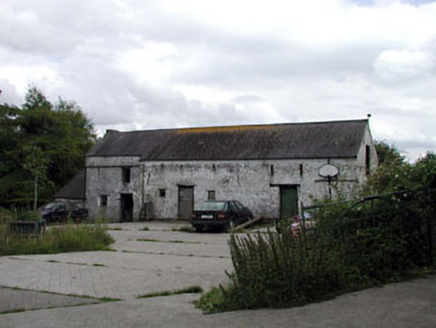
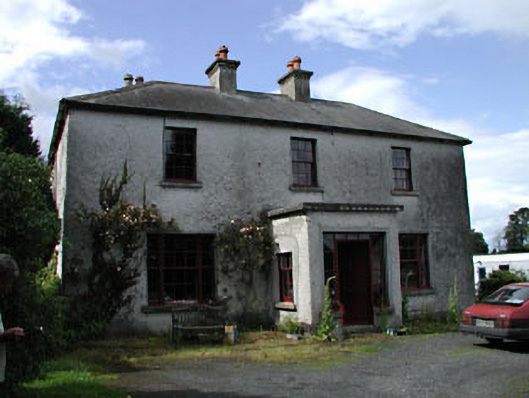
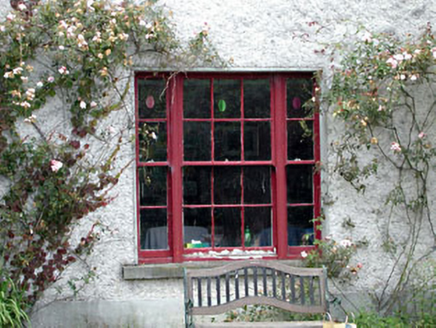
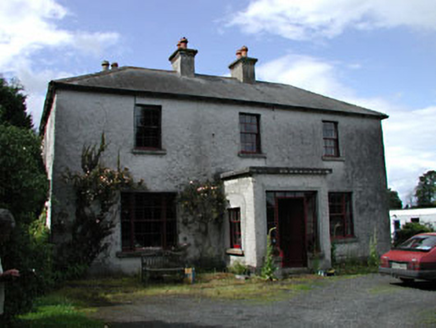
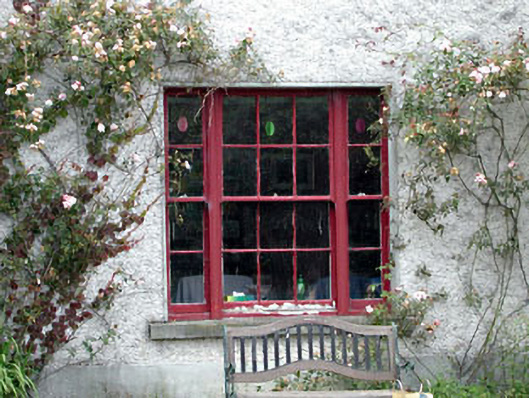
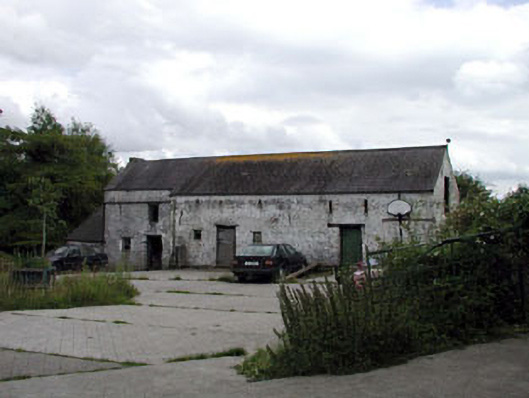
Detached three-bay two-storey former mill owner's house, c.1820, on an L-shaped plan retaining early fenestration with single-bay single-storey flat-roofed projecting porch to centre and two-bay two-storey return to rear to north. Extended, c.1950, comprising two-bay two-storey lean-to lower parallel range along rear elevation to north. Now in private residential use. Hipped roof with slate (lean-to to parallel range to rear to north). Clay ridge tiles. Rendered chimney stacks. Cast-iron rainwater goods. Flat-roof to porch. Bitumen felt. Dentilated eaves band. Roughcast walls. Painted. Square-headed window openings. Stone sills. 6/6 timber sash windows (tripartite to flanking bays to ground floor). Timber casement windows, c.1950, to rear elevation to north. Square-headed door opening. Rendered architrave, c.1995. Replacement timber panelled door, c.1995, with sidelights and overlights. Set back from road in own grounds. Tarmacadam forecourt to front. Detached six-bay single-storey rubble stone outbuilding with half-attic, c.1820, to north. Gable-ended roof with slate. Clay ridge tiles. Cast-iron rainwater goods. Rubble stone walls. Painted. Square-headed openings (including door opening to first floor to gable to west). Stone sills. Exposed lintels. Timber fittings. Remains of corn mill, c.1820, to site. Now in ruins.
Appraisal
This house is an attractive and well-maintained middle-size building of the early nineteenth century, which retains much of its original features and character. The house is not untypical of many substantial rural houses of the period and is composed as a symmetrical design, centred about a projecting porch, with openings of graceful Georgian proportions - the tripartite window openings to ground floor are a distinguishing feature. The house retains many early or original features, such as the fenestration and slate roof, which serves to suggest that an interior of note may also survive intact within. Of social and historic interest the house is one of the final fragments of a former industrial complex on site, which would once have provided a centre for the agricultural economy in the region. An attractive outbuilding also remains, of good construction, and retains important salient features such as the exposed lintels to the openings. Also of some interest is the site of the former corn mill to the grounds, which was originally powered by a mill stream stemming from the nearby River Barrow or Grand Canal (Athy Branch).