Survey Data
Reg No
11902402
Rating
Regional
Categories of Special Interest
Architectural, Artistic, Historical, Social
Original Use
Church/chapel
In Use As
Church/chapel
Date
1785 - 1795
Coordinates
286999, 214129
Date Recorded
22/10/2002
Date Updated
--/--/--
Description
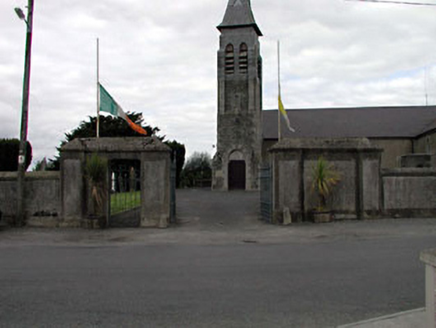
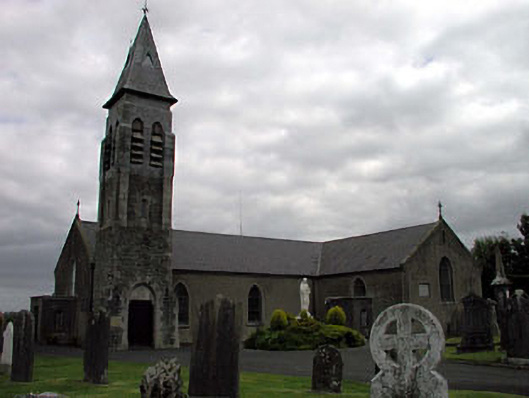
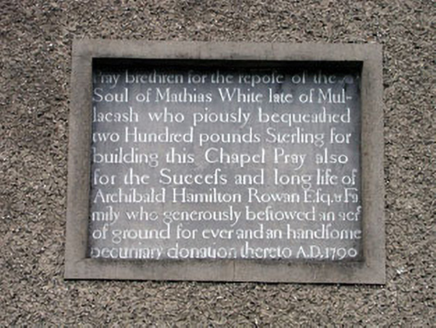
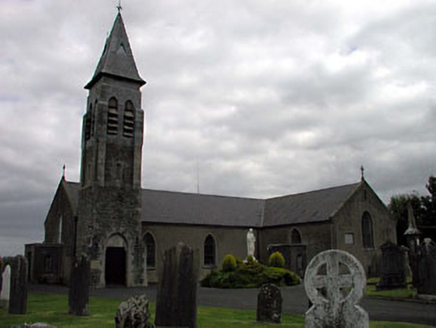
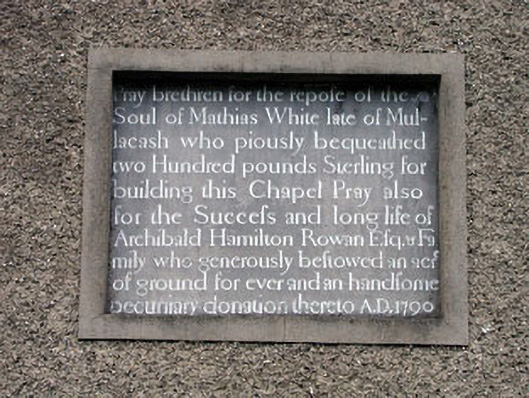
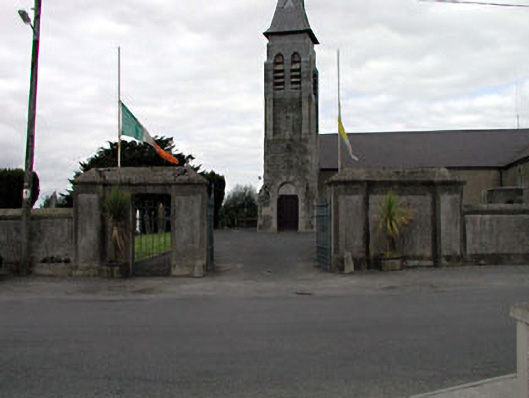
Detached four-bay single-storey Gothic-style Catholic church, dated 1790, on a T-shaped plan comprising three-bay single-storey nave with lancet-arch openings, single-bay single-storey transepts to north and to south, and single-bay single-storey lower sacristy projection to east. Gable-ended roofs with slate. Clay ridge tiles. Cut-stone coping to gables with cross finials to apexes. Cast-iron rainwater goods on eaves course. Pyramidal roof to tower with sprocketed eaves. Scalloped fish-scale slate. Clay ridge tiles. Iron weather vane. Flat-roofs to additional porches. Bitumen felt. Roughcast walls. Unpainted. Cut-stone date stone/plaque. Rubble stone walls to tower. Cut-stone dressings including buttresses and quoins. Lancet-arch window openings (square-headed to sacristy projection; round-headed to additional porch). Stone sills. Fixed-pane leaded windows (timber sash windows to sacristy projection). Square-headed door openings to porches. Tongue-and-groove timber panelled doors. Paired lancet-arch openings to upper stage to tower. Cut-stone surrounds. Louvered panels. Square-headed door opening to tower in lancet-arch relieving arch. Cut-stone shouldered surround. Tongue-and-groove timber panelled door. Set back from road in own landscaped grounds.
Appraisal
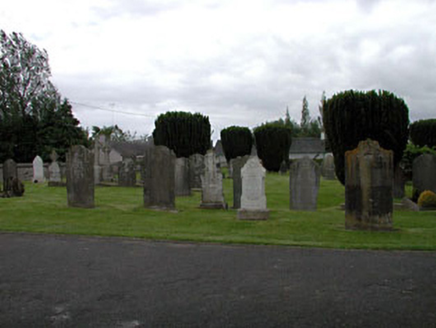
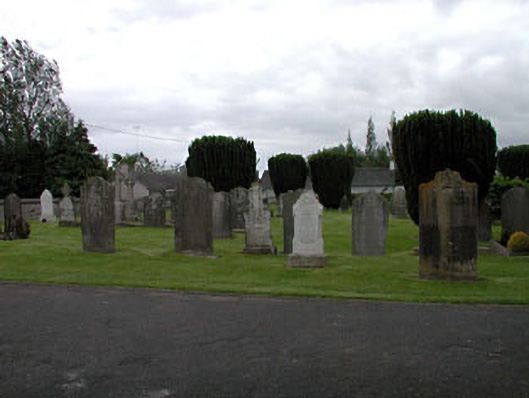
Saint Peter's Catholic Church is an important building of particular significance having been built before Catholic Emancipation through the donation of funds and land by two local landlords (both of whom are commemorated in the earliest date stone/plaque). The building is somewhat typical of the early Catholic churches and comprises a long, low range of sparse ornamentation - only the relatively ornate plan distinguishes the church above the 'barn-style' models. The later tower is of historical interest and represents the emergence and growing prosperity of the local Catholic community over subsequent years. The church retains much of its original character, features and materials, including early fenestration, a slate roof, and so on. The survival of such fittings suggests that early features may also survive in the interior. The church is attractively set in its own landscaped grounds and forms the core of the village of Twomilehouse. It also forms the ecclesiastical centre of the locality - as such it is of considerable social interest - and is an attractive landmark in the region; similarly the tower serves to identify the church in its surroundings and adds incident to the skyline. The attendant graveyard is also of significance and contains cut-stone grave markers of various periods - many of these are of considerable artistic interest.