Survey Data
Reg No
11902401
Rating
Regional
Categories of Special Interest
Architectural, Social
Previous Name
Dowdingstown
Original Use
Farm house
In Use As
Farm house
Date
1810 - 1850
Coordinates
285867, 214178
Date Recorded
22/10/2002
Date Updated
--/--/--
Description
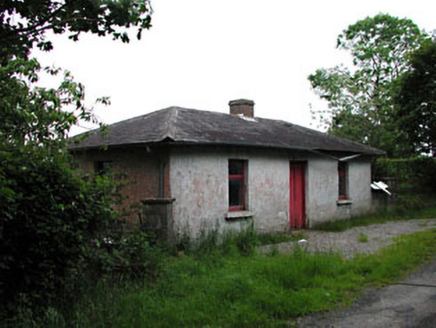
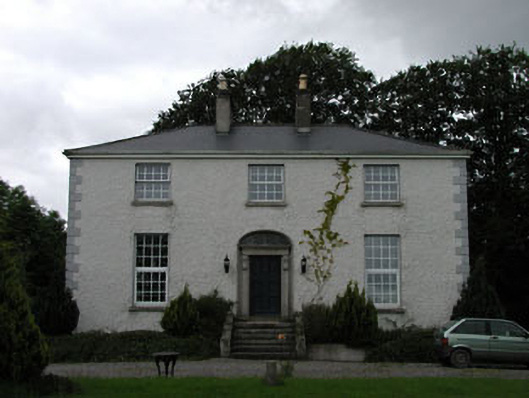
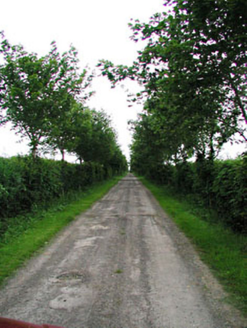
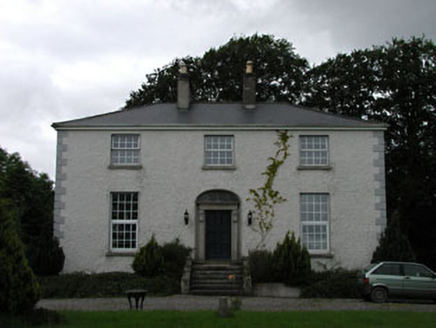
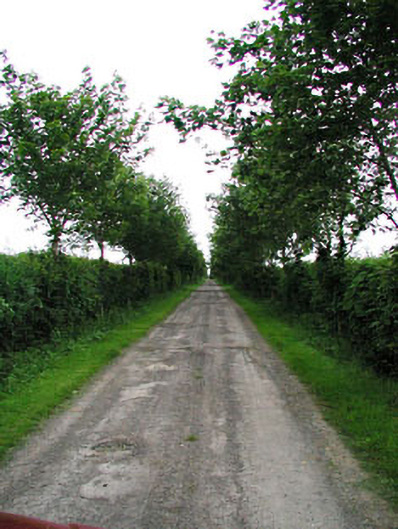
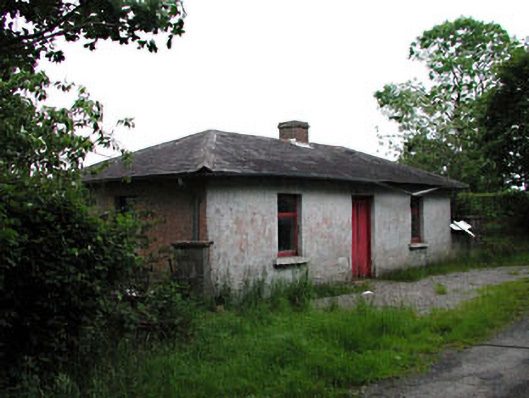
Detached three-bay two-storey over basement house, c.1830, on a T-shaped plan with elliptical-headed door opening to centre approached by flight of steps. Extended, c.1880, comprising two-bay three-storey return to rear to west. Reroofed and refenestrated, c.1995. Hipped roof (gabled to return). Replacement artificial slate, c.1995. Concrete ridge tiles. Roughcast chimney stacks. Timber eaves. Replacement uPVC rainwater goods, c.1995. Roughcast walls. Unpainted. Rendered quoins to corners. Square-headed window openings. Stone sills. Replacement uPVC casement windows, c.1995. Elliptical-headed door opening approached by flight of stone steps. Rendered pilaster doorcase with entablature on consoles. Timber panelled door. Fanlight. Interior with timber panelled shutters to window openings. Set back from road in own landscaped grounds. Tarmacadam drive to front. Lawns to site. Formal avenue to south. Detached three-bay single-storey gate lodge, c.1830, to south. Refenestrated, c.1980. Now disused. Hipped roof with slate. Clay ridge tiles. Red brick chimney stack. Timber eaves. Replacement aluminium rainwater goods, c.1980. Roughcast walls. Painted. Square-headed window openings. Stone sills. Replacement timber casement windows, c.1980. Square-headed door opening. Tongue-and-groove timber panelled door. Sited adjacent to avenue at entrance to estate.
Appraisal
Dowdingstown House is an imposing middle size Georgian-style farm house of sombre appearance that retains some of its original character. Built on a symmetrical plan the entrance (east) front is dominated by the elliptical-headed door opening to the centre, approached by a flight of steps and furnished with a fine doorcase, and the remainder of the façade is free of superfluous detailing. The replacement of some original features, including fenestration, has diminished the architectural quality of the building somewhat, but is an easily reversible alteration - the re-instatement of timber fenestration would restore a more accurate representation of the original appearance of the house, while the retention of the early timber panelled internal shutters is an important survival. The house is attractively set in its own landscaped grounds and is approached by a long formal avenue. The gate lodge to south, now disused and in fair condition, is a quaint and attractive structure that would benefit from maintenance.