Survey Data
Reg No
11901705
Rating
Regional
Categories of Special Interest
Architectural, Historical, Social, Technical
Original Use
Mill (water)
Date
1830 - 1870
Coordinates
274604, 221000
Date Recorded
16/10/2002
Date Updated
--/--/--
Description
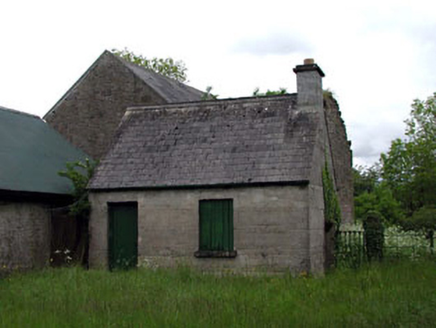
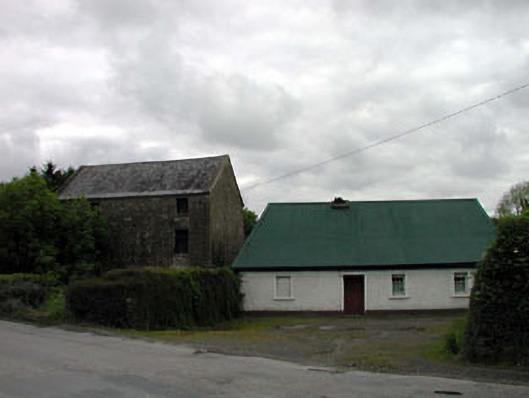
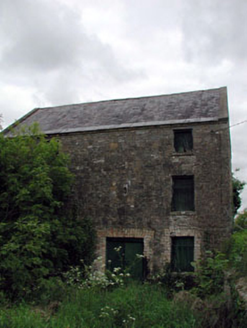
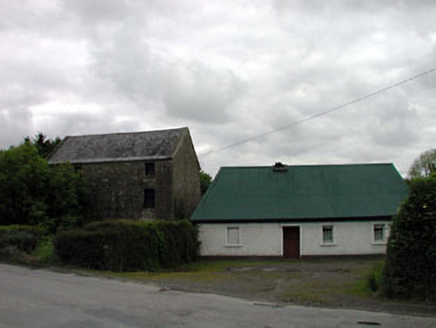
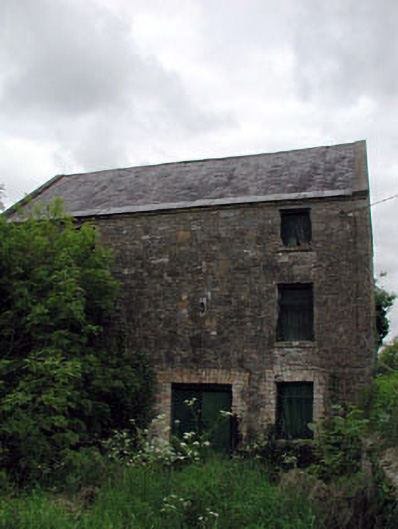
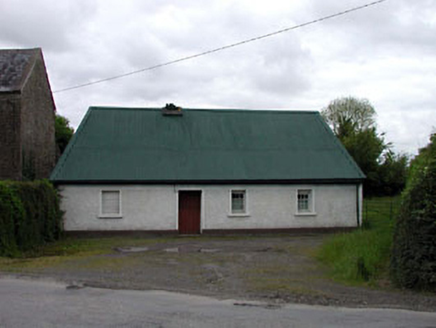
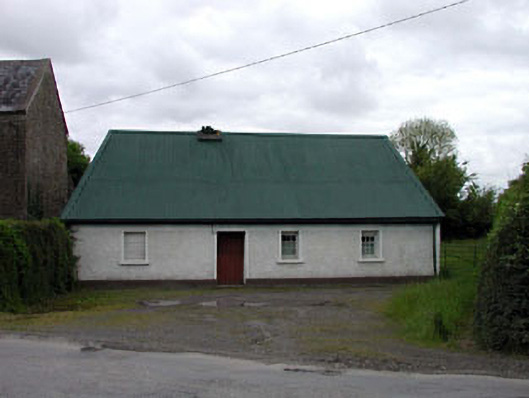
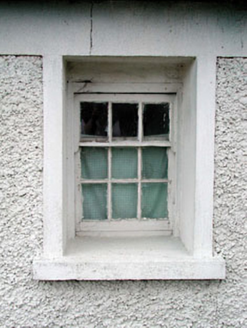
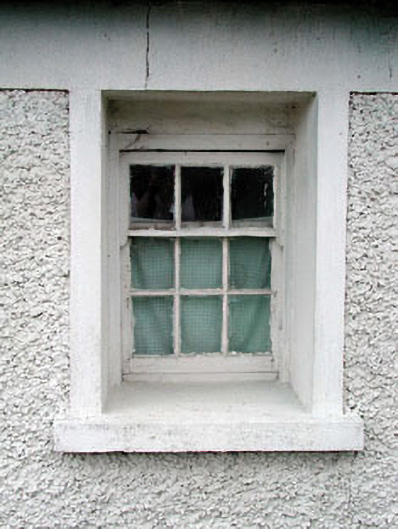
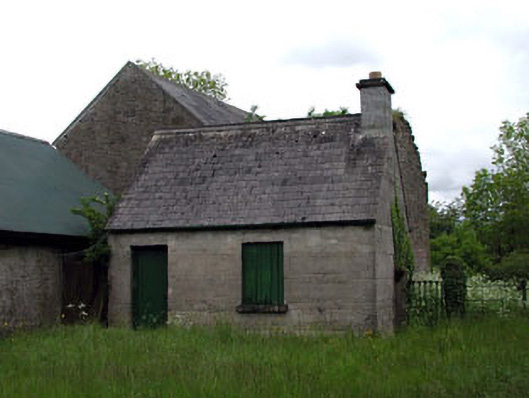
Detached three-bay three-storey rubble stone former corn mill, c.1850, on a T-shaped plan with single-bay three-storey return to rear to north. Now disused and part-overgrown. Gable-ended roofs with slate. Clay ridge tiles. Cut-stone coping to gables. Rainwater goods not discernible. Rubble stone walls. Square-headed window openings (two possibly additional to front (south) elevation; one broken opening to ground floor to return to north). Stone sills (yellow brick dressings to possibly later openings). Timber shutters. Square-headed door opening. Timber panelled double doors. Set back from road in own overgrown grounds with evidence of mill race to site (now dried). Waterwheel now missing. Detached four-bay single-storey cottage, c.1850, to east originally thatched. Reroofed, c.1930. Gable-ended roof. Replacement corrugated-iron, c.1930. Iron ridge tiles. Rendered chimney stack. Iron rainwater goods. Roughcast walls. Painted. Rendered band to eaves. Square-headed window openings. Stone sills. 3/6 timber sash windows. Square-headed door opening. Timber panelled door. Detached two-bay single-storey mass-concrete outbuilding, c.1930, to south. Gable-ended roof. Artificial slate. Clay ridge tiles. Iron rainwater goods on eaves course. Exposed mass-concrete walls. Unpainted. Square-headed window openings. Concrete sills. Timber fittings. Square-headed door opening. Timber fittings.
Appraisal
Pluckerstown Corn Mill (former) is a fine example of a mid nineteenth century small-scale industrial centre that retains much of its original character - the complex is attractively set just off the road side and is a picturesque feature in the area. The mill building is a fine and imposing rubble stone structure that includes small openings necessary for maintaining a cool, dry environment. Many of the original features and materials remain intact, including a slate roof, although the original waterwheel is now gone. The evidence of the now dried mill race is also of interest. Located adjacent to the east, the cottage is a good example of the vernacular tradition in County Kildare - although the thatched roof has now been replaced, the use of corrugated-iron for domestic buildings is considered a vernacular quality. The house also retains important early timber sash windows. To the south the outbuilding is of some technical interest, being an early example of the use of mass-concrete in construction. The mill complex as a defined group is of considerable historical and social interest, having once been a major employer in the region.