Survey Data
Reg No
11901005
Rating
Regional
Categories of Special Interest
Architectural, Artistic, Historical, Social, Technical
Original Use
Church/chapel
In Use As
Church/chapel
Date
1855 - 1865
Coordinates
290651, 234733
Date Recorded
11/10/2002
Date Updated
--/--/--
Description
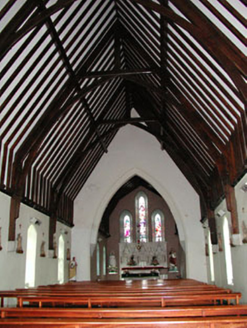
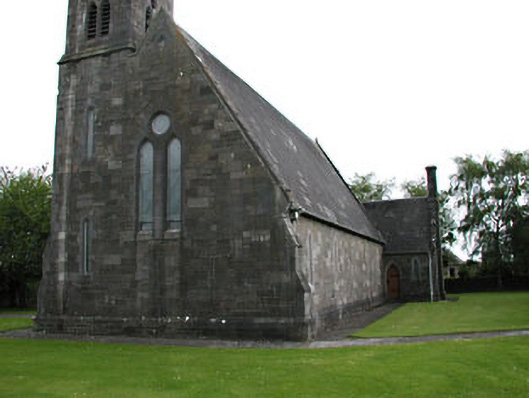
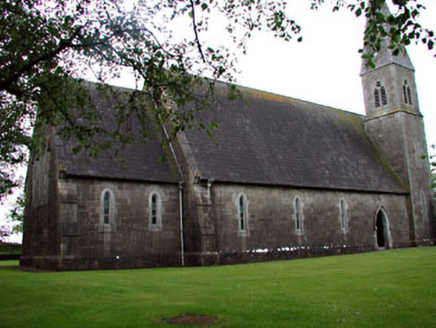
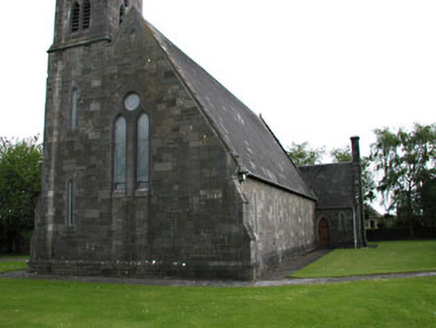
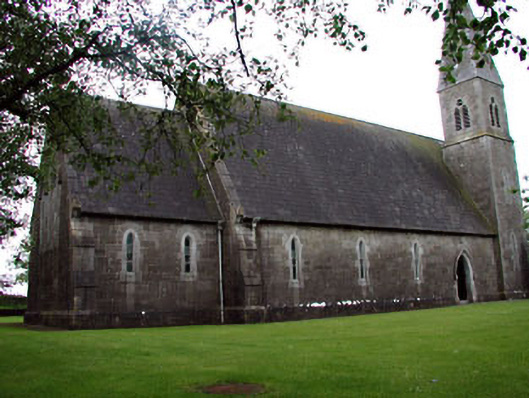
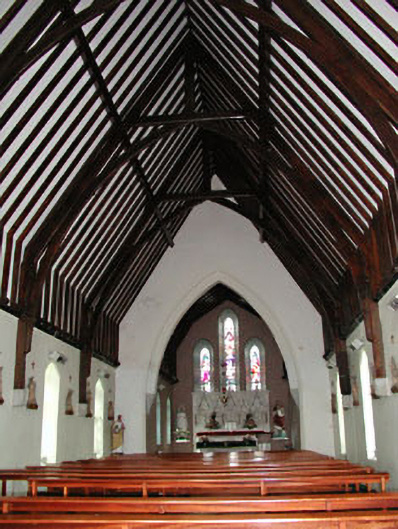
Detached seven-bay double-height Gothic-style Catholic church, built 1860-3, comprising five-bay double-height nave with lancet-arch openings, single-bay three-stage engaged corner tower to west on a square-plan with spire and two-bay double-height lower chancel to north-east gable end having single-bay single-storey sacristy projection to north-west. Gable-ended roof with slate (gabled to sacristy projection). Clay ridge tiles. Cut-stone coping to gables with trefoil motif. Cut-stone chimney stack to gable to sacristy projection. Cast-iron rainwater goods with decorative hoppers. Pyramidal roof to spire with slate (fish-scale pattern). Hammer-dressed snecked limestone walls. Stepped buttresses to corners. Lancet-arch window openings (paired to south-west gable end; tripartite to north-east gable end with hood moulding over). Cut-stone chamfered block-and-start surrounds. Fixed-pane leaded windows. Lancet-arch openings to tower. Louvered timber panels to top stage. Pointed-arch door opening. Cut-stone chamfered surround. Hood moulding over. Timber panelled doors. Full-height interior open into roof. Glazed timber panelled internal porch. Exposed timber roof construction on cut-stone corbels. Gothic style altar and reredos to chancel. Set back from road in own grounds. Lawns to site. Rubble stone boundary wall to site.
Appraisal
The Catholic Church of the Assumption of Our Lady, also known as Ladychapel Catholic Church, is a fine example of a mid to late nineteenth-century Gothic style church, which retains much of its original aspect. Composed on a simple, almost single-cell plan the scale of the church and the plain treatment of the external elevations achieves an atmosphere of intimacy. Many original features and materials survive intact, including the early leaded fenestration and a slate roof. The interior is also of considerable interest with a chancel that contains fittings of artistic interest, while the exposed timber roof construction is of some technical/engineering merit. The church is attractively set within its own landscaped grounds and the soaring spire is a prominent landmark that articulates the skyline. Prominently located on a wedge-shaped site on the crossroads the church is of social and historic significance as the ecclesiastical centre for the Catholic population in the locality.