Survey Data
Reg No
11900701
Rating
Regional
Categories of Special Interest
Architectural, Historical, Social
Original Use
House
In Use As
House
Date
1740 - 1760
Coordinates
261610, 235824
Date Recorded
--/--/--
Date Updated
--/--/--
Description
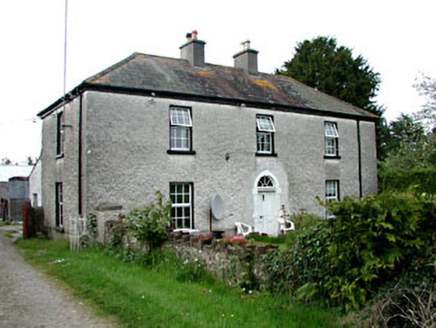
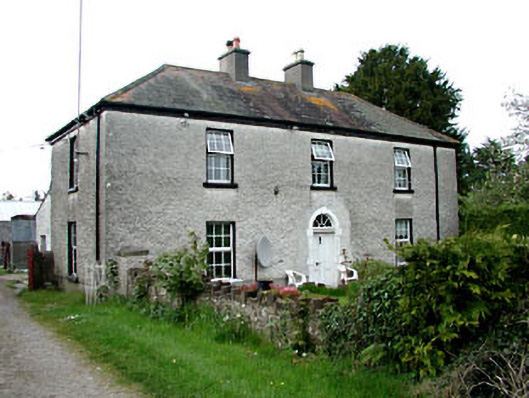
Detached three-bay two-storey house, c.1750, on a symmetrical plan with round-headed door opening to centre ground floor. Extended, c.1980, comprising single-bay single-storey lean-to return to rear to north-west. Refenestrated, c.1990. Hipped roof with slate. Clay ridge tiles. Rendered chimney stacks. Cast-iron rainwater goods on eaves course. Lean-to to return. Artificial slate. Roughcast walls. Unpainted. Exposed concrete block construction to return. Square-headed window openings. Stone sills. Replacement uPVC casement windows, c.1990. Round-headed door opening. Cut-stone block-and-start doorcase with keystone. Timber panelled door. Spoked fanlight. Set back from road in own grounds. Part-overgrown grounds to site. Detached nine-bay single-storey outbuilding, c.1750, with series of round-headed integral carriageways. Part reroofed, c.1970. Gable-ended roof with slate (replacement corrugated-iron, c.1970, to right). Clay ridge tiles. Remains of cast-iron rainwater goods on eaves course. Lime rendered walls over rubble stone construction. Unpainted. Square-headed window openings. No sills. Timber fittings. Square-headed door openings. Timber fittings. Round-headed integral carriageways. Rendered voussoirs. Fittings not visible.
Appraisal
Kinnafad House is an attractive middle-size house that is representative of the type of dwellings built by the prosperous agricultural businessman in the mid eighteenth century. Composed of graceful proportions on a symmetrical plan, the house is austerely detailed and relies primarily on the attractive doorcase for decorative incident. Comprehensively renovated and extended over the course of the late twentieth century, the house nevertheless retains some of its original fabric, including the fittings to the door opening and a slate roof having cast-iron rainwater goods, while the original form appears to remain intact. The re-instatement of traditional-style fenestration might restore a more accurate representation of the original appearance of the house. Set back from the road in its own grounds, the house is complemented by a range of attendant outbuildings that emphasise the social and historic significance of the site, providing insight into the appearance of a mid eighteenth-century middle-size farm holding.