Survey Data
Reg No
11823018
Rating
Regional
Categories of Special Interest
Architectural, Artistic, Historical, Social, Technical
Original Use
Farm house
In Use As
Farm house
Date
1830 - 1850
Coordinates
278405, 185072
Date Recorded
03/02/2003
Date Updated
--/--/--
Description
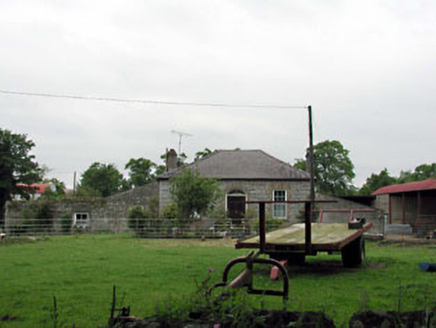
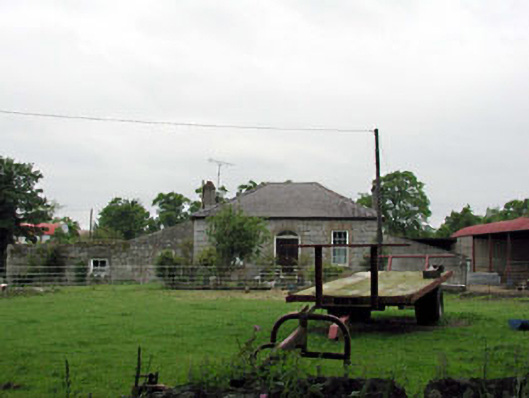
Detached three-bay single-storey over basement rubble stone farmhouse, c.1840, with elliptical-headed door opening to centre, single-bay single-storey lean-to flanking end bays and three-bay two-storey rear elevation to north. Refenestrated, c.1990. Hipped roof with slate (lean-to to flanking end bays). Clay ridge tiles. Rendered chimney stacks. Cast-iron rainwater goods on cut-stone eaves course. Coursed snecked rubble granite walls. Random rubble stone walls to flanking end bays with render over to west. Square-headed window openings. Stone sills. Yellow brick dressings. Replacement uPVC casement windows, c.1990. Elliptical-headed door opening. Yellow brick surrounds. Replacement glazed timber panelled door, c.1990. Decorative fanlight. Set back from road in own grounds. Attached two-bay single-storey rubble stone mono-pitched outbuilding, c.1840, to west retaining early fenestration with single-bay single-storey advanced end bay to right (north-west) having square-headed integral carriageway. Reroofed, c.1940. Mono-pitched roof. Replacement corrugated-iron, c.1940. Cast-iron rainwater goods. Random rubble stone walls. Rendered to elevation to north. Unpainted. Square-headed window opening. Stone sill. 2/2 timber sash window. Square-headed door opening. Replacement glazed timber door, c.1970. Square-headed integral carriageway to advanced end bay. Replacement corrugated-iron-sheeted door, c.1940. Attached two-bay single-storey rubble stone mono-pitched outbuilding, c.1840, to north retaining early fenestration. Reroofed, c.1940. Mono-pitched roof. Replacement corrugated-iron, c.1940. Timber eaves board. Cast-iron rainwater goods. Random rubble stone walls. Square-headed window openings. Stone sill. 1/1 timber sash windows. Freestanding cast-iron waterpump, c.1905, comprising cylindrical shaft with raised horizontal banding, fluted upper section with fluted spout and 'cow-tail' handle. Now disused with capping now missing. Cut-stone trough. Section of rubble stone boundary wall, c.1840, to boundary of site with rubble stone coping.
Appraisal
Church View is an attractive middle-size mid nineteenth-century farmhouse that retains much of its original form and character. Composed on an almost-symmetrical plan of graceful Classically-derived proportions and detailing, the house forms a picturesque landmark in the locality. The construction in locally-sourced rubble granite is a feature shared with further buildings in Castledermot, and attests to the high quality of stone masonry practised in the locality – the use of yellow brick as dressings to the openings adds a subtle decorative tone to the design. The house has been well-maintained over the years and retains many important early or original features and materials, including slate roofs with cast-iron rainwater goods and a delicate fanlight to the door opening – the re-instatement of traditional-style timber sash fenestration would provide a more accurate representation of the original appearance of the house. The house is complemented by a range of attached small-scale outbuildings, of similar construction, that retain important early salient features and materials – later ranges have threatened to envelope the house, however, and future development on the site ought to respect the central role of the house in the grounds. Also of interest in the grounds is the cast-iron waterpump, which is of technical and artistic significance (having been designed as an aesthetic as well as a functional piece), and which is accompanied by a cut-stone trough. The boundary wall to the site is a good example of the traditional method of constructing boundary walls and is an important survival as many rubble stone walls have been replaced with unsympathetic modern versions.