Survey Data
Reg No
11821012
Rating
Regional
Categories of Special Interest
Architectural, Historical, Social
Original Use
House
In Use As
House
Date
1860 - 1900
Coordinates
287629, 208413
Date Recorded
--/--/--
Date Updated
--/--/--
Description
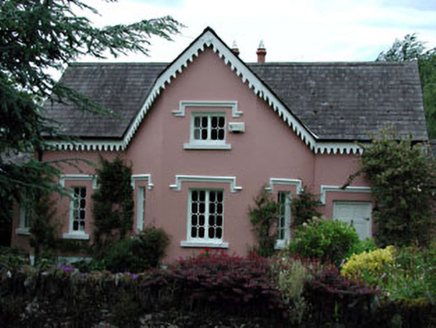
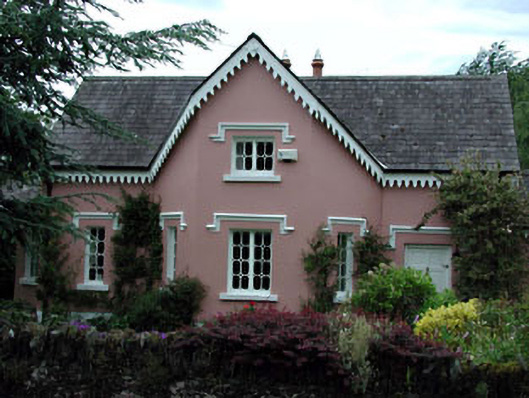
Detached three-bay single-storey house with half-dormer attic, c.1880, on a corner site with single-bay single-storey gabled canted projecting bay to centre and single-bay single-storey canted bay window to side elevation to south-east. Gable-ended roof with slate (gabled to canted projecting bay). Clay ridge tiles. Rendered chimney stack. Decorative timber eaves and bargeboards with pendant motif. Rainwater goods not visible. Rendered walls. Painted. Square-headed openings (including to canted bay window). Stone sills. Rendered hood mouldings over. Leaded timber side-hung casement windows. Timber panelled door. Set back from road in own grounds on a corner site with laneway to south-west. Rubble stone boundary wall to front with rubble stone piers having cast-iron gate. Detached two-bay single-storey outbuilding, c.1990, to south-west. Gable-ended roof with artificial slate. Concrete ridge tiles. Decorative timber eaves and bargeboards with pendant motif. Rendered walls. Painted. Square-headed window opening. Concrete sill. uPVC casement window. Remainder of openings not discerned.
Appraisal
Peacock Cottage is an attractive, small-scale building in the Tudor Revival cottage orné style, which retains much of its original character. Although a modest range, the house is afforded much presence in the locality through the application of a full-height gabled canted projecting bay to the centre of the front (north-east) elevation. Complementing the architectural scheme are applied decorative motifs, including hood mouldings to the openings, while the leaded glazing to the openings also contributes to the decorative effect. The cottage has been well maintained and retains most of its original features and materials, including the fenestration and a slate roof. Set attractively in its own grounds on a corner site, the house is an important component of the architectural heritage of the locality. Of social and historic interest, the house attests to the development of a settlement in the locality in the late nineteenth century.