Survey Data
Reg No
11821007
Rating
Regional
Categories of Special Interest
Architectural, Historical, Social
Original Use
House
In Use As
House
Date
1870 - 1890
Coordinates
287470, 208811
Date Recorded
12/12/2002
Date Updated
--/--/--
Description
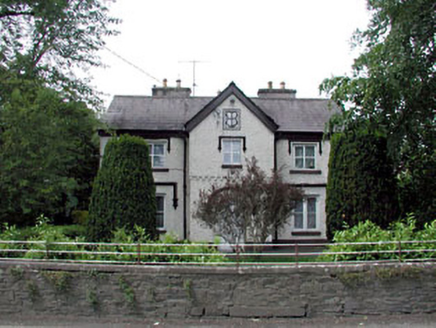
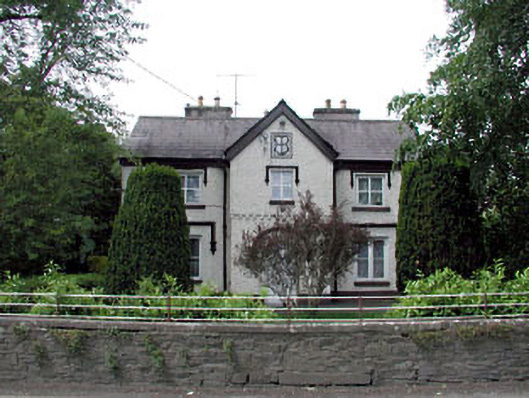
Detached three-bay two-storey double-pile house, c.1880, with single-bay two-storey gabled breakfront and single-bay single-storey canted bay windows to side elevations to north-west and to south-east. Reroofed, c.1970. Mostly refenestrated, c.1990. Gable-ended double-pile (M-profile) roof (gabled to breakfront). Replacement artificial slate, c.1970. Concrete ridge tiles. Rendered chimney stacks. Timber eaves and bargeboards. Cast-iron rainwater goods. Roughcast walls. Painted. Dentilated stringcourse to first floor breakfront. Rendered plaque to gable. Square-headed window openings (including canted bay windows). Stone sills. Hood mouldings over. Some original timber casement windows. Replacement uPVC casement windows, c.1990, to remainder. Elliptical-headed door opening. Hood moulding over. Tongue-and-groove timber panelled door. Set back from road in own landscaped grounds. Rubble stone boundary wall to site with iron railings over.
Appraisal
Beechlawn (House) is a fine and well-maintained substantial house that retains much of its original character. Of social and historic interest, the house attests to the development of a Presbyterian settlement in the locality in the late nineteenth century. Designed on a symmetrical plan and with elevations of graceful proportions, the house is decorated in a pared-down Tudor style, as identified by the hood mouldings to openings, and as emphasised by the numerous gables throughout the piece. Although renovated in the late twentieth century, leading to the loss of some of the original materials, the replacement items are easily reversed – the re-instatement of timber fenestration, using the existing original models as references points, might restore a more accurate representation of the original appearance of the house. The house, set slightly back from the line of the road in its own grounds, is an attractive and prominent landmark in Brannockstown, being positioned on the crossroads, and is a fine component of the architectural heritage of the locality.