Survey Data
Reg No
11812002
Rating
Regional
Categories of Special Interest
Architectural, Historical, Social
Original Use
School
Date
1790 - 1810
Coordinates
292098, 221651
Date Recorded
19/06/2002
Date Updated
--/--/--
Description
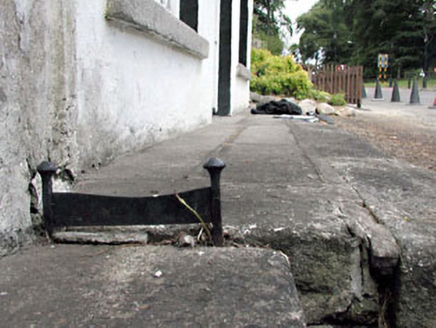
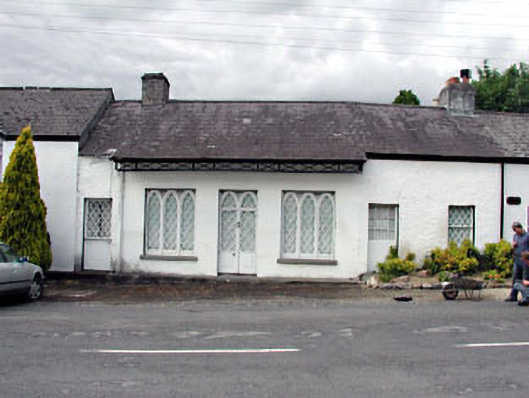
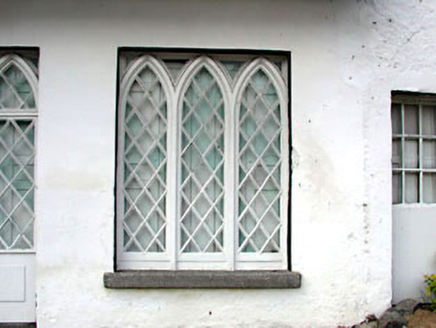
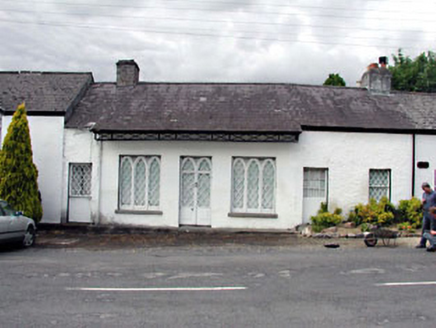
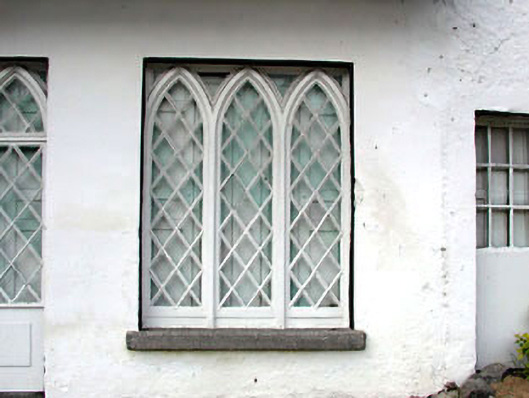
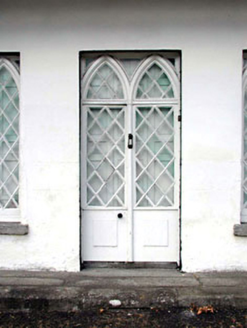
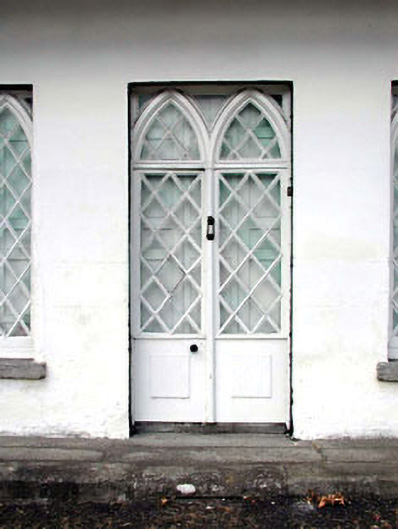
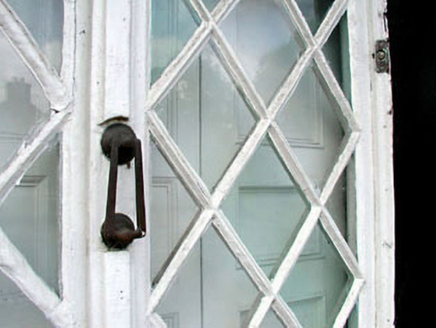
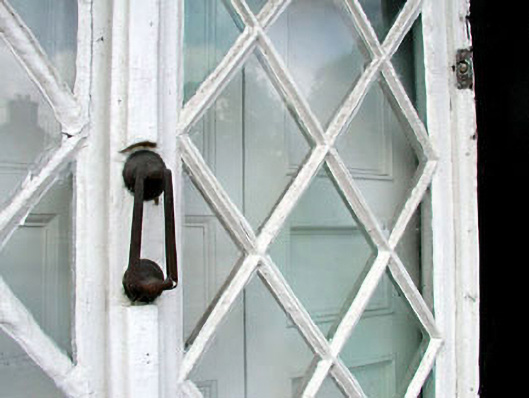
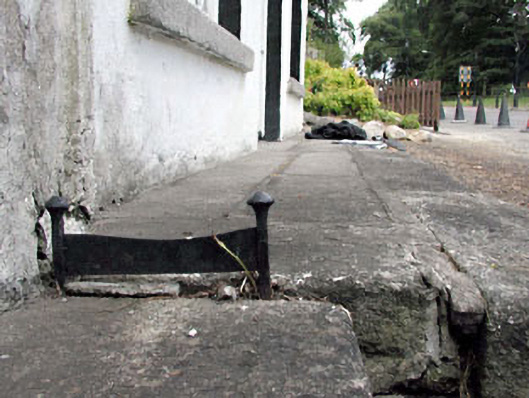
Terraced six-bay single-storey former schoolhouse, c.1800, possibly originally two separate buildings. Renovated, c.1880, with some openings remodelled having canopy over. Now disused. Gable-ended roof with slate (overhanging over remodelled openings forming canopy). Clay ridge tiles. Rendered chimney stacks over red brick construction. Cast-iron rainwater goods. Lattice-work cast-iron section, c.1880, over remodelled openings. Rendered walls (probably over rubble stone construction). Painted. Square-headed openings (some remodelled, c.1880). Stone sills. Replacement Gothic-style diamond-leaded timber fenestration, c.1880 (single fixed-pane and 1/1 timber sash windows to original openings; tripartite lancet-arch fixed-pane windows to remodelled openings). Replacement glazed timber panelled double doors, c.1880. Overlight. Timber panelled internal shutters to all openings. Set back from line of road. Stone flagged verge to front with cast-iron boot scraper.
Appraisal
This former schoolhouse, although currently no longer in use, is a fine long, low range that retains most of its early character. The school is of considerable social and historical interest as one of the earliest educational facilities in the village of Johnstown. Possibly originally two separate houses, amalgamated in the late nineteenth century with some openings remodelled, the current form of the building is an attractive, prominent feature on the streetscape. The diamond-leaded fenestration, particularly in the lancet-arch panels, achieves a highly decorative effect and is complemented by the unusual cast-iron lattice-work beam over. The school retains most of its early or original features and materials, including the fenestration, timber panelled internal shutters to all openings and a slate roof, and is a highly valuable component of the architectural heritage of the locality. Sundry early items of interest include the cast-iron boot scraper to front, which is an increasingly rare survival.