Survey Data
Reg No
11810047
Rating
Regional
Categories of Special Interest
Architectural, Social
Original Use
House
In Use As
House
Date
1800 - 1820
Coordinates
266984, 219436
Date Recorded
12/06/2002
Date Updated
--/--/--
Description
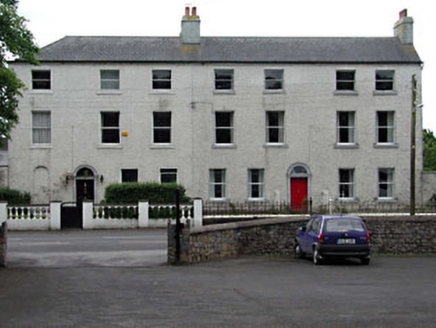
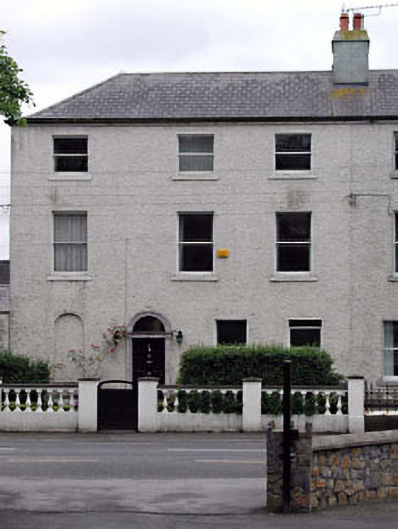
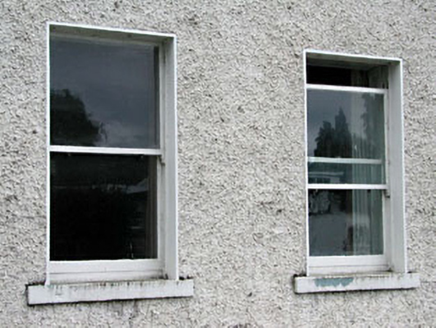
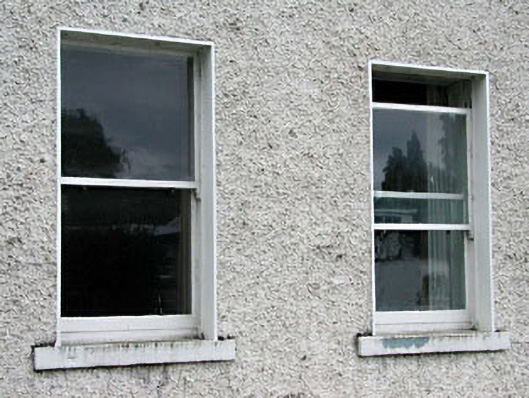
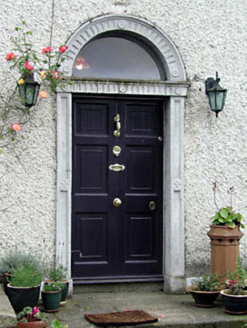
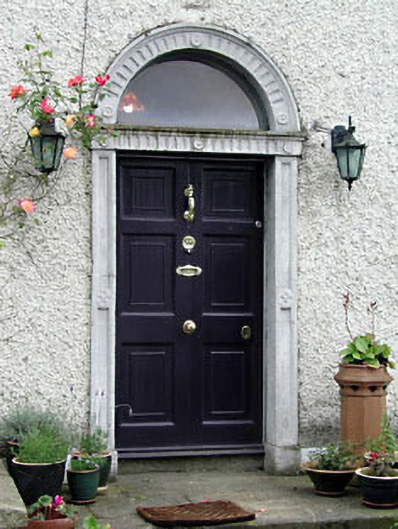
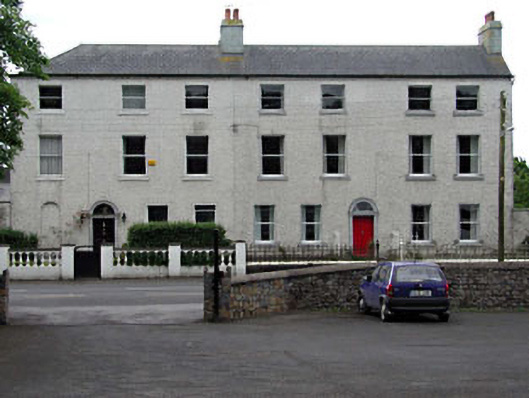
Semi-detached four-bay three-storey over basement house, c.1810, retaining early fenestration with round-headed door opening to centre ground floor and single-bay single-storey end bay to left (east). Reroofed, c.1970. Hipped and gable-ended roof (gable-ended to end bay). Replacement artificial slate, c.1970. Concrete ridge tiles. Rendered chimney stack. Cast-iron rainwater goods on rendered eaves course. Roughcast walls. Unpainted. Round-headed panel to left ground floor. Square-headed window openings. Stone sills. Early 1/1 timber sash windows. Round-headed door opening. Moulded doorcase (possibly cut-stone). Timber panelled door. Overlight. Set back from line of road. Sections of iron railings to forecourt on rendered plinth wall.
Appraisal
This house is a fine, Classically-balanced substantial Georgian house of the early nineteenth century that has been well-maintained. The house is of social and historic significance, representing a component of the early development of the historic core of Rathangan in the early nineteenth century. The scale and fine detailing of the house suggest that it was originally built by a patron of high status in the locality, and it is therefore of social interest, representing the formal architecture employed by the middle class at the time. Composed of graceful proportions, the house has a positive impact on the streetscape of Portarlington Road and forms a neat group with further sophisticated buildings on the street, attesting to the growing prosperity of the town. The house retains many important early or original features and materials, including timber sash fenestration and sections of iron railings to the forecourt. Without extraneous ornamentation, the only concession to decoration is the fine doorway to centre ground floor, which retains early fittings. The house is an important component of the architectural heritage of Rathangan and has been well-maintained for the benefit of future generations – the interior may retain early or original features and fittings of significance.