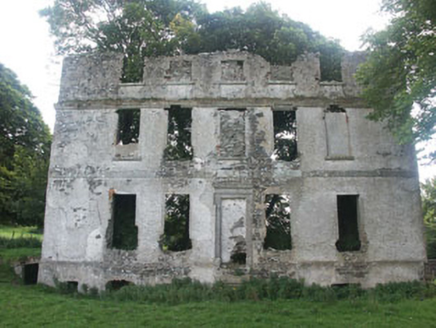
Detached five-bay two-storey with basement country house, built c.1720, but with a third-storey possibly added later. The country house was destroyed during the 1798 Rebellion or its aftermath and is...
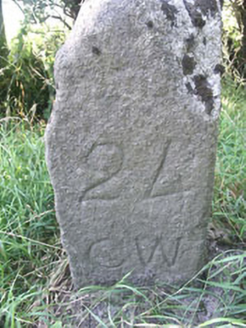
Triangular granite milestone of c.1760 inscribed ‘Dublin 24 [miles]’ to one face and ‘Bglass [Baltinglass] 11’ on the other, both in informal lowercase lettering but now largely indistinct due...
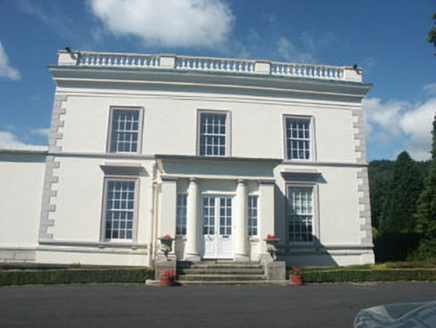
Detached five-bay two-storey house with basement, single-storey granite portico, c.1835. The windows in the two outer bays being set in panels breaking forward. Four-bay single-storey service wing?...
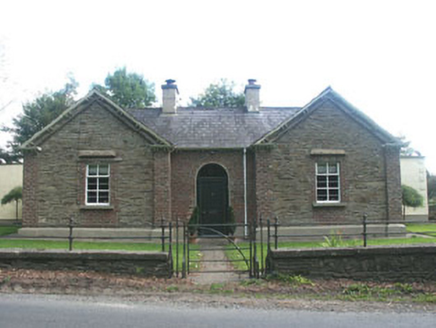
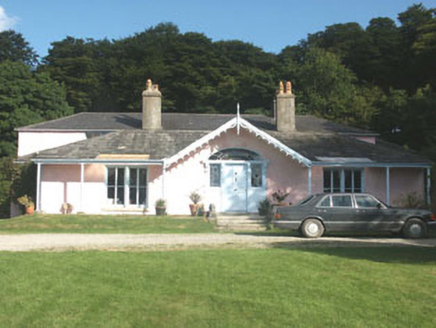
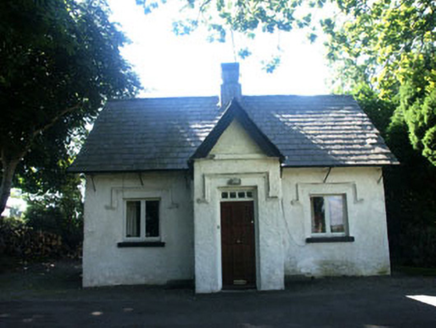
Detached three-bay single-storey former gate lodge to Tynte Park, built c.1850, and now in use as a private home. The building is constructed in rubble with the central bay to the front, edge pilaste...
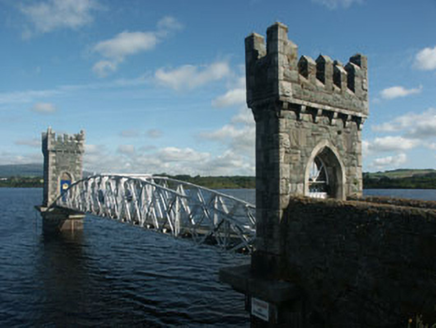
Single-stage stone-built valve tower, completed 1868, sited on the margin of Vartry Reservoir (1862-8). The valve tower was built to give access to underground draw-off pipes which stretch from the r...
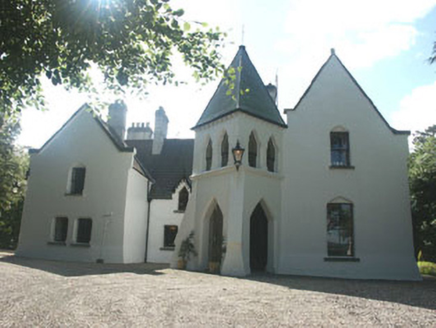
Detached multiple-bay two-storey house, built c.1865, possibly for the manager of the nearby Vartry Reservoir. Built in an eclectic mix of Tudor style and Venetian Gothic with an irregular plan, the ...
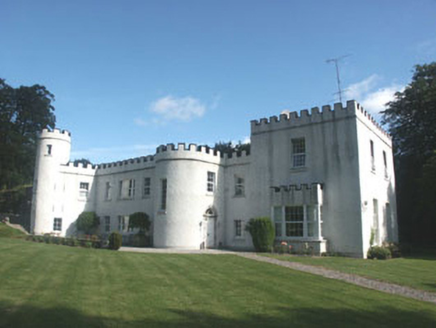
Detached multiple-bay two-storey house, built c.1800 but extended and remodelled in castle style in the later 19th century. The building has an irregular plan with three projecting bays to the front,...
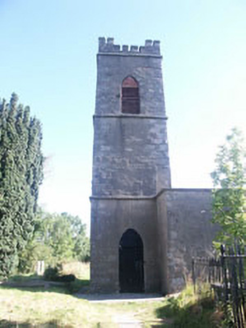
Detached three-bay single-storey Church of Ireland church with three-stage tower and transepts, built c.1820 but now a ruin. The walls of the nave and transepts are partly in rubble and partly render...
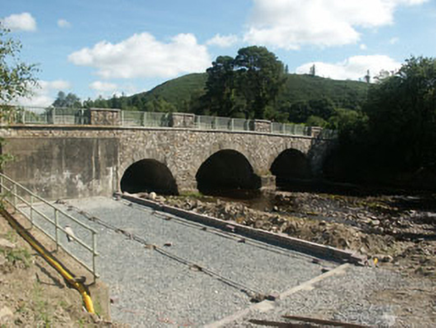
Four-arch road bridge over the Avonmore River, built c.1990 replacing an earlier bridge swept away in 1986. The bridge is constructed in rubble with dressed granite voussoirs. The segmental arches r...
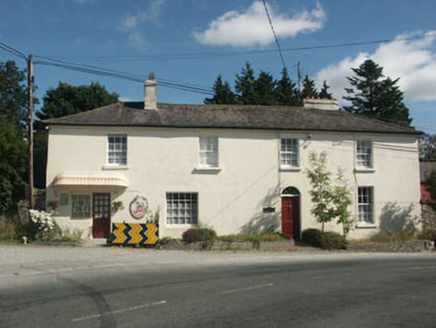
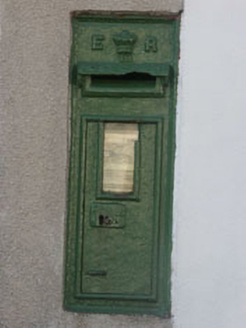
Detached four-bay two-storey house, built c.1840, now in use as a house and shop. The walls are finished in painted render whilst the hipped roof is slated and has rendered chimneystacks. The entran...
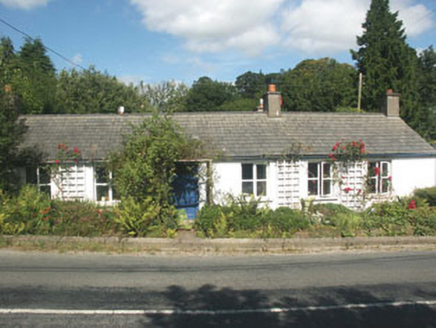
Detached six-bay single-storey double-pile house of c.1820. The walls are finished in painted render whilst the gable-ended pitched roof is covered in artificial slate and has rendered chimneystacks....
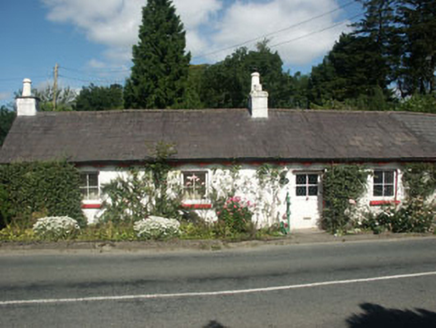
Semi-detached four-bay single-storey house, built c.1820. The walls are finished in painted render whilst the slated gable-ended pitched roof has an overhang with decorative bargeboards. The entranc...
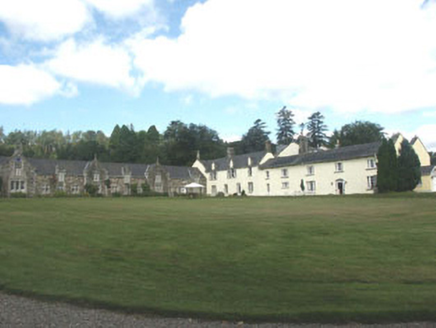
Detached five-bay two-storey country house, built c.1750, but extended to the west and north in the 18th or early 19th century, remodelled in Tudor Revival style and new front (east) wing added in c.1...
Detached three-bay part single part two-storey triple-pile house, built c.1835, but with rear sections possibly raised to their present two storeys in the later 1800s or early 1900s. The walls are fi...
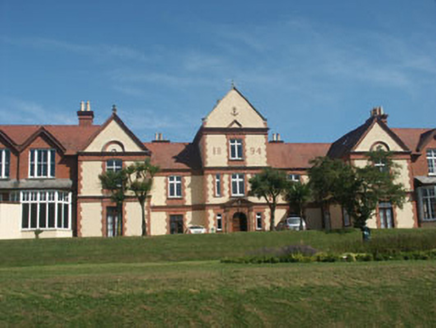
Detached multiple-bay part two- part three-storey hospital, built 1894. The hispital is finished in roughcast render with sandstone dressings and brick block and start quoins and window surrounds. T...
Detached five-bay part one part two and part three-storey country house, built c.1800. The east front is finished in painted vertical hung slate while the remainder is finished in render. There are ...
Detached three-bay one and a half-storey gate lodge, built c.1850, now in use as a house. The building is finished in roughcast render with square Tudor style drip mouldings. The replacement timber ...
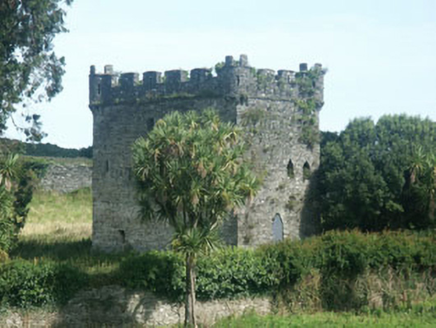
Detached three-bay three-storey castle or tower house of c.1550 which was later adapted as a folly. The castle or tower house is constructed in rubble fieldstone. The parapet is castellated and ther...
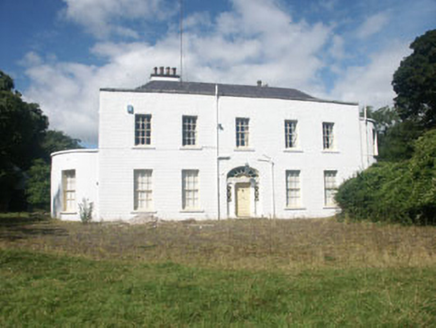
Detached three-bay two-storey country house, built c.1820. The country house was extended and re-modelled in c.1850 and in c.1995 a single storey bow-fronted bay was added to the south side. The cou...
To provide the best experiences, we use technologies like cookies to store and/or access device information. Consenting to these technologies will allow us to process data such as browsing behavior or unique IDs on this site. Not consenting or withdrawing consent, may adversely affect certain features and functions.
Functional
Always active
The technical storage or access is strictly necessary for the legitimate purpose of enabling the use of a specific service explicitly requested by the subscriber or user, or for the sole purpose of carrying out the transmission of a communication over an electronic communications network.
Preferences
The technical storage or access is necessary for the legitimate purpose of storing preferences that are not requested by the subscriber or user.
Statistics
The technical storage or access that is used exclusively for statistical purposes.The technical storage or access that is used exclusively for anonymous statistical purposes. Without a subpoena, voluntary compliance on the part of your Internet Service Provider, or additional records from a third party, information stored or retrieved for this purpose alone cannot usually be used to identify you.
Marketing
The technical storage or access is required to create user profiles to send advertising, or to track the user on a website or across several websites for similar marketing purposes.